
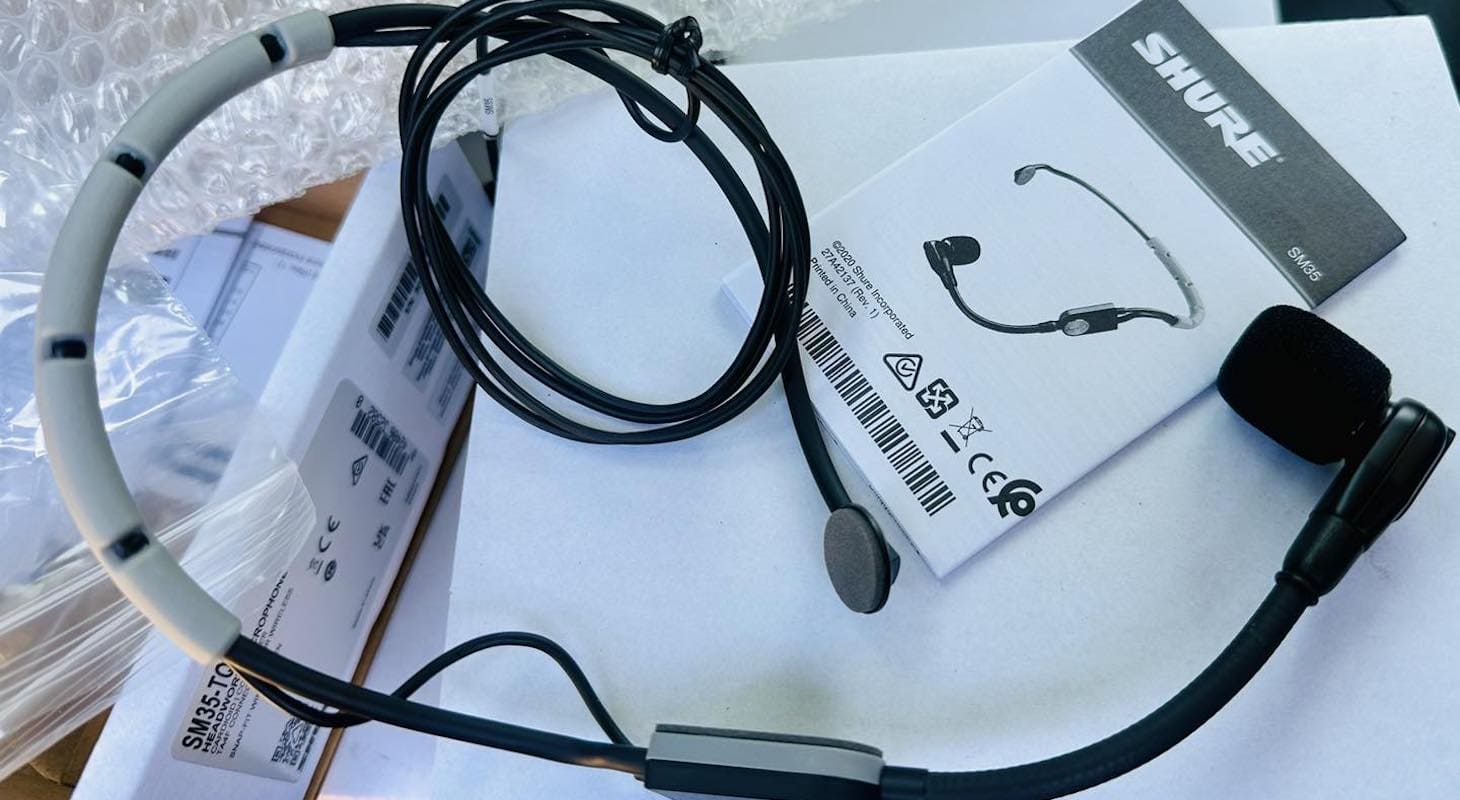
Headset microphones have multiple applications. From actors to presenters, musicians, public speakers, pastors, sports instructors, and buskers, applications are as varied as the wide array of options available in the market.
I had fun with them while playing bass and singing at an eighties tribute band for a while. We were going full throttle with the retro vibe, so I got myself a big, black chunky headset microphone. Every time I stepped on stage, I felt like I was about to go lere-lero like Freddy at Wembley.
Although I don’t like the way they look, they’re oh so comfortable.
So, before you go online searching for yours and find out there are way more options than you can handle, let me take you on a tour through the best models available in the market today.
These are tested-and-true perfect options to up your game regardless of your budget and needs. Yes, if you’re serious about your headset mic needs, chances are your next purchase is on this list.
Ready? Let’s do it!
The Best Headset Mics for Live Singing
1. Shure SM35
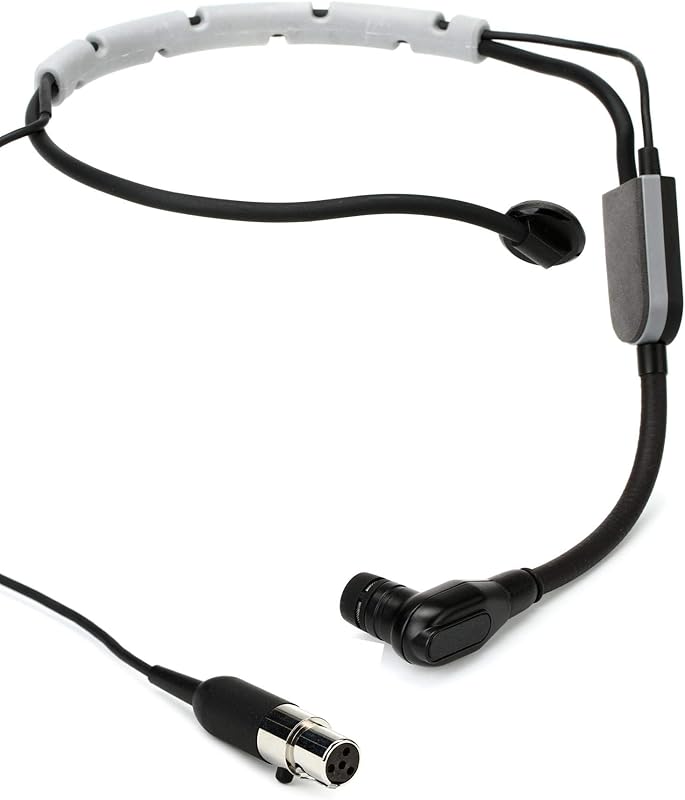
The SM line by Shure is one of the best-selling in music history. I mean, we’ve all come across SM58s and 57s before in our lives, right? Well, that’s exactly the kind of reliability and ease of use you can expect to have with this headset microphone.
To begin with, the headset is very comfortable at first, but then you learn it presses a little too much on your temples with not enough padding. So much so that pushing through an entire performance becomes painful. Other than that, the headset is among the sturdiest I’ve come across, and the gooseneck is perfect to accommodate the microphone quietly and precisely.
Speaking of the microphone, the bump in the higher mids made my vocals much clearer when speaking and when singing. I could pierce through a dense mix and be heard on top of loud drums and a band going for it at full steam. Moreover, unlike many other headset models, this microphone doesn’t sound anemic because of a harsh high-pass filter getting rid of the lows and lower mids.
On the contrary, it offers clarity and body in equal proportions.
In that sense, noise rejection is wonderful; it can take noisy stages and quiet conference rooms with similar results. The thing with noise doesn’t come from the outside with the SM35; you need to learn how to work with a high noise floor. When I say high, I really mean it; it goes up to 35dBa, which is a lot to work with in post-production.
Coupling that with a very low sensitivity, and you’ll have to crank and gate it to get better, noise-free results. Speaking of noise, I could hear a lot of my own breathing, plosives, and throat-cleaning efforts through it.
To wrap this up, let me tell you that I really liked the way this microphone sounds. I think for the price, it is a great XLR option for singers and instrumentalists, foremost, but also for public speakers and sports instructors. It sounds and feels exactly as it should for the price.
If it’s close to your budget, give it a try.
2. Crown CM311 AESH
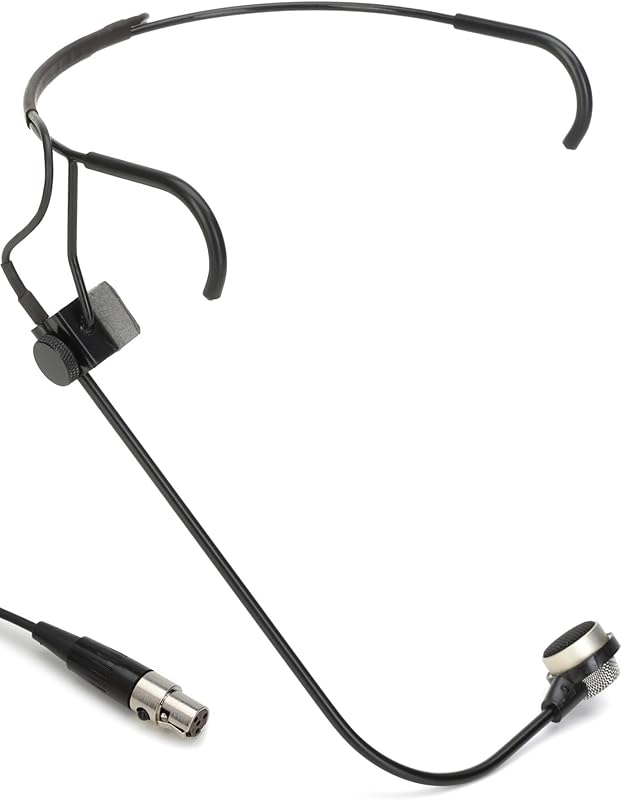
This headset by Crown, the CM311 AESH, could be seen on stage adorning the faces of big stars like Phil Collins and Justin Bieber, among many others. Why do they choose this one when they can choose anything at all?
Well, simply because this thing sounds just terrific!
Yes, let me begin this review by saying I was blown away by how clear, warm, and punchy this thing sounds. There’s nothing out there that can cover the frequency range as perfectly and accurately as this thing can in this price range.
Moreover, another great thing about this microphone is that it’s accurate in position and sturdy enough to stay in position throughout the show. Since it’s a cardioid microphone, it needs to be aimed directly at the sound source, AKA, your mouth. Well, I always got full power because it’s easy to set up and sturdy enough to endure a show in the same position as you left it.
Since the position is right in front of your mouth, it’s kind of hard not to breathe on the thing, especially if you haven’t used headset microphones before. Worry not, because the windshield is quite handy to avoid plosives and breathing.
Perhaps the Achilles’ heel of this headset is the wiring. It’s non-detachable, and it’s not professional-grade, super sturdy wiring that’s sure to last for several performances in a row. On the contrary, it looks like the piece of equipment that will need to see service on the road more than once.
I guess with the price tag attached and the sturdier-than-average carrying case, I would have expected further measurements to keep it in working order throughout a tour, like detachable cables, for example.
Other than that, sound-wise, this headset is truly stellar; it sounds great for spoken words, singing, and even cardio activities (I tried running on the spot while shouting incoherent confidence-boosting phrases into it like a good instructor does with great results).
So, for those who want a professional-sounding, comfortable, easy-to-carry solution, this is a serious candidate. If you’re more worried about reliability than sound, then you’re better off looking somewhere else.
3. DPA 4088 CORE
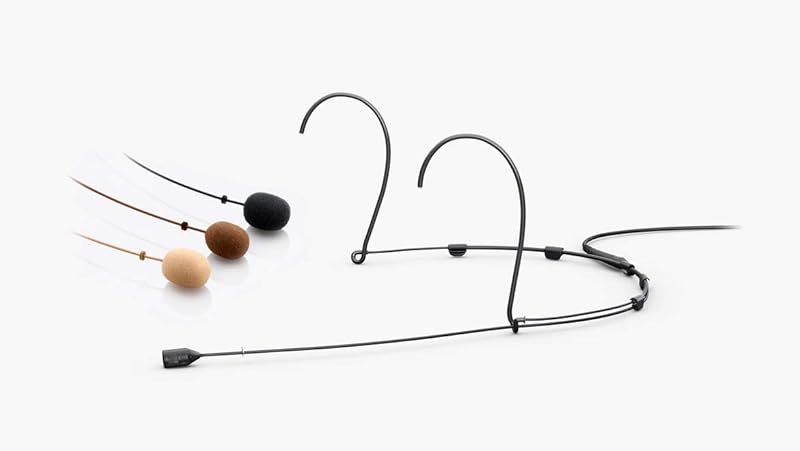
DPA is one of the best-sounding microphone makers in the world today. If you’ve ever been familiar with the scope of grandiloquence that Broadway shows put on every season, you’ll know they don’t settle for anything less than excellence.
Well, DPA is all over the place in those venues because the sound quality is just outstanding.
Yes, let me begin by talking about that because when I first put the 4088 CORE on and adjusted the thing to my face, I was surprised to hear the balance, nuances, and dynamics of my voice perfectly through the floor monitor at the shop. Moreover, with a 144 SPL limit before distortion, I could shout, whisper, and shout again, and the result was always clean and accurate.
Being a condenser microphone, I was expecting to suffer and struggle with low-end rumble, but it wasn’t the case. This thing sounds compressed, warm, powerful, and punchy without overcharging the mix with low-end. In the same vein, the bold midrange delivers enough clarity to help the human voice push through the mix.
Speaking of pushing through, it’s important that I tell you that this thing has a lot of headroom available for singers and speakers. The company reworked the capsule to carve an extra 14dB of clean volume so you can go literally over the top and have more room to maneuver, especially in crowded spaces.
Also, the provided carrying case, accessories, and overall weight once you have it on belong to a truly first-class microphone. I mean, looking at the price tag, it’s exactly what you would expect, but it was a very nice surprise to see the company put the money where it’s needed the most.
The one concern I had with it was the reliability of such a thin structure. It felt as if it was going to break all the time while having it in my hands. On the flipside of the same coin, it’s almost invisible, very light, and easy to use for long periods of time.
If you’re after a professional solution that can deliver sound quality for the biggest stages in the world and can afford it, this is an outstanding option with all the features you’ll need to perform at the highest level.
On the contrary, for a more road-worthy, sturdier microphone that can withstand the hardships of the road at an amateur level, you might be better off with another option on this list.
4. Sennheiser ME 3

Opening a Sennheiser package is always a treat. This ME-3 headset comes in a branded bag that’s very comfortable to take around. It’s not the sturdiest carrying case, but it surely is handy.
Once the bag is opened, you’re presented with a big, bulky, and very sturdy headset that can endure even the sweatiest power cardio class in the open. This is because, besides featuring the microphone’s headset that goes over the ears, it also comes with a rubber band you can accommodate on top of your head, keeping everything in place effortlessly.
In the same vein, the way that the microphone sits on top of the ears and connects to your skin helps it stay motionless throughout a performance. Perhaps, in this sense, the only drawback is that it doesn’t come with a clip to keep the cable in one place, rather than jumping around with you. I know, it’s an inexpensive, minimal plastic thing that would cost a giant like Sennheiser close to nothing to add, but from a user perspective, it enhances the experience.
I tried jumping around with it on while connected to a wireless transmitter clipped to my belt, and it was very annoying to feel the cable hitting me time and time again.
Sound-wise, let me tell you that this thing is clear. Loud, proud, and clear. It’s got that beautiful round body and top-end definition with a slight bump in the upper midrange that gives vocals the warmth and cleanliness you need to cut through.
I just loved it for spoken words, but it does a great job with singing voices, too. They are projected with the natural bottom-end of the singer but sculpted, crystal-clear in the higher mids without sounding anemic.
One thing that might not be suitable for everyone, being this a cardioid and not an omnidirectional microphone, is the length of the goose-neck microphone. It’s not stretchable or retractable; you have to work with what you’re given. If it falls short on your face and you need to have it at the corner of your mouth, you're certainly losing some power and sound quality.
The maximum SPL of 150dB makes this a great microphone for all vocal applications, and the noise rejection to prevent ambient noises is perfect for all scenarios. We tried it with a floor monitor blasting right below me, and the results were just right.
So, if you want a good-sounding, comfortable, and sturdy headset condenser microphone at an affordable price, you should give this one a try. If you want something easier to conceal or with omnidirectional capabilities, you’d be better off with another model.
5. Acacia Audio LIZ Pro
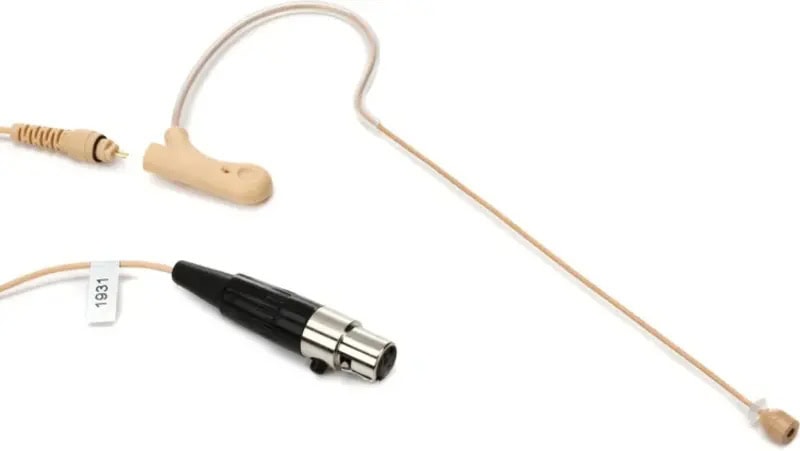
This kind of microphone featuring the good-old Shure TA4F connector isn’t so easy to find with these specs and in this price range. The Acacia Audio LIZ Pro is a great option for presenters, public speakers, pastors, and singers.
The first thing I have to say is that I just love the fact that this microphone comes with a detachable cable. I mean, it’s a feature I wish I could say I found in microphones with a price tag much bulkier than this one.
This is awesome for two reasons: First, it allows you to take just a spare cable in your bag and be able to overcome disaster and put on the show anyway. Second, you won’t be left with a perfectly usable microphone with a dead cable, as happens with other brands.
I could even add a third; it’s easier for transportation, too.
Another big plus of this headset is that it comes in three colors to make it invisible to the audience. These are tan, cocoa, and black. It might not sound like something important if you’re a public speaker, but for singers who work in theater or other artforms that require staying in character and hiding technical aspects of the performance, it’s very useful.
The windshield and the included clip to keep the cable firm against your clothing are welcome additions, too. The carrying case is kind of an odd, big, and black plastic box that works perfectly, but it’s neither good-looking nor ergonomic.
Now, moving on to how it fits and performs, let me tell you that it’s very light and comfortable. Plus, since it’s an omnidirectional condenser microphone, you get fidelity and great sound even if the microphone is parked midway between your cheek and your mouth. Furthermore, you can experiment with positioning a lot since its omni pattern will capture sound evenly from any angle.
I tried moving it around a bit, and the result was always perfectly usable.
The one thing you need to bear in mind, as with many affordable microphones, is the noise floor. This one sits comfortably at 36dBa, which is quite a bit coming from any microphone. You’ll have a lot to do in the mix to remove background disturbances threatening to pollute your song.
Other than that, this can be an outstanding, inexpensive replacement for most Shure wireless systems. Furthermore, with an adapter, you can use it to go to a different source as well.
If you’re looking for professional-sounding, comfortable, and ready-to-go audio for the big leagues, you might as well aim higher in price. For an affordable solution to get the job done every time, this is a perfect option.
6. AKG C520
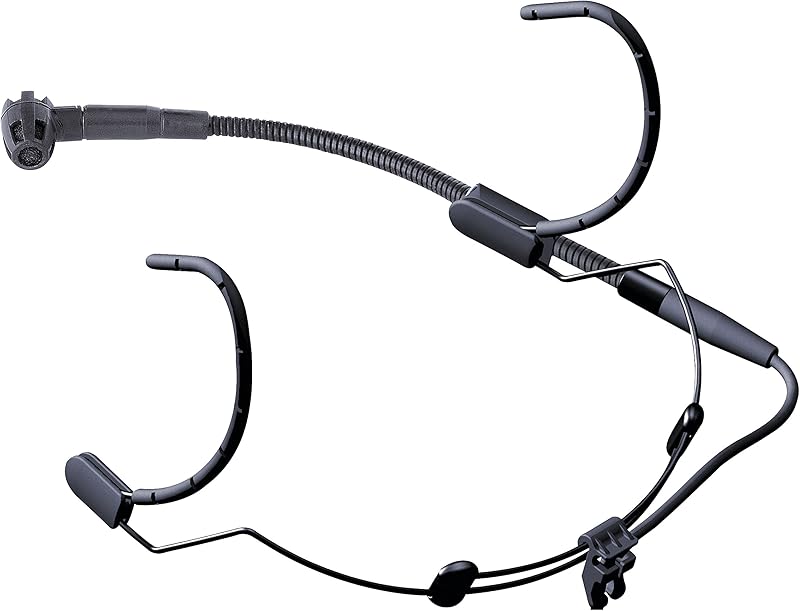
The AKG C520 was designed and manufactured with drummers in mind. Yes, the construction and features of the headset align perfectly with the needs of those who bash the skins and beat the cymbals, besides singing.
The first indicators are the size and the looks. This is not a small headset microphone; you can just hide or pretend it’s a part of your costume. On the contrary, it’s big, bulky, and, once you attach the puffy, round, and huge windshield, you have your shot at taking a trip back to the wild beginning of the nineties.
I mean, this thing sure looks retro, being so big. Yet, for drummers, that’s a great asset because it means it will stay in place and withstand the hardships of a life hitting things for a living while singing.
For those who use the hi-hat stand on the other side of the drum and play with a heavy left hand, the good news is that, unlike most headset condensers, you can easily and effortlessly move the microphone gooseneck attachment from the right to the left.
When it comes to singing and playing, the one thing most drummers bear in mind is sound rejection. I mean, if you’re hitting that snare with body and soul, chances are it’ll come through the microphone on your head. Well, this is not only a cardioid microphone, which already ensures fine sound rejection capabilities, but it’s also engineered to aim at the corner of your mouth so it will pick up the sound of your vocals, rejecting everything else.
Speaking of which, the gooseneck should be adjustable in size because not all of us have the same distance from the ear to the mouth. For example, in the shop, it was fine for me, but my friend felt it was short, and it was way too long for the salesclerk.
Now, to test it fully, I just had to go full-on Phil Collins mode. I sat on the (virtual) drums to play and sing. I played “Sussudio,” and the result was great because the thing stayed perfectly in its place, and it wasn’t heavy or uncomfortable to sing to.

Sound-wise, this thing performs paying homage to its brand. It’s a bit too hissy for my taste when singing, meaning the bump in the higher mids is a bit too much, but clarity and punch are great. Also, since the frequency range starts at 60 Hz and goes all the way to 20 kHz, you can forget about the kick drum being a problem.
I think this is ideal for drummers who sing, but anyone who doesn’t mind having a bulky, big headset microphone on their face will be rewarded with great sound and reliability.
If you want something more discreet, you should keep looking.
The Bottom End
Some headset microphones were designed to be discrete, concealed, out of sight. Others are big, proud, bulky, and designed to be ready for the hardships of life on the road. Regardless of your needs, the list above has some stellar-sounding options that will make it effortless to sound amazing and play comfortably.
So, choose the one you liked the best and head toward the stage confident you’ll have the performance of a lifetime with one of these close to your mouth.
We’re ready to hear you sing loud and clear; are you ready to shock the world?
Happy (headset microphone) singing!
