

The Neumann U67 is one of the most revered tube condenser microphones in the history of music. If we were to add credits to this statement and name international stars whose voices shone through its capsule, this would be the never-ending story.
The thing is, getting that uncanny sound costs nothing short of a fortune these days. And that’s for a new one! If you were to get an original, you’d pay way into five-digit territory for it.
Luckily for us, this is an amazing moment to be alive and make music. There are many companies trying to capture the 67 sound on a budget. Let me tell you, things are getting pretty close for way less.
I did the heavy lifting for all of us and tried a bunch of them at different price points, so here’s my narrow list of great 67-sounding microphones.
Are you ready?
Let’s do it!
Best Budget U67 Alternatives
1. MXL V67G
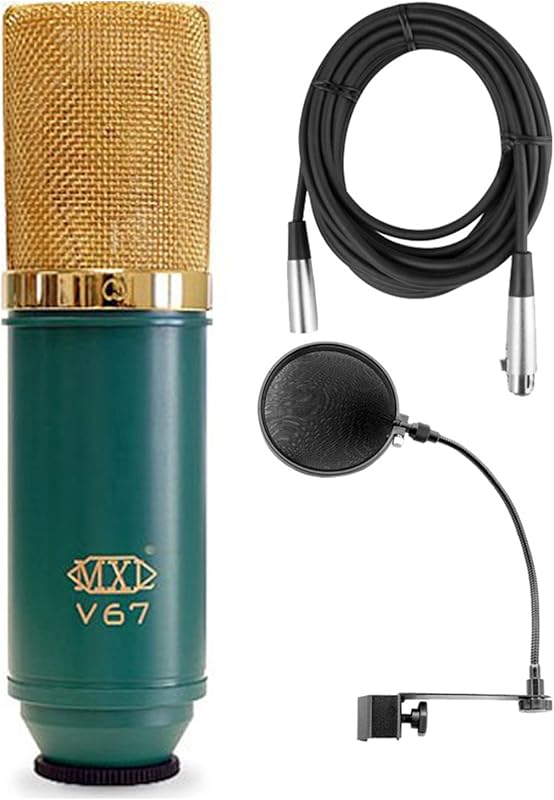
Taking the MXL V67G out of the box is quite something. The moment you see the gold-meets-green exterior, you know this microphone is camera-ready. Well, let me tell you it can do a little more than that at a price that won’t hurt your wallet.
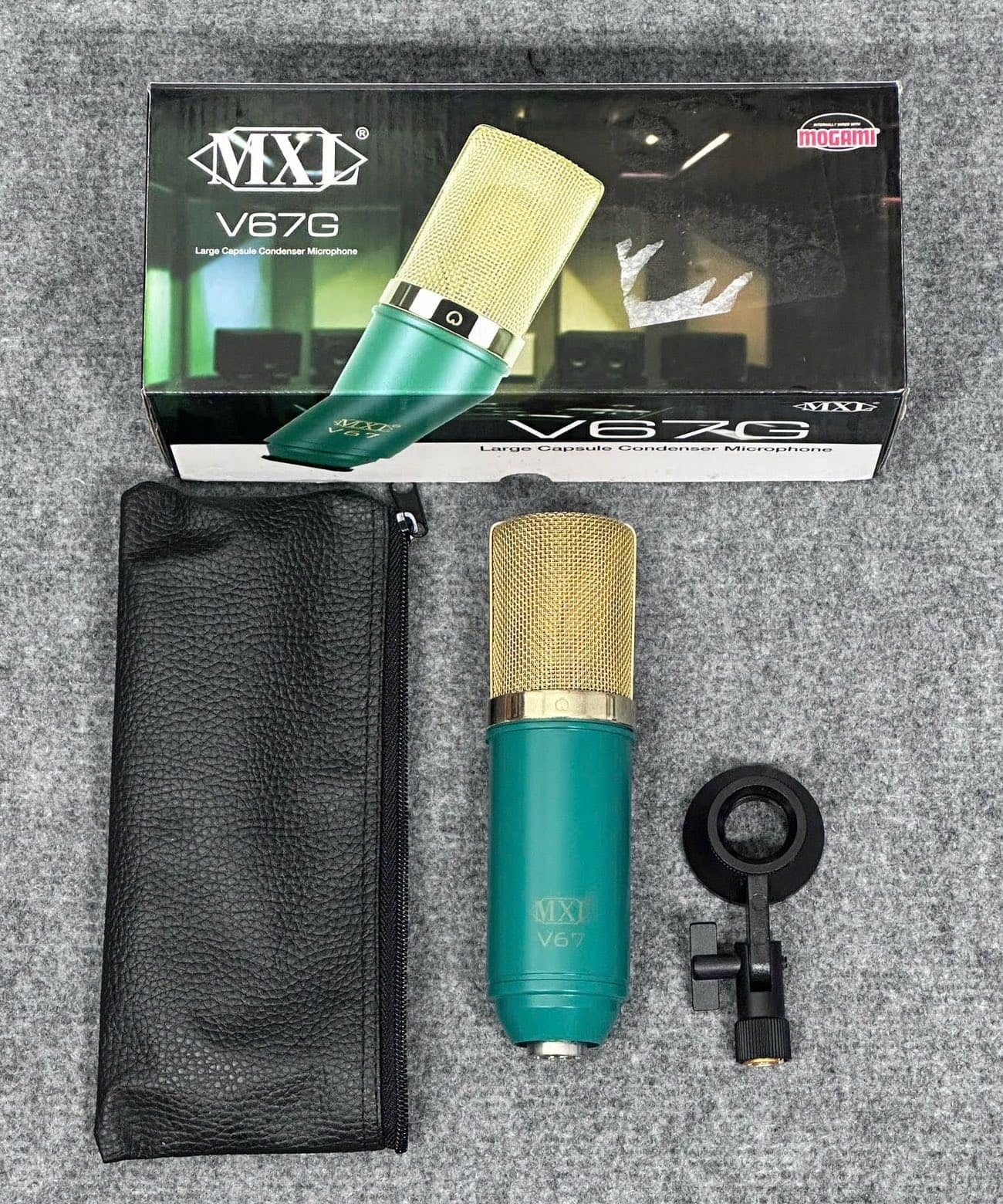
MXL V67G
Two not-so-good things opening the box, though, are the leather pouch and the lack of a shock mount. I guess it’s expected at this price range, but it would have been great.
The first thing I noticed upon plugging this microphone in and looking for some sounds was that it’s quiet for the price. It turns out that the company is owned by Marshall Electronics, the same company that makes Mogami cables. So, it’s entirely wired with ultra-silent, high-quality Mogami cables. The result was a surprisingly low noise floor for the price.
But that’s not all, because it also has that oomph coming from the lower frequencies that just warms up the overall sound while keeping it clear and powerful. The company used JFET transistors instead of the almighty valve, but the EQ is shaped so that you won’t miss it (that much).
I tried some Beatles classics like “Hey Jude” and some Stones with “Sympathy for the Devil,” and the result was realistic, warm, and defined. It’s not very hot, though. You’ll have to give it plenty of gain to get some sweet tones out of it. I recommend going into a preamp before hitting the interface.
For voiceover work, the results are impressive for the range. This microphone remains articulate, gives you that big-diaphragm condenser air and body, and makes your voice just better.
There are, however, some details that make it a part of its category. The lack of polar pattern options is a great example. Moreover, moving to the sound quality of the V67G, the high-end isn’t as detailed and magically musical as in other microphones on this list, and the low-end isn’t as tight but broader and warmer. This is, of course, for a seasoned ear.
To sum it up, in my opinion, this is a great entry-level microphone that sounds good on vocals but also on acoustic instruments. Also, if you want an extra retro flavor for your studio, this is a good, affordable option to always have ready to go.

2. Warm Audio WA-67
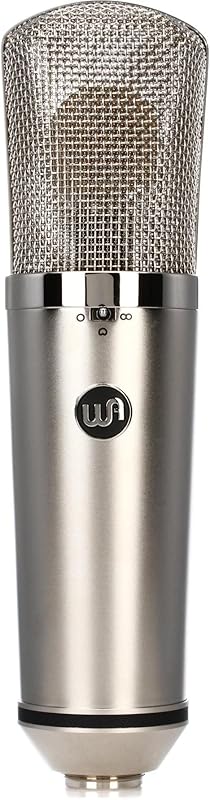
Taking a tube microphone out of a wooden box is already something. Adding to that the separate transformer and the new all-brass casing (more on that later), you’re inside the DeLorean with crazy Doc Emmett Brown.
Well, that’s an experience until you hear it plugged in. This thing has vintage written all over it. I know, the Warm Audio WA-67 has a bump in the low-mids that might not be everyone’s cup of tea. That said, you don’t seek a 67 clone to sound like everybody else, right?
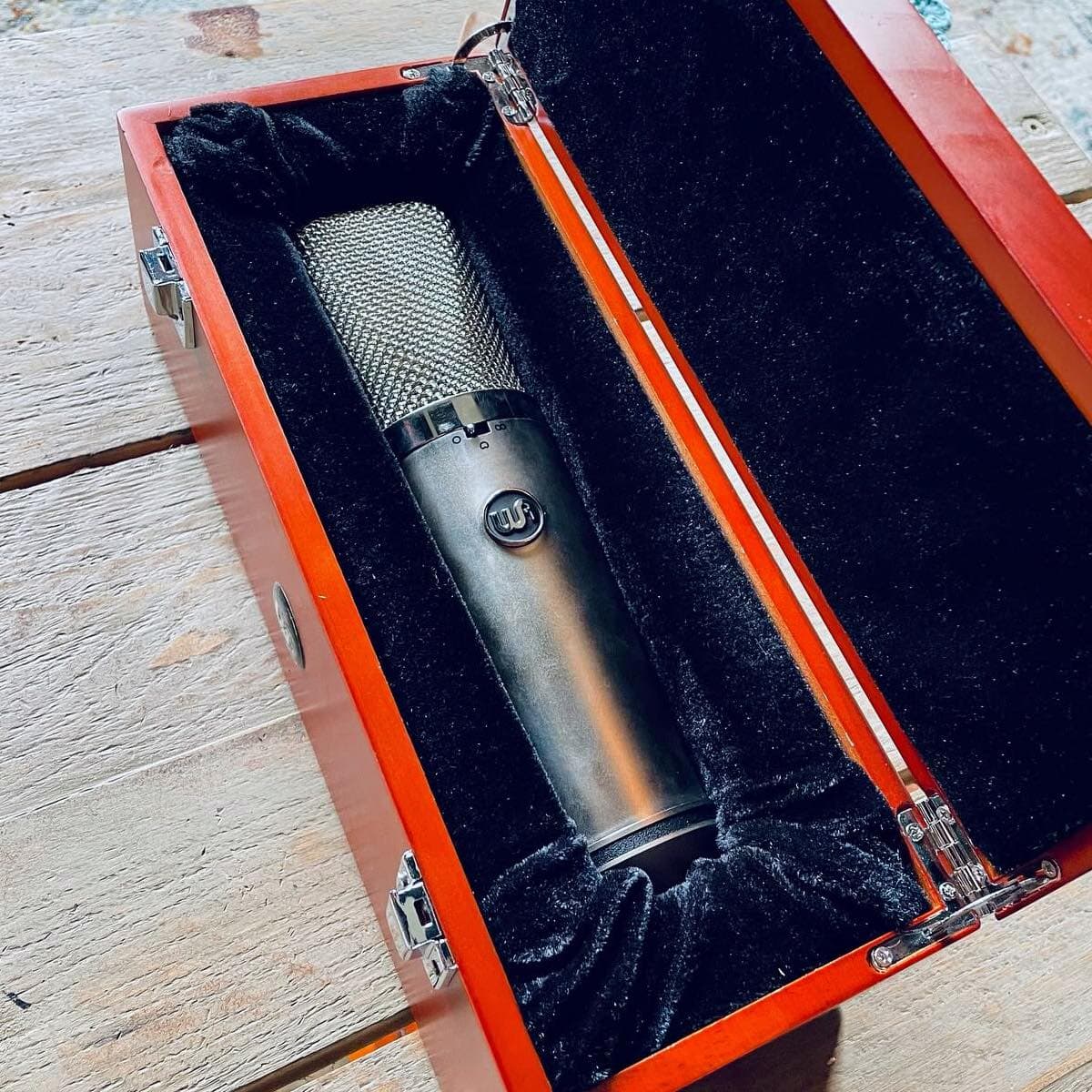
Warm Audio WA-67
The first thing I did was record some vocals with a whispering voice. The low and high-pass filters were disengaged, and the pattern was cardioid. I have to tell you, I was almost fooled into thinking I was really talking to an original u67. That smoothness that turns into fatness and body for the lower part of your midrange is just exquisite.
Oh no, I’m not about to tell you it sounds like a $7000 microphone. The upper midrange isn’t as clear, magical, and jaw-droppingly good. Nevertheless, it does a great job at giving you that 67 sound at an affordable price.
We started with the right foot, but things just got better with this Warm Audio microphone. In my opinion, it’s amazing to cut vocals, especially singers with a powerful voice. Not the typical rock and roll punchiness and clarity of, say, a u87, but a much smoother and bigger tone.
I loved singing “Something in the Way” by Nirvana through it. The bottom-end is just articulate and huge, but instead of adding mud to the mix, it just fattens the tone.
I tried it on an acoustic guitar, and it’s perfect for capturing the natural sound of the instrument from a couple of feet away. Moreover, the omnidirectional pattern is immense and gloriously captures a room. You can even play with the filters to equalize the sound before it hits the DAW.
The figure-of-eight pattern was also great for two people speaking and for a vocal and a piano. You get noise deflection from the sides, which is always useful.
Now, the brand-new, all-brass casing is something that I didn’t like so much. I mean, don’t get me wrong, it’s a beautiful microphone. Stellar-looking even. That said, it’s a u67 copy that doesn’t look like the original. I would have loved to see a little more effort put into that.
So, if you’re after a professional-grade microphone that delivers that sound very close, this Warm Audio microphone is a goldmine. For a beginner-oriented clone, you’re better off with another model on this list.
3. United Studio Technologies UT Tube 67
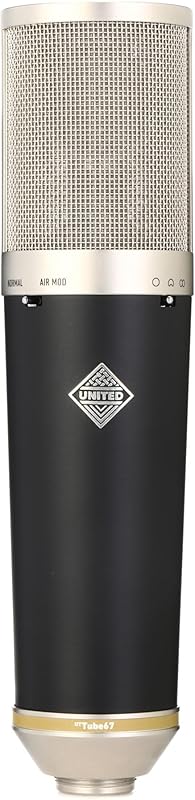
The Tube 67 is just a great example of how you can take a classic just a little bit further and open the sound palette widely for a studio owner. I mean, they could have settled by making a great copy, but they decided to add something that’s clever and helpful to the mix.
Let me rewind. The UT Tube 67 comes with its power supply and a real tube in its interior. It’s a big, bold, black-and-silver microphone with some mojo in the aesthetics.
Once I had it plugged in, I went to find the u67 sound right away, so I tried some whispering from a very close distance right into the microphone through a pop filter. The polar pattern was set to cardioid, and the filters were off. I just have to say Wow. The body, the smoothness, the personality. It was all there instantaneously.
Again, the midrange isn’t as musical and smooth as the real thing, but it’s very, very close. I took several steps back and sang to it without changing the settings, with great results. This is one of those microphones you can just put in front of anything, and it’ll sound great right away.
I did exactly that: I set it up for an acoustic guitar in cardioid at a few feet away. The sound was organic; it had snap but also body. The same happened when I activated the omni mode. It decreased the overall volume but gave me a great sense of the room. I can imagine just having two of these to record an entire performance.
Also, since the 10dB pad takes it to over 130 SPL, I tried it in front of a drumkit, and the result was punchy and pristine with generous lows.
So far, so good, right? Your good, old, amazing 67 sound. Well, this microphone can give you one more option besides polar patterns: The Air Mode. Is that something out of an old spy movie? Well, no, it’s the way to give your 67 some 87 flavor.
Yes, it’s a higher-midrange boost that clarifies the top end and makes this a more modern-sounding microphone. It doesn’t ditch the huge low-end, but it does add the punchiness and clarity of modern vocals. This is especially handy when singing rock.
I tried some Nirvana powerful tunes like “Breed”, and it was not only liberating and fun but also a great experience with this microphone. It sounds great in front of just about anything, and you’ll need very little tweaking to accommodate any instrument.
Let me finish this by saying shame on you, United Studio Technologies. A tube microphone this good in a leather pouch? Please.
4. Melon Audio MA-67
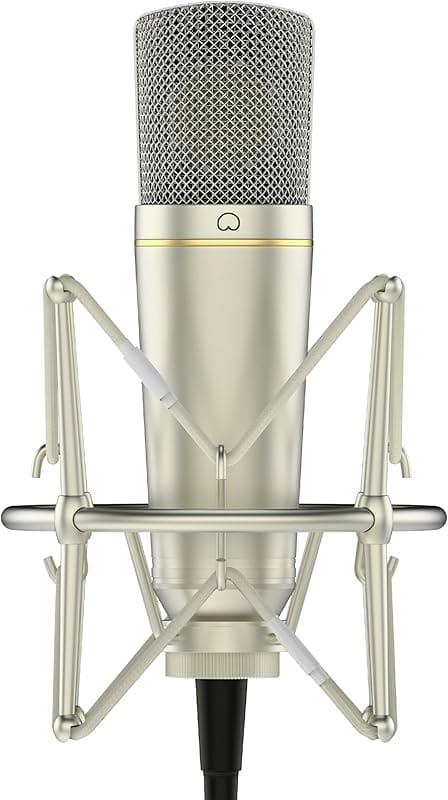
This Melon Audio MA-67 isn’t just a microphone; it can be considered a bundle. Yes, this beginner-oriented microphone is not only a vintage-sounding microphone at a steal of the price, but it also comes with everything you need to get started right from the box. That includes a cable, pop filter, and shock mount.
I have to tell you, I was pleasantly surprised by this microphone’s low-end and clarity. Yes, it’s not as clear as some other models costing 10x as much; nevertheless, my whispered voice was round and full, but with enough presence for every word to be defined and precise.
In the same vein, the low-end isn’t as smooth and silky. That said, it’s equalized to sound warmer than most of its competitors.
It’s a good microphone for voice-overs and spoken word. Somehow, the upper midrange and high-end aren’t as musical and pleasant, but add the right amount of clarity.
I was very comfortable speaking to it, but the moment I switched over to a singing voice, I heard this microphone’s price range immediately. There’s something about the higher frequencies that isn’t as smooth as others on this list and might sound brittle on singers with a high register. I know, even while having that 67 warmth underneath.
I mean, for its price, it’s something to be expected. What’s not expected is for it to be a quiet microphone. I tried it at 3 feet from an acoustic guitar and aimed it at the 12th fret. The results were organic with a warm low-end that added a bit of vintage flavor to the sound.
The same thing happened when capturing an upright piano, a clarinet, and a saxophone. Although brilliance might get brittle, the midrange is just punchy and powerful, so it cuts the mix easily.
I can sum it up by saying that this cardioid-only Melon Audio version of the 67 is great for those in search of a retro flavor for spoken word and podcasting. In my opinion, high-end might be an issue with some singers, so I don’t know if it can perform at a professional level.
Nonetheless, it’s got that big-diaphragm condenser sound that’s just grandiloquent, and that sits perfectly in the mix.
If you’re a beginner or if this is for your hobbyist home studio, you can deal with the high-end later on in the mix. You’ll enjoy that little bump in the low-end greatly, believe me.
So, if that sounds like you, give this mic a try; it’s a great first step.
A Little Advice on Tubes by a Confessed Tube-Lover
I’ve been playing through tube amplifiers for over 20 years, and there’s one thing you hear all the time that’s absolutely true: they sound better when they’re warm.
So, if you choose a microphone with a tube inside, let it warm up for a while before recording.
Valves are organic, almost alive. They will deliver much better results when you give them some time to get started. Plug the microphone in at least a couple of hours before the session. You’ll be amazed to hear the difference.
The Bottom End
The 67 sound is as famous as recorded music. You’ve heard it a million times; its huge, beautifully round, and smooth low-end is era-defining. Moreover, it’s still used in the best studios on the planet.
These are affordable alternatives that can get you closer to that tone without breaking the bank. So, pick the one that suits your needs best, and make some great recordings.
We’re all excited to hear what you can do with one of these in front of you.
Happy (rich, smooth, and big) recording!
