
Overdrive isn’t just for guitar players! Some of my favorite bass tones, especially from the halcyon days of 70s hard rock, are heavily overdriven. Old-school bass amps, like guitar amps, demanded a serious volume push in order to achieve that glorious, growling drive.
Fortunately, these days, you can simply use an overdrive pedal to achieve a similar tone without the window-rattling volume. In fact, there are specialized bass overdrives on the market today that achieve exactly the kind of amp-like compression and saturation we all crave.
Top 3 - Bass Overdrive Pedals
In this article, I’ll run through some of my favorite bass drives on the market today.
My Favorite Bass Drives
1. Origin Effects DCX Bass Tone Shaper & Drive
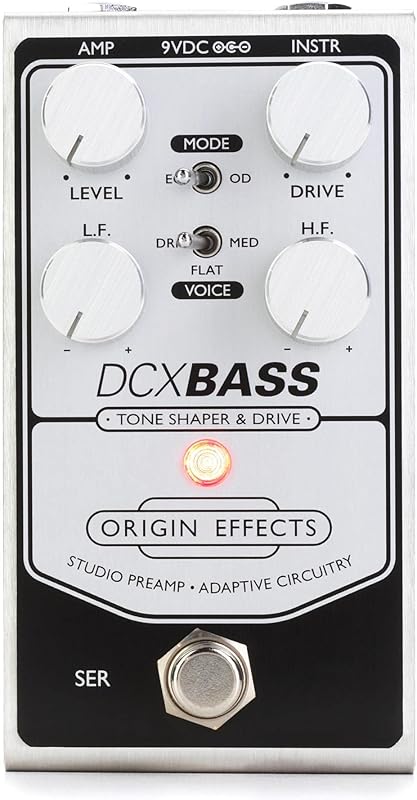
The Origin Effects DCX is a very differently voiced drive than I was expecting. I tend to associate the term “overdrive” with preamp or poweramp style drives: Tube Screamers, distortion pedals, and the like. This, instead, is more reminiscent of studio-quality drive and saturation, which is an intriguing prospect right out of the box.
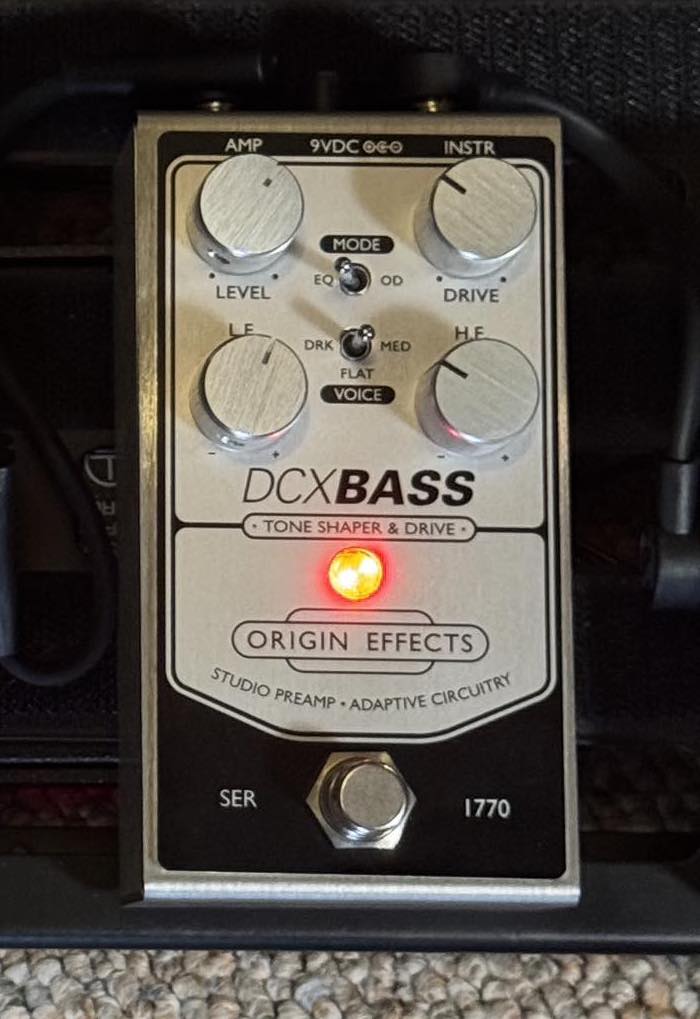
Origin Effects DCX Bass
It works best when trying to conjure an old-school vintage bass thump and thud. The basic sound on offer here is pleasantly warm without being woofy, just clean enough to be articulate.
Dialing in a drive tone from this point is more like putting icing on the cake! I was able to fine-tune a nicely driven sound that reminded me a lot of Gene Simmons’ tone on Rock and Roll Over. Plenty of growl and grimace to the sound, which can easily be dialed back to a more polite Motown-style 70s sound.
Really, this pedal excels at making a live bass sound like a recorded bass. It’s a slightly weird way to look at bass sounds, but in reality it’s very useful. It’s a hit with mixing engineers, and a bigger hit with audiences who like to feel the thud of a walking bass line in their chests.
At this price point, and the level of specificity and time it takes to dial in a great tone, I’d really only recommend this to regularly gigging players. Beginners won’t find much joy in this pedal.
That said, it’s a cool pedal, and a worthwhile purchase for any serious gigging bass player.
2. Way Huge Smalls Pork and Pickle
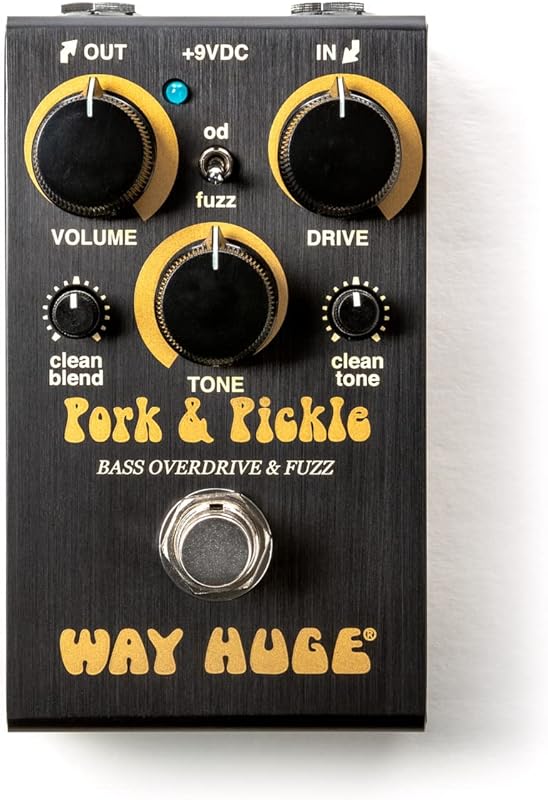
This cheeky take on Way Huge’s Pickle Fuzz is more than just an overdrive. The Smalls Pork and Pickle both fuzzes and drives, offering full-bore saturation as well as a cleaner, more subtly driven tone.
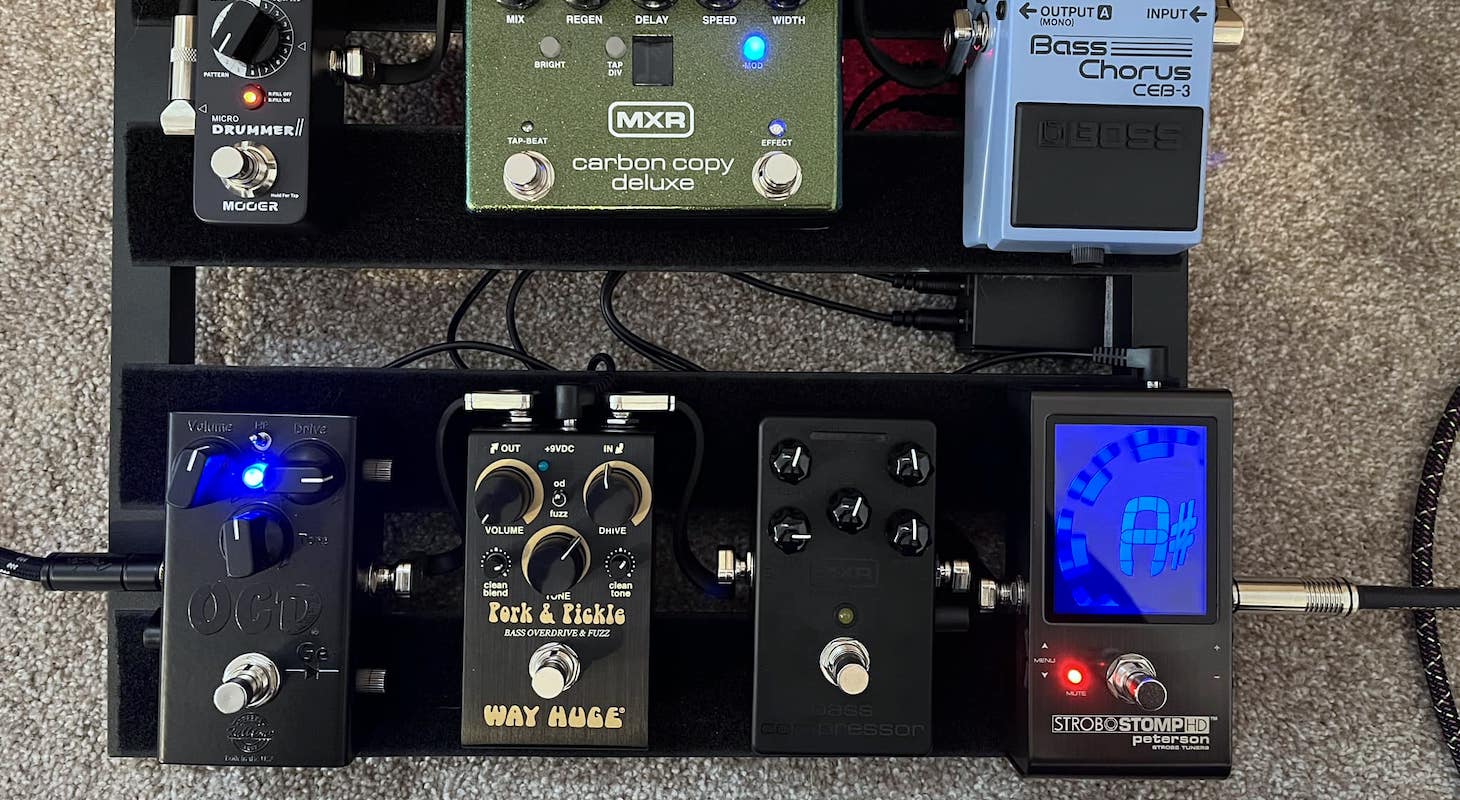
Way Huge Pork & Pickle on Pedalboard
As I’ve come to expect from Way Huge, the controls are fairly complex, with plenty of ways to tweak the sound coming out of my amp. Two huge knobs, one smaller one, and two tiny ones, with a switch for good measure. I don’t know about you, but my toes aren’t quite dextrous enough to precision-switch the pedal, so it takes dialing in pre-show, but that’s nothing a bit of tape and a marker can’t help with!
One thing that often turns me away from bass fuzz sounds is the loss of low end in the mix. With this pedal, I found that the bass, even at full-bore fuzz, maintained its strong bottom end. The “clean side,” the overdrive, can be subtle enough to add a little preamp compression and cleanliness. It’s a welcome addition, the option to bypass one side or the other, although the pedal could do with another footswitch to enable on-the-fly switching from drive to fuzz or both.
The sound does take a bit of effort to dial in, especially when taking into account the twin circuits used to make noise. However, I’d argue that time spent chasing tone is never wasted, and this pedal does reward your tenacity with gorgeous, dominating sounds worthy of Black Sabbath.
3. Electro-Harmonix Bass Soul Food
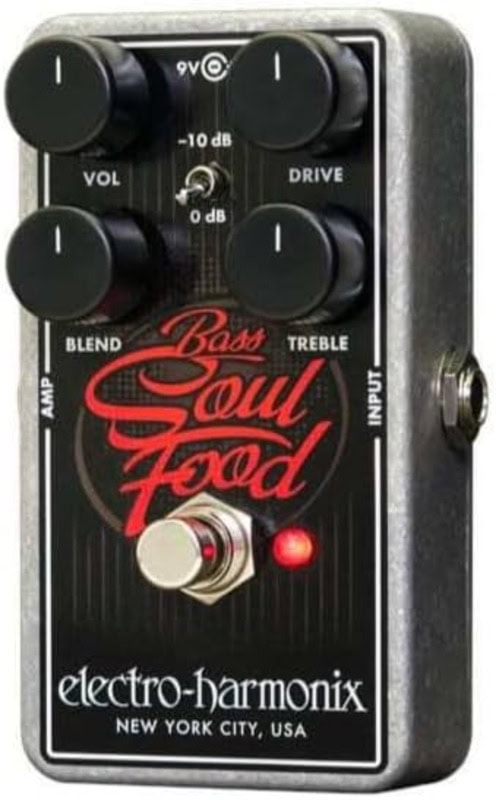
The original EHX Soul Food, for guitar, is effectively a “Klone,” an approximation of the transparent overdrive made famous by the Klon Centaur.
The EHX Bass Soul Food, then, embraces this idea - overdrive without coloration - without sacrificing the thump and thud that I always want from my bass tone, whether it’s clean or dirty.
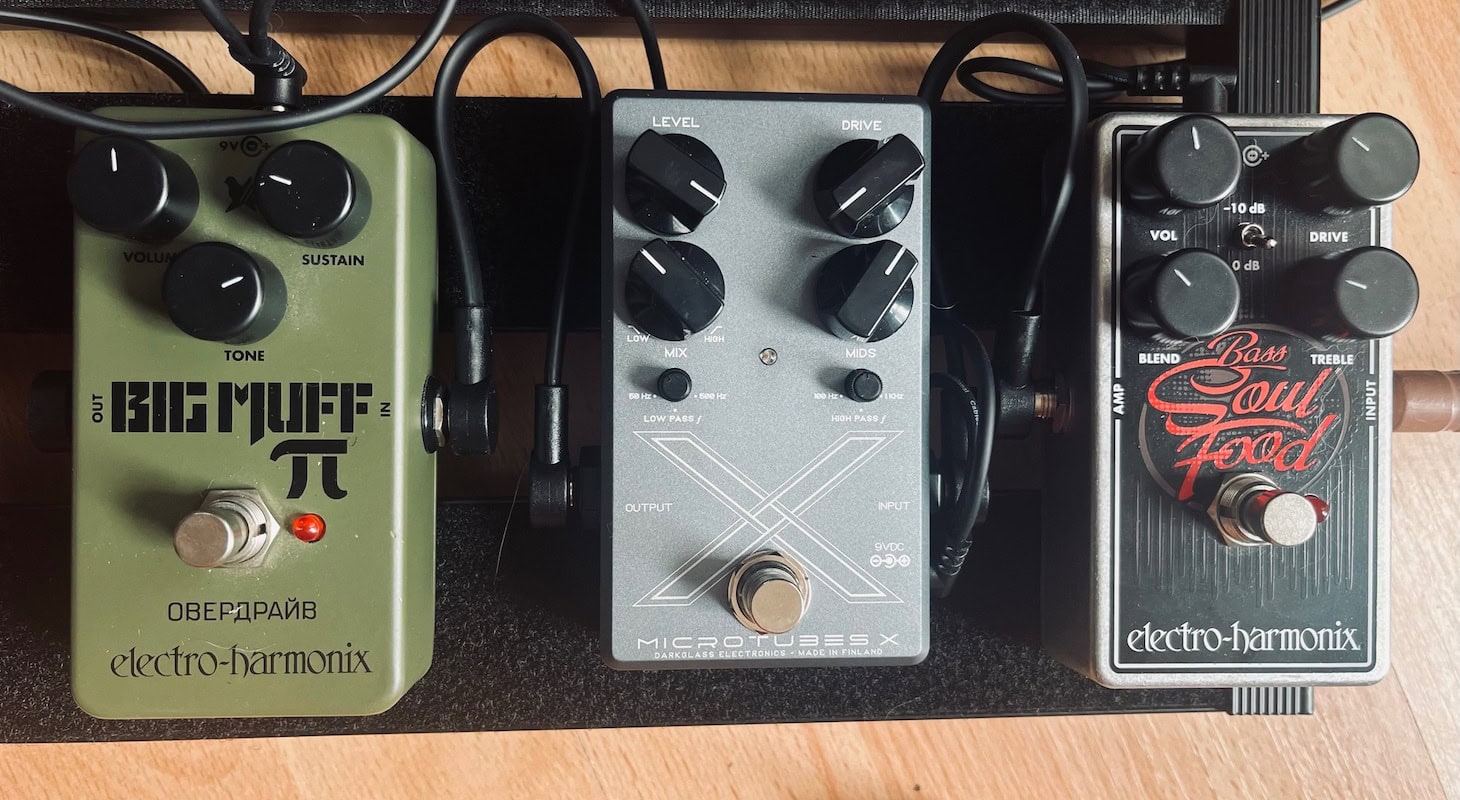
EHX Bass Soul Food (right)
I’d characterize this sound as firmly vintage-voiced: it’s more of a 1960s or 1970s vibe than a modern ultra-saturated sound. I couldn’t quite get into “Ace of Spades” territory: this isn’t a full-power distortion.
The Soul Food works best as a touch of drive, adding a little depth and dimension to the clean bass tone.
I found the most satisfying results using this as a “set and forget” pedal, which is one of my favorite ways to run a drive. The overdrive sound isn’t exactly thrilling when cranked, but at lower drive levels it’s a great “tone conditioner.”
The way I found the most joy with this pedal was by setting Blend, Treble, and Volume to noon, and slowly turning up the Drive until I hit the sweet spot, just before it gets fizzy or thin. I found that I needed to turn up the treble slightly at this point, to get the sparkle and articulation I like in a driven tone. In the end, I found the best settings to be a little over noon on Drive and about three o’clock for Treble.
It’s a very usable pedal for vintage-voiced drive tones, more like warm tube amp saturation than fuzz or distortion. I’d recommend it to anyone doing classic rock or country styles where a little vintage warmth is the key to a great sound.
4. JOYO Bass Guitar Overdrive
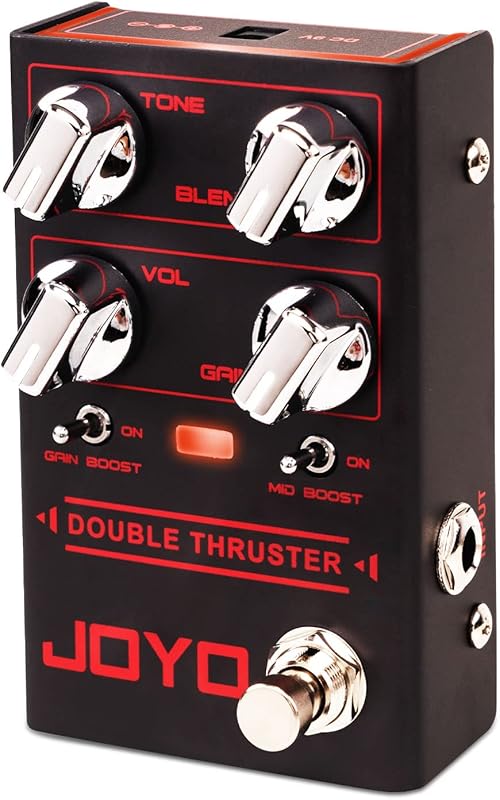
JOYO’s range of ultra-affordable pedals offer excellent value for money, and the Bass Guitar Overdrive is no exception.
There’s an impressive array of knobs on board here, with plenty of tonal options to choose from. It wasn’t excellent at warmer vintage bass drive sounds, but with plenty of gain on tap, I found myself leaning more into doomier, fuzzier tones anyway.
The key to making any of these sounds work, however, is the option to blend in the clean signal. I found that this allowed me to maintain come tonal clarity and low end without losing the sound of my bass in the gain and distortion.
That’s actually an old recording studio trick: some engineers would double-track bass or guitar, with one clean sound and one distorted sound, with this exact scenario in mind!
The EQ is nicely flexible and sensitive to minor tweaks, and the LED lights are bright enough to use during daytime outdoor performances.
It seems that Joyo’s one concession to their price point is a relatively noisy switch! Turning the drive on or off does emanate a noticeable click.
That’s not going to bother everyone, though, and at this price point, it’s hard to argue with picking the JOYO up just to try it out!
5. Earthquaker Devices Blumes
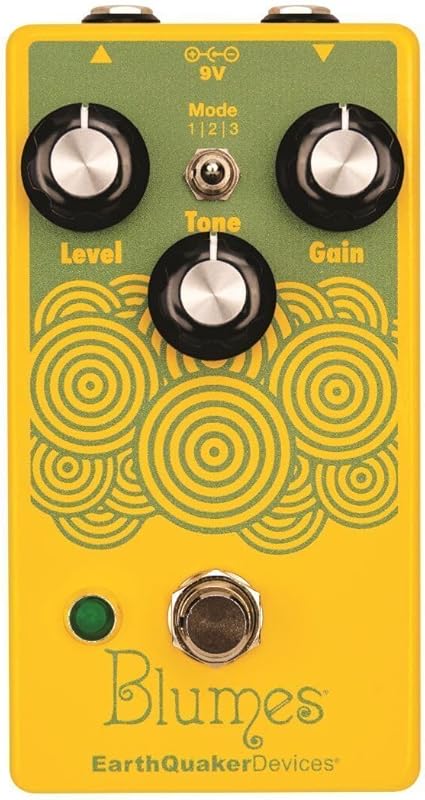
The Blumes, officially dubbed the tongue-twisting EarthQuaker Devices Blumes Low Signal Shredder Overdrive, is an endearingly versatile overdrive.
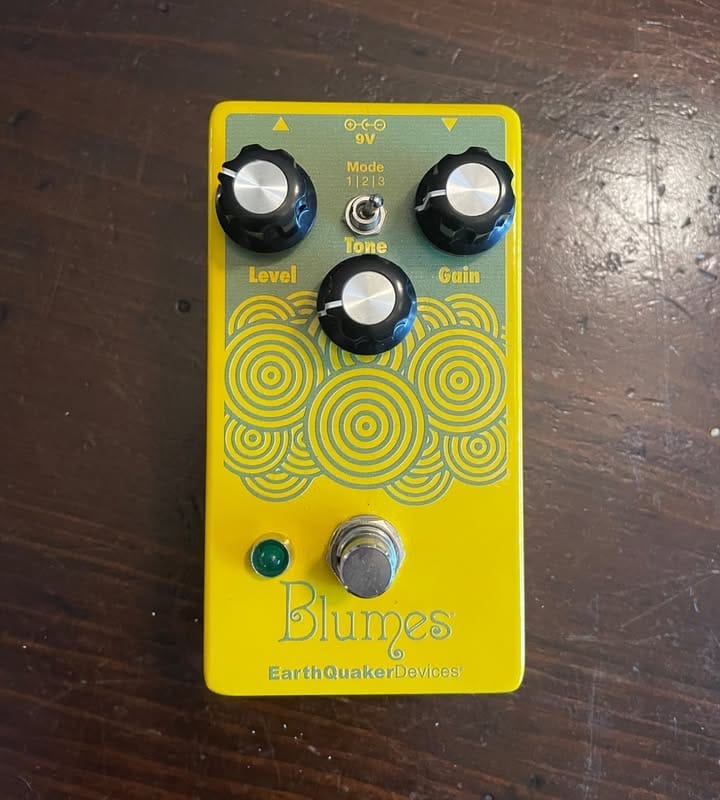
Earthquaker Devices Blumes
When I say versatile, I really mean it! The pedal is malleable enough, thanks to its three-way switch and three sensitive knobs, to sound great through solid state or tube amps, and active or passive pickups. It’s just a matter of dialing in the right tone, and adjusting accordingly if switching between basses or borrowing an amp.
The basic sound here is highly reminiscent of the classic Tube Screamer sound. There’s the expected coloration - beyond the green chassis - of the tone, but the circuit preserves the bass’ natural low end. Instead of thinning out the sound, necessitating an extra EQ pedal, the way a classic Plumes or Tube Screamer might, it maintains the warmth and presence of the original sound.
I liked the drive sound the best, but this pedal is more than capable of tearing into gritty, driving distortion. It offers a pretty significant volume boost, too, pushing my amp a little harder than I’d expect, in the best possible way.
I’m not a huge fan of the top-mounted jacks: most pedals I’ve played follow the Boss/MXR design with side-mounted jacks. That makes combining it on a board with, say, a Boss tuner, easier said than done. A few cable ties and the ability to run cables under the board solves this problem, but I’d prefer standard side-mounted jacks.
Apart from that minor complaint, this is a great-sounding pedal for pretty much every conceivable level of drive any bass player might want. A great tonal addition for any bassist, from a beginner to a pro.
6. Nobels ODR-1 Natural Overdrive
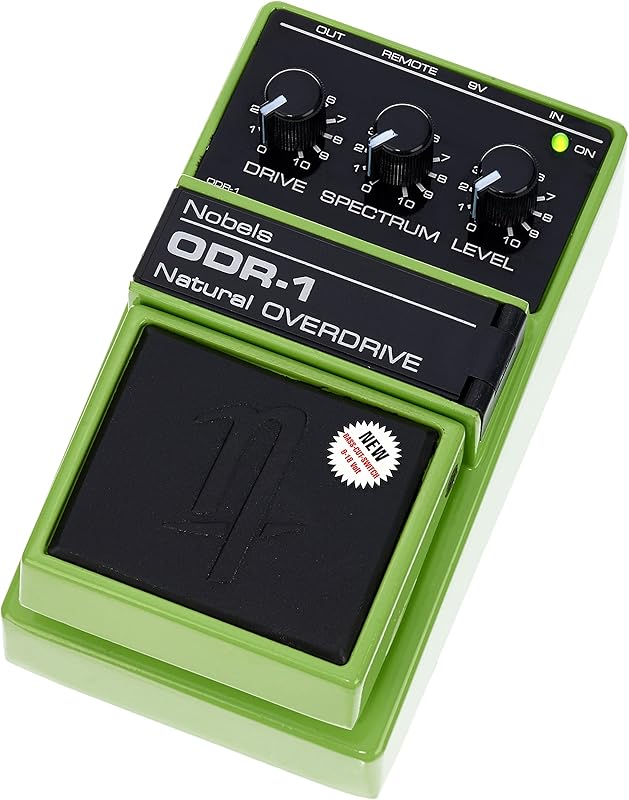
No, it’s not a Nobel Prize: it’s the Nobel Drive! The ODR-1 might be verdant green, but it’s certainly not a Tube Screamer clone. They might have thought to change the color, but that’s beside the point.
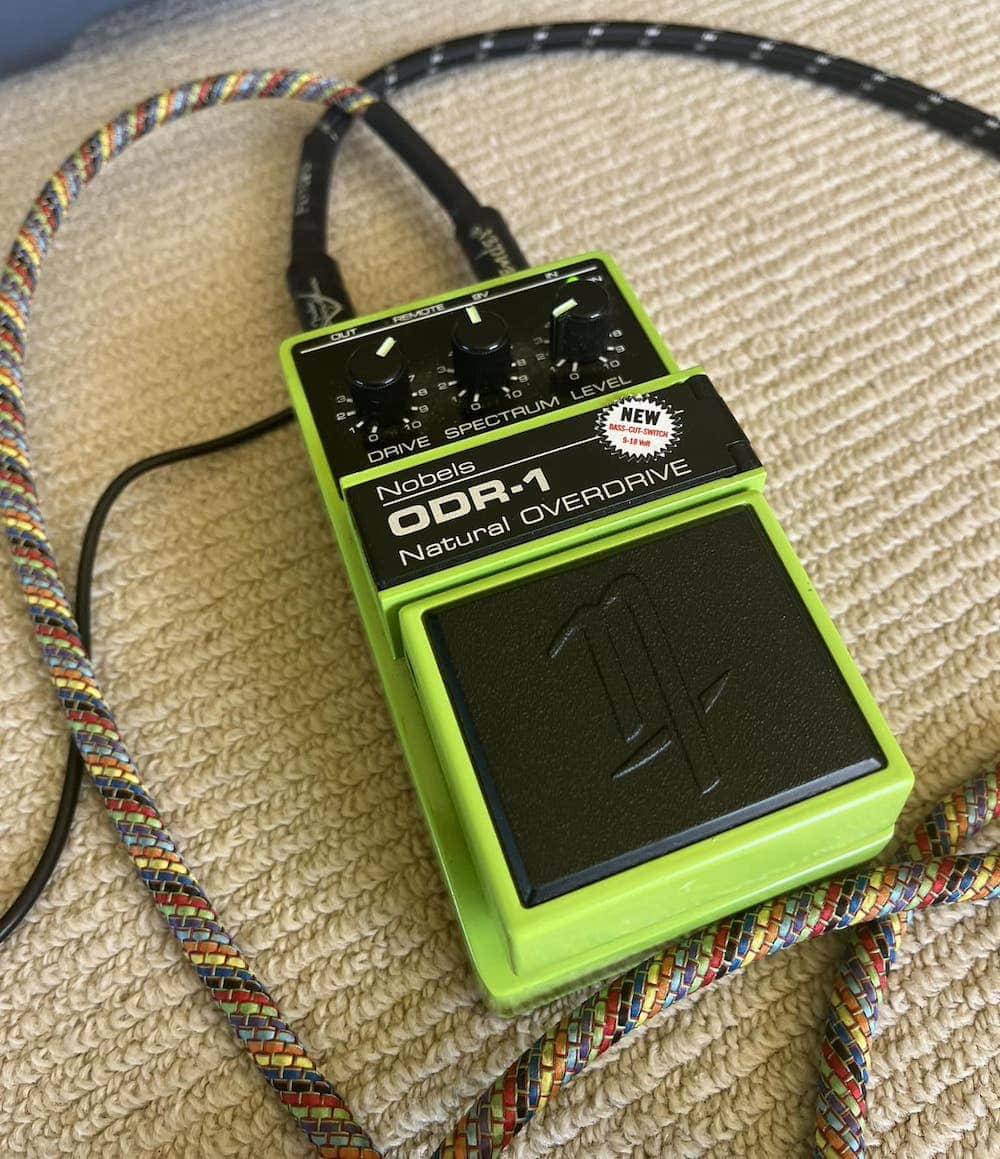
Nobels ODR-1
The idea here is that the Nobel is a transparent drive with the ability to sculpt the EQ. It’s possible, for that reason, to fine-tune it and use it as a guitar drive, or tweak it a bit and use it to overdrive a bass.
This is thanks to the Spectrum knob, which, despite feeling a little counterintuitive at first (it cuts or boosts both bass and treble at once) is very easy to use. Scooping out the mids or offering a midrange “hump” is as easy as turning it one way or the other.
When switching to bass drive, I used the built-in sub bass switch, which helps remove the pesky ultra-low frequencies that often lead to mushy, undefined overdriven bass tones.
I also took it to a gig in a dark club, and discovered that the knobs glow in the dark! Handy for on-the-fly adjustments.
The dynamic range when using this overdrive actually reminds me a lot of the sound of a Fender amplifier at the edge of breakup. Playing harder actually yields a more driven tone, playing softer cleans it up.
I’m not overly familiar with Nobel’s effects, but if this pedal is anything to go by, it’s a name I’ll be watching in the future.
Why Overdrive a Bass?
Why let guitar players have all the fun with distortion?
Most of the time, when we think of a distorted or overdriven tone, we think of the electric guitar. I certainly think of Edward Van Halen’s sound, or James Hetfield’s. Lighter overdrive is the stuff of The Eagles, or Eric Clapton.
However, overdriven bass, from subtle studio-assisted warmth to full-power distortion, has been a staple of many kinds of music for decades now.
When it comes to bass overdrive, I tend to think of classic 70s hard rock: Lemmy’s early Motorhead tone, or Gene Simmons’ sound on the first five KISS records. It’s a snarling, in-your-face sound that commands attention and hits you square in the chest.
Of course, there’s a very broad spectrum of bass tones out there. A subtle, slight overdrive can turn a sterile bass sound into warm, loving Motown goodness. I’ve seen a full-on bass fuzz ignite the room at a doom metal gig. When it comes to bass overdrive, as with all other gear, it’s all about how you plan to play it.
Generally speaking, I advise bassists to look for a transparent, rather than colored, overdrive. Most big builders have a bass-tailored version of their flagship drive, too, which preserves the low end warmth of the bass’ natural tone without turning it into mush or brittle unpleasantness. I tend not to use guitar pedals when I’m playing bass, and vice versa.
At the end of the day, however, it’s always best to play the gear and trust your ear.
Closing Thoughts on Bass Drivers
Finding an overdrive is one of the funnest parts of making guitar music. There are so many different flavors of drive out there these days that it’s hard to choose just one! That might be why so many players own drawers full of varying overdrives.
Bass overdrive can be a great way to fill out a three-piece band, or just add some pizzazz to a tone that feels a little lifeless.
