
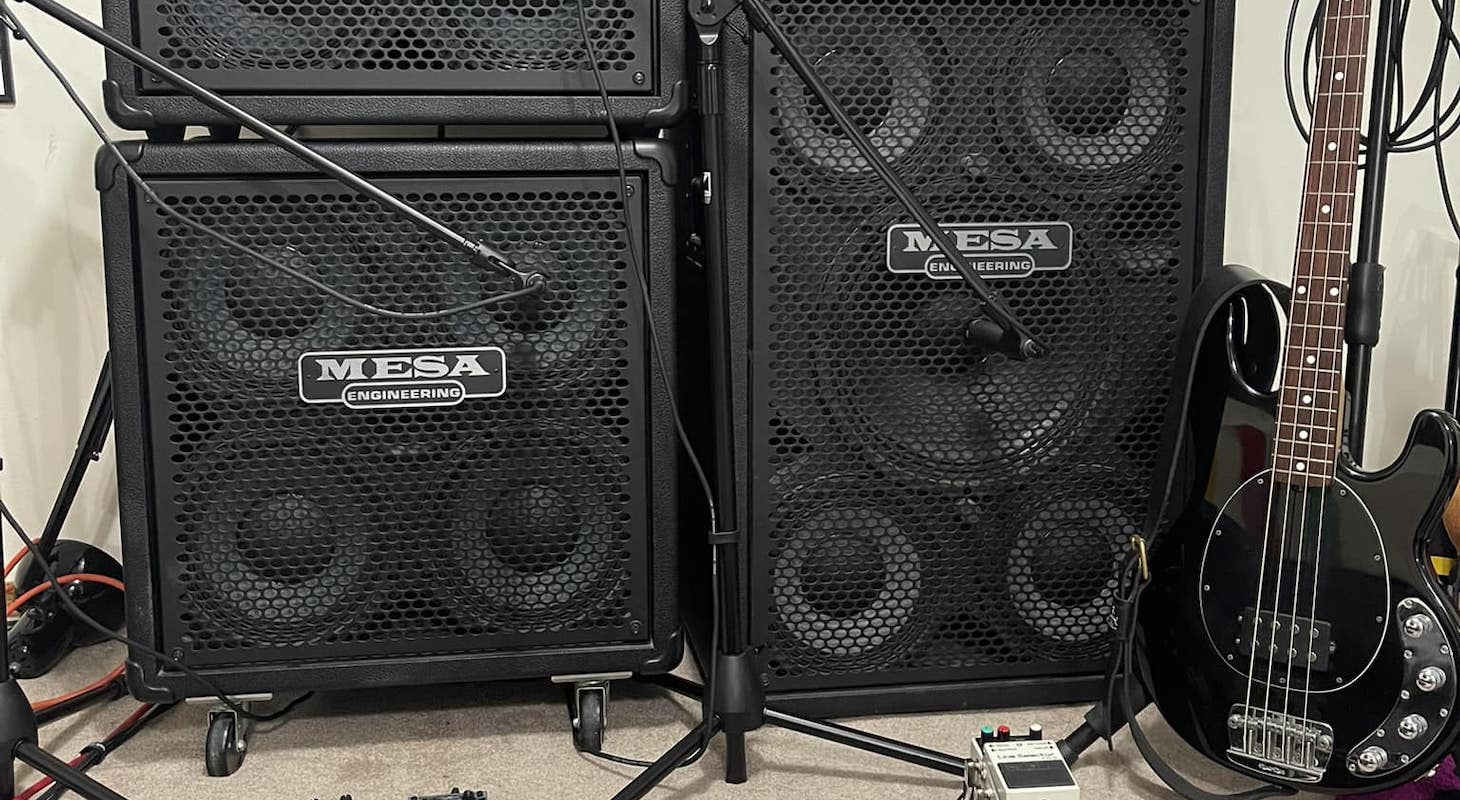
Sometimes I feel like a relic of a bygone era. I was talking to a younger friend in a touring band recently and I found out they don’t even use onstage amps for stage volume, instead running everything through modelers and using in-ear monitors.
That’s not necessarily the rule for all live acts, however, and many of us still prefer to mic up a bass amp. This is equally true in the studio: sometimes, you just need to push some air around in the room to get the most out of it.
Top 3 - Mics for Bass Amps
Preview | Product | Price |
|---|---|---|
 | ||
 | ||
 |
Whether we’re playing live and need a professional sound mix to take the performance from good to great, or recording rhythm tracks, getting the right mic for your bass amp is key.
In this article, I’ll run through some of the best mics for bass amps on the market today.
Why Would You Mic an Amp?
If you’re anything like me, you grew up seeing photos and videos of live shows where there was a “wall” of amplifiers. Full Marshall stacks on either side of the drum set, unleashing ear-shattering volume onto the crowd.
In the early days of electric amplification, it wasn’t common to use microphones on live amps, instead running them as loud as possible. The downside to this is obvious: stage volume becomes unruly, and is distinctively different from what the audience hears. The Beatles infamously stopped touring because of this issue! They couldn’t hear themselves on stage of the sound of screaming teenagers.
That, of course, was sixty years ago. Since then, we’ve developed amp-specific microphones for live and studio usage. Often, even bands that deploy a wall of amps will mic up at least one amplifier on stage. The full stack is more of an aesthetic touch than an auditory necessity these days: some bands even use “dummy” stacks with no speaker in, just to look the part!
When I play live gigs, I prefer to work with a dedicated live sound engineer. Often, especially when we’re playing private gigs, the client will ask why we need a PA when we’re already running amplifiers. The answer is simple, at least as far as live sound goes: my onstage amp is for me. The mic in front of it, running through the PA, is for the audience.
The other use case is in the studio. When recording, we have the luxury of trying a few different microphones to get the best sound out of each instrument. There are microphones specifically engineered for the lower frequency range of a bass guitar that sound great on a recording, and allow for greater flexibility during the mixing and mastering phases.
In my experience, most microphones specifically designed for bass amps will work great for live or studio work, but within that genre there are more specific sounds and textures to consider.
My rule is always to play the gear and trust my ear, and I encourage anyone to do the same.
The Best Microphones for Capturing Bass Amps
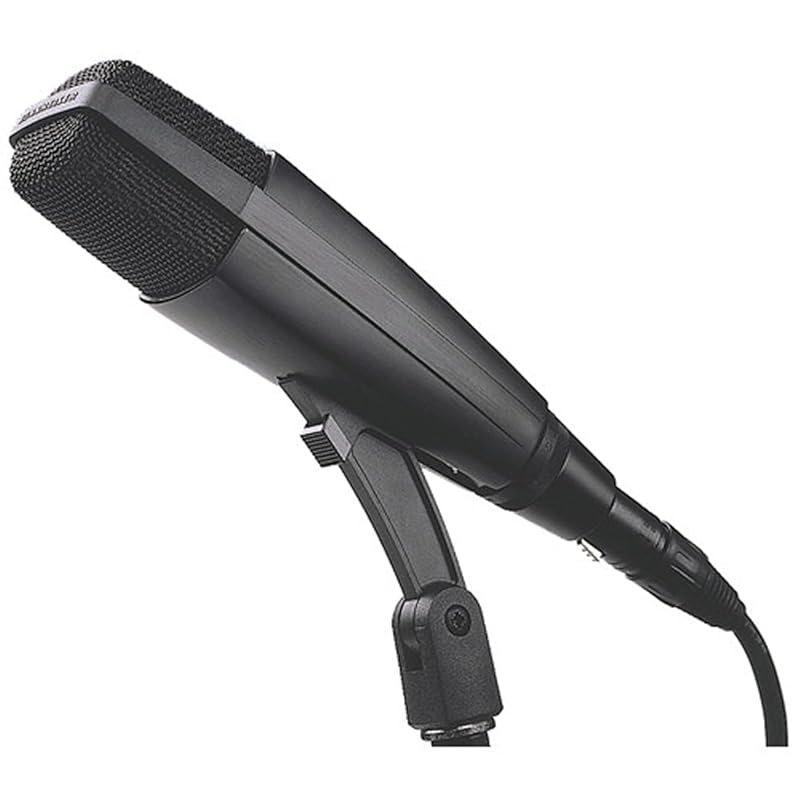
1. Sennheiser MD 421-II Cardioid Dynamic Mic
Sennheiser are one of the best names in the business. I’ve been using their vocal mics as my go to stage mics for years! The MD 421-II certainly lives up to the brand’s reputation, with a crisp, impressive sound.
This isn’t exactly an entry level mic: at this price point, it’s clearly aimed at those with a bit of experience looking to add a quality cardioid to their arsenal. I’ve actually mostly seen these microphones used to record toms in the studio, and given how “bassy” toms sound, it makes sense to me that it’s an awesome bass mic, too.
This Sennheiser is quite sensitive to placement. I found that it took a little bit of time to find the “sweet spot” on the bass amp I was trying this mic with, but one I did, everything sounded great.
It’s reliable and (relatively) durable enough for live use, although I’d be wary of taking a microphone this nice to a rowdy gig.
I’ve found it to be very forgiving of very high volume, handling even the most severe sound pressure levels.
Really, it’s all about the bass response here, which is perhaps a product of its ability to withstand extreme volume. It’s a very versatile microphone that captures all the low end and “pushing air” that standing in front of a great, cranked bass amp gives you.
Overall, an excellent piece of gear from a reputable manufacturer.
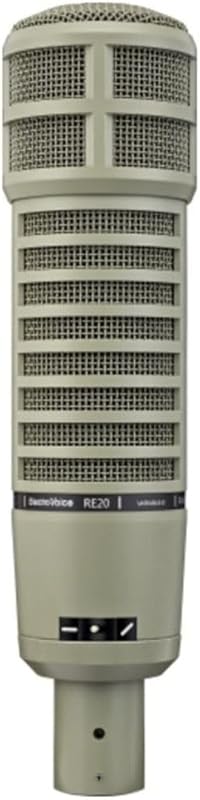
2. Electro-Voice RE20 Dynamic Broadcast Mic
This dynamic mic from EV has a few nifty features to help with micing kick drums and bass amps. Chief among them is its natural tendency to filter out the “bass boost” of close micing.
I found that at closer distances to the amp, it doesn’t become overly woofy or muddy the way that less specialized microphones tend to. If that’s not enough, there’s a handy bass rolloff switch to remove even the most stubborn of unwanted low end.
It feels a little counterintuitive to want to remove low end from a bass signal, but too much just drowns it out! Like all things in life, a great bass sound needs to be balanced.
While many use this microphone for broadcast purposes, including podcasting, it’s something of a jack of all trades! It’s versatile enough to use as the primary microphone for a home recording setup. I found that bass, drums, and even acoustic guitar sounded good enough to record with using this microphone.
While it worked great for my baritone voice, I found that it didn’t respond as well to the female voice. Despite that, it’s far more versatile overall than I expected.
Most reassuringly, it’s built to last. I’d happily use this microphone for live sound: it’s pleasantly heavy, and covered in various protective layers to minimize unwanted sounds and keep the cardioid microphone within safe.
It’s an awesome piece of gear that I’d highly recommend to anyone trying to get as much as possible out of a single microphone.
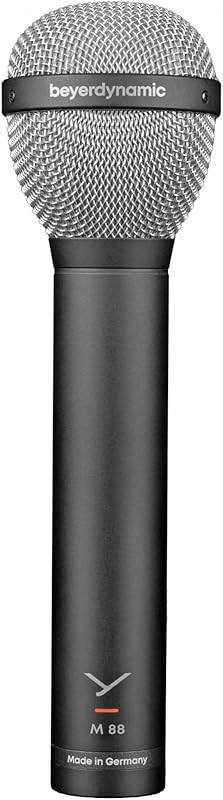
3. Beyerdynamic M 88 Dynamic Mic
This hypercardioid microphone might look like the industry standard SM58 vocal mic at first glance, but it’s anything but a cheap copy.
This has been an industry standard for over sixty years! The M 88, of course, will happily work as a vocal microphone. It fits neatly into a cradle for this very reason. It sounds particularly good for deeper male voices like mine.
However, its “secret sauce” comes from this microphone’s gloriously wide frequency response. I found that it gives the illusion of additional volume to allow my lower register to effortlessly keep up with higher voices when singing multi-part harmony. I’ve seen it used for live sound and in recording studios on the kick drum, too!
Of course, this all implies that it’s a great microphone for use with a bass amp. I was very impressed with the clarity and accuracy here. I could hear the switch from pick to fingers, and the change in tone from harder playing to softer playing when using this mic.
It does look a little out of place in front of a bass amp live, but it certainly does the trick. Best of all, I noticed little to no feedback even at higher volumes.
The only downside of this level of tonal clarity is that there’s really nowhere to hide with sloppy playing. Mistakes are highly noticeable. This will make anyone, myself included, a better musician, which can only be a good thing!
4. Shure SM57 Cardioid Dynamic Instrument Mic
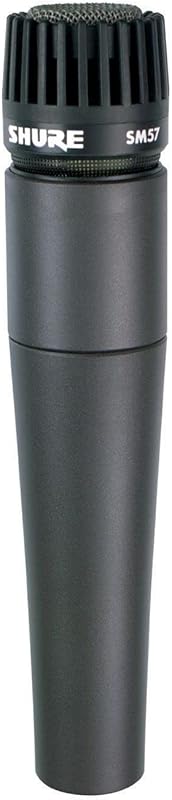
This list wouldn’t be complete without the legendary Shure SM57. The industry standard for recording instruments, just as the SM58 is the standard for vocals. The first time I ever set foot in a recording studio, the engineer was using an SM57.
There’s not a lot to say about this microphone that hasn’t already been said. It’s highly affordable, and excellent in terms of quality for the price.
It’s punchy and clean, and easy to set up. It’s about as plug-and-play as a mic for a bass amp can be. The frequency response is nice and wide, with plenty of warmth and clarity.
The SM57 does work best when I can put the time in to place it properly. Different positions in front of the amp offer drastically different results, so it’s worth taking the time before recording to really get the sounds down.
It’s a very accurate read of a bass sound: a tinny, fizzy amplifier won’t suddenly sound great just because there’s an SM57 in front of it. However, a good player, with good gear, will find themselves represented well on recording by this workhorse of a microphone.
It’s a tried and tested classic. Many engineers’ first instrument mic, and a staple of live rooms and recording studios the world over.
Lords of Low End
Whether I’m recording a bass part or playing live, micing up a bass amp is a part of life as a working musician. Getting the right mic for a bass amp is the best way to guarantee consistently great sound, every time.
I always find that I play better when I sound good, and I’m more inspired to play, which in turn makes me a better player. I’m not saying that the right microphone in front of an amp makes anyone a better bassist, but it sure doesn’t hurt!
