
Sometimes, when you’re fronting a band, or you’re playing a solo gig, it’s nice to have an extra layer in the mix. Van Halen made up for their lack of a horn section (or their lack of a budget for one!) on their first record by layering two- or three-part vocal harmonies, helping fill out the sound.
Top 3 - Vocal Harmonizer Pedals
Preview | Product | Price |
|---|---|---|
 | ||
 | ||
 |
I often think a vocal harmonizer, when used appropriately, can be a great way to fill out a solo rig, or add an extra layer to a band without having to bring an extra mic or teach the bass player to sing harmony.
What is a Vocal Harmonizer?
A vocal harmonizer is a pretty self explanatory piece of gear. The basic idea is to allow a solitary live singer to reproduce studio-style vocal processing and effects on stage.
This often extends to reverb, compression, and even subtle pitch correction. Not unlike a loop pedal, the basic functionality is often enough to seriously spice up a solo rig, but there’s no shortage of deeper, more intricate use cases. Bon Iver, for example, often uses a vocal harmonizer to add dense, powerful layers to his music.
So, too, does avant-garde singer-songwriter Sofia Isella often use heavily processed vocals in the live setting to convey the eerie, disturbing aura of her studio recordings. I saw Billie Eilish live last year, and she’s using heavily processed live vocals in a stadium!
Just as with guitar pedals, finding the right vocal effects unit is all about how we, as musicians, plan to use them. I’ve compiled some of the finest vocal effects units on the market in this list.
What Effects Do We Really Need?
As a general rule, most singers don’t need much more than a little reverb, EQ, and compression.
A couple of years back, I was playing a lot of wedding gigs, and there were songs where, between me and the singer/ukulele player I was working with, we couldn’t always capture the necessary vibe. Sometimes we needed an additional female harmony, and I certainly didn’t have the vocal range for that. Sometimes we just needed two male voices singing the “oohs” and “ahs” in old-school soul tunes.
That’s why we tried a few vocal harmonizers and effects processing units, just so we could cover as many bases as possible. It expanded our repertoire, which helped us get more gigs, and made our performances at weddings into much richer, more dynamic experiences for the audience.
We didn’t need extremely complicated gear, but a range of harmony options, compression, and echo were very helpful to us. The main priority, however, was ease of use and portability.
Studio units can be as big and bulky as you need, but when you’re setting up in the corner of a marquee using battery power, it’s best to have something that fits into your backpack or onto your pedalboard.
4 Best Vocal Harmonizer Pedals Worth Buying Now
1. Boss VE-2
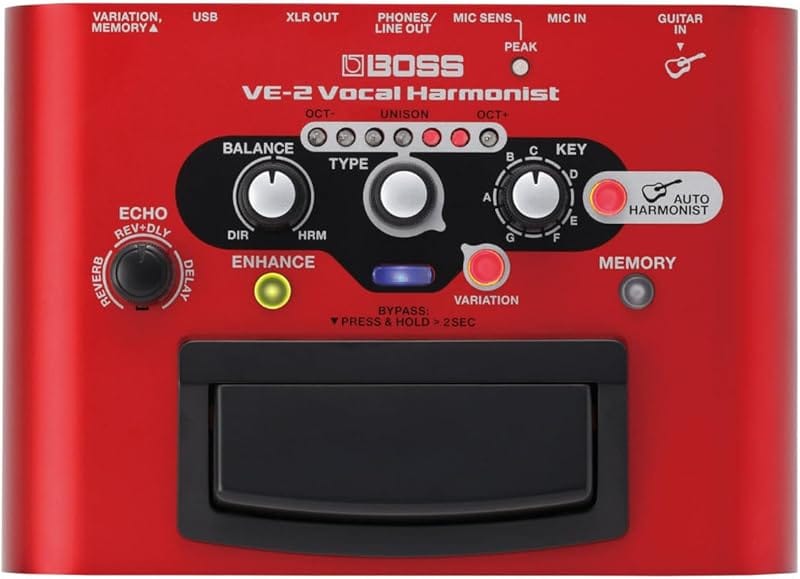
I absolutely love Boss’ guitar pedals, and this vocal effects unit is no exception to the rule. The VE-2 Vocal Harmonist is a soloist’s dream.
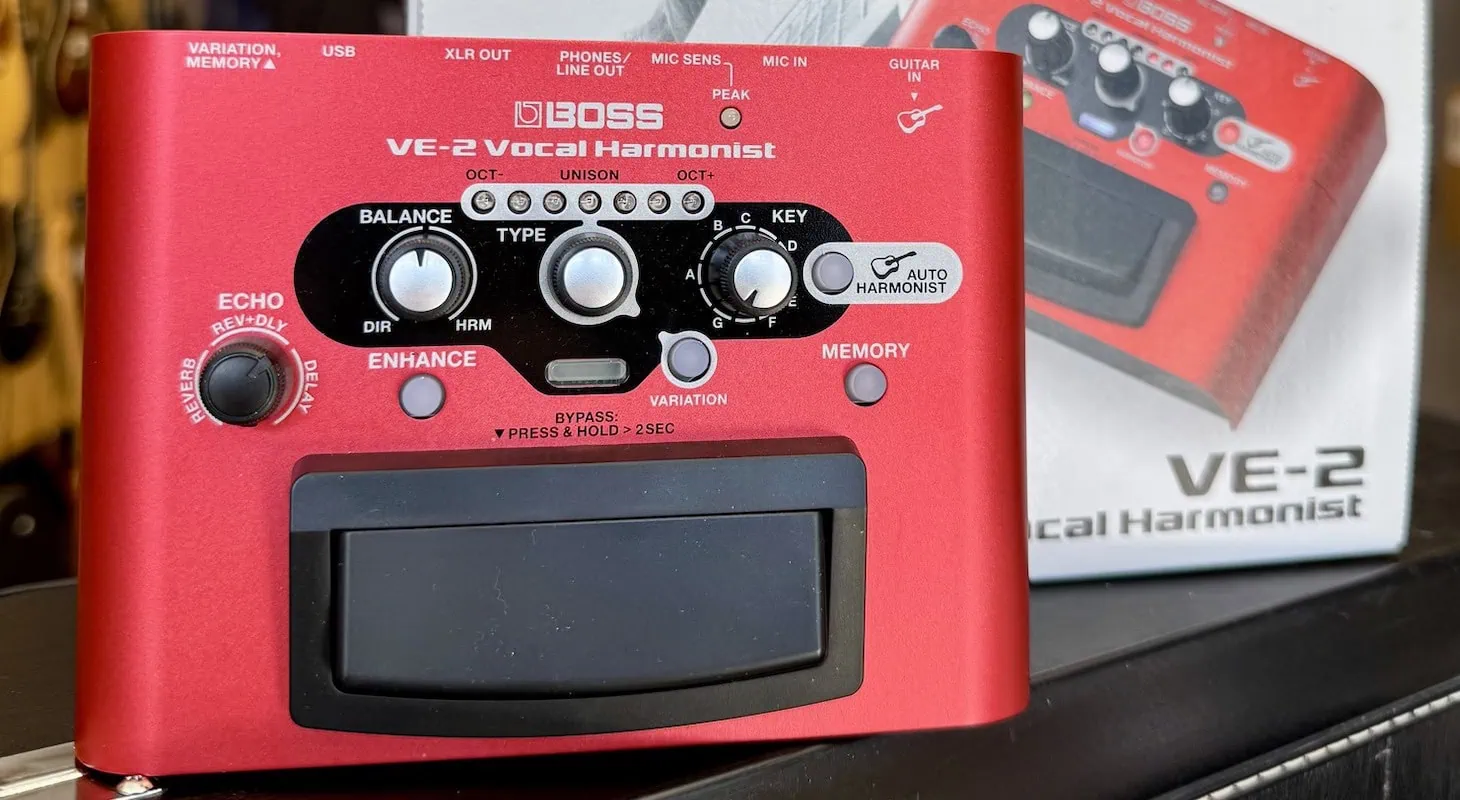
BOSS VE-2 Vocal Harmonist
There’s a plethora of easy-to-use effects on offer here. The main draw, for me, is the Auto Harmony function. I just plugged my guitar in, the unit identifies the key you’re playing in, and will intelligently apply a harmony to the vocal signal coming out the other side.
It is possible to manually set the key, too, which is pretty helpful. I was able to get up to two layers of vocal harmony, which can be a cool effect.
The reverb is more useful, to me, than the delay, or the combined reverb + delay option, but I can see how a more avant-garde performer than me might have fun with vocal delay.
I also think the “enhance” function here, which feels a touch patronising, is an interesting choice. What Boss calls “controlling dynamics and pitch correction” is probably closer in reality to a subtle vocal compressor with pitch correction. It does boost the vocal signal into my PA, which can be a real help when competing with a loud, upbeat acoustic guitar player like me.
The pitch correction is subtler than expected, but I can’t say the same for the initial vocal harmony setting. I actually found the volume of the harmony tracks at “neutral” to be far too hot to sound natural. A little lower than neutral seemed like the sweet spot.
Likewise, when playing chords on the Auto Harmony mode, I found that I had to be very precise. Messy rhythm playing messed up the harmony intervals, resulting in some very unpleasant, dissonant auto harmonies.
I also found it reacted much better to my dynamic microphone than to a condenser.
Best of all, it runs on AA batteries, even offering phantom power via XLR if need be.
At only six inches wide, it’s nicely portable, although it’s a little bulky for pedalboard use.
Overall, an excellent unit, and one that I’d recommend for soloists and ensembles alike.
2. TC-Helicon Harmony Singer 2
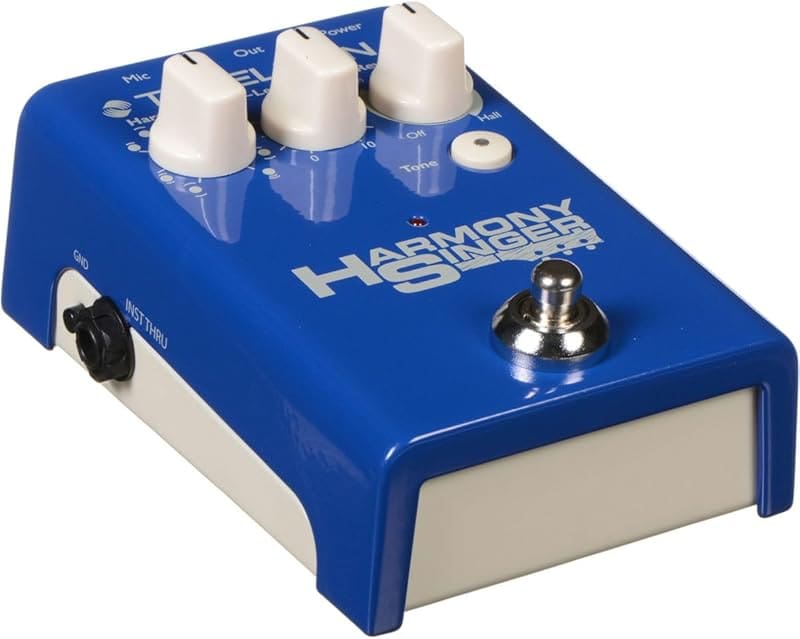
The TC Helicon Harmony Singer is a compact, highly functional unit. It’s attractively priced, nicely sized, and offers reverb and harmony. That’s it. I appreciate a simple, easy to use piece of gear!
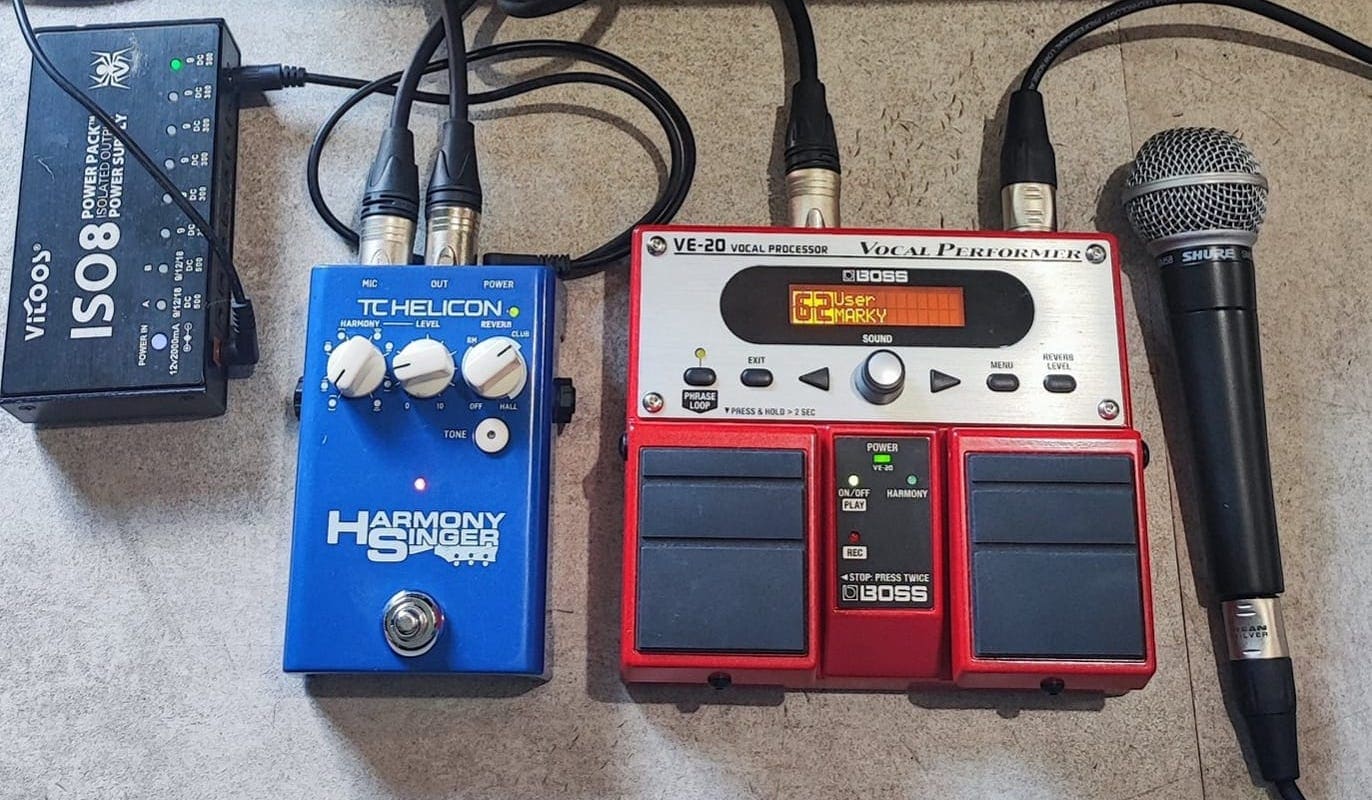
TC-Helicon Harmony Singer 2 and BOSS VE-20 Vocal Processor
The construction is reassuringly weighty, with a nicely sturdy metal chassis. It’s diminutive enough to fit on my solo pedalboard with ease, and the single footswitch makes using the harmony function very easy indeed.
The reverb settings are pretty much standard. A few different “room sizes” are on offer, and they all sound pretty good. The tricky thing with the reverb is the inability to turn it off on the fly without bending down and manually manipulating the knob. That’s a relatively minor issue for me: I don’t know many singers, myself included, who want to switch reverb off mid-gig once it’s on! The reverb also stays on even when the harmony mode is bypassed.
I find that the “tone” switch conditions the overall signal so well that I keep it on all the time. It just smooths out the sound very nicely.
The most confusing thing about this pedal, although it’s relatively easy to use, is its visual display. The dots and parentheses aren’t exactly intuitive, and the lack of an instruction manual doesn’t make it easy to understand.
Of course, it’s a simple matter of a few minutes’ experimentation to understand what the symbols mean. One or two harmonies above or below your note, either close close or distant harmony. Relatively easy, if a little counterintuitive.
For the size, sturdiness, and price, this is a great unit. The relatively limited functionality will be a selling point to some, and off-putting to others, but I appreciate it.
3. TC-Helicon VoiceTone H1
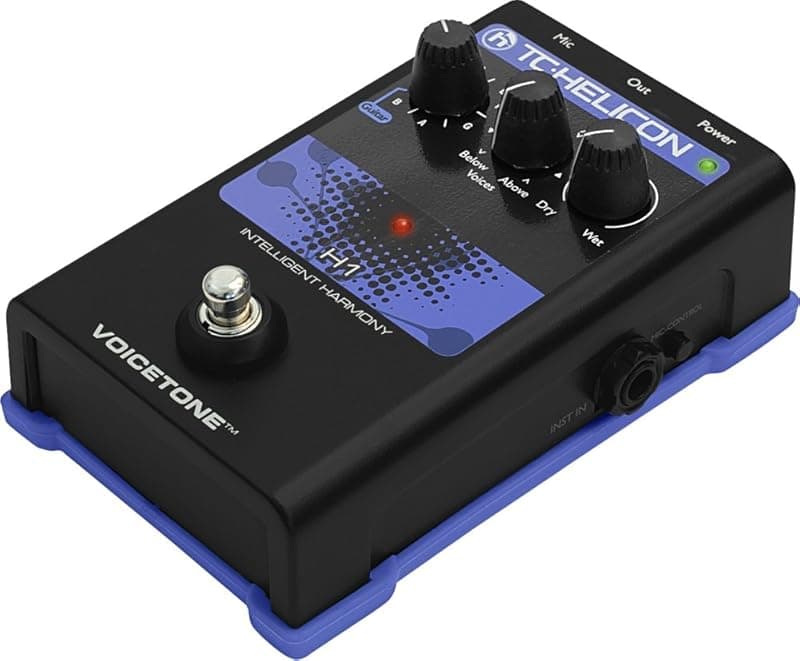
This pedal is about as simple as vocal harmonizers get. The TC-Helicon VoiceTone H1 is a straightforward unit. It adds either one or two extra voices. The key selector does most of the work in finding the right harmony, but the guitar input allows for intelligent real-time monitoring of the signal.
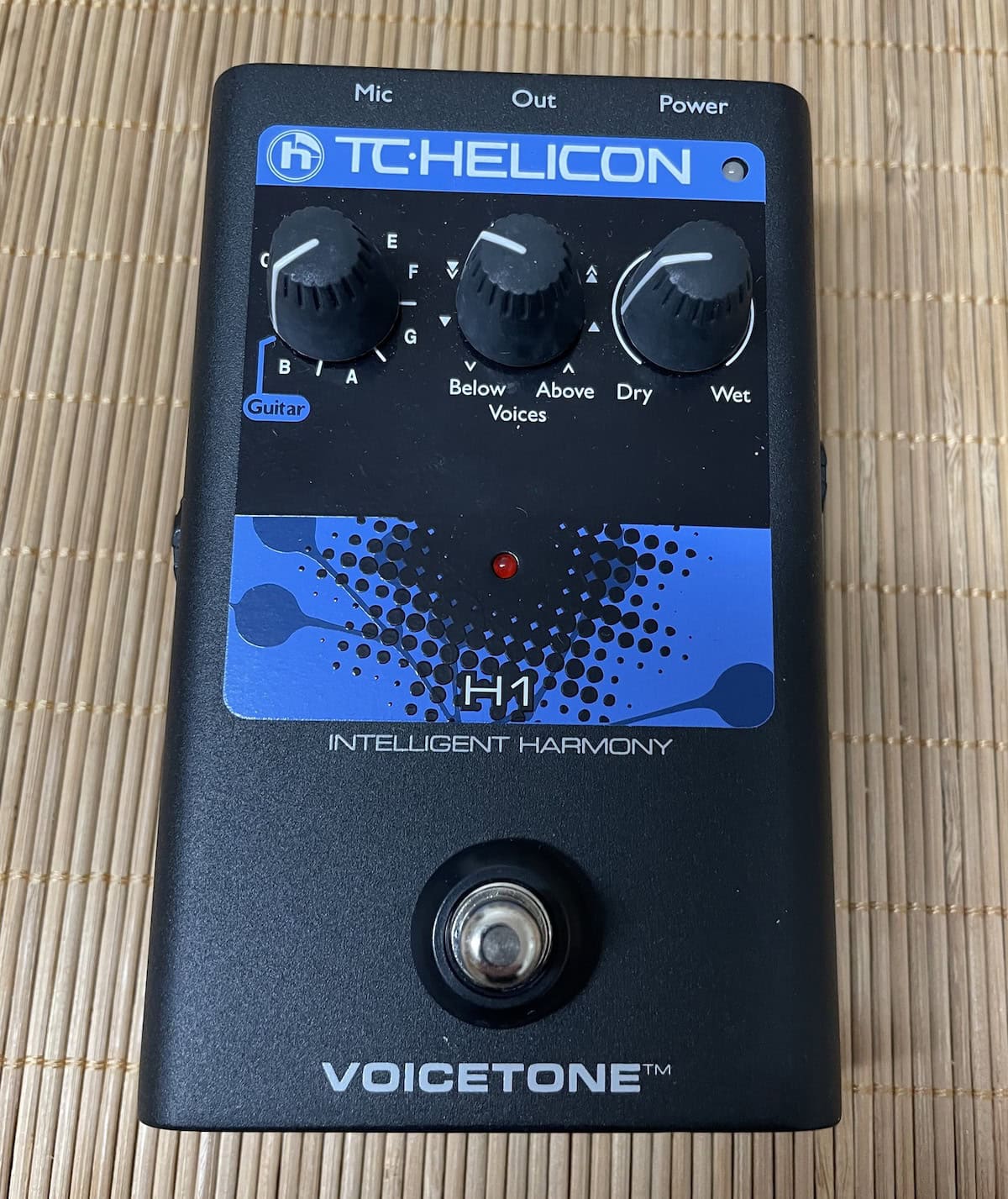
TC-Helicon VoiceTone H1
It’s this feature that I find most useful about this pedal. Sometimes, the simple key selector feature on units like this can “lock in” to a certain interval and not allow for, in particular, a pleasant harmony over a minor chord. The ability to plug my guitar in and let it guide the harmonies is potentially the most intricate thing on offer here.
I’m not a huge fan of the top-loaded XLR in and out, but I’ll tolerate it for sounds this good. Maybe I’m just used to guitar pedals that have the jacks on the side!
My other gripe with this otherwise useful unit is the inability to run battery power. It must be powered by the supplied power supply, which can make gigging a little awkward. My main use case for a vocal harmonizer is playing weddings, which are often outdoors, rather than in a dedicated live music venue. Power outlets can be rare and unreliable, and 9 volt or AA batteries are easier to bring to a gig than a big, bulky generator.
Overall this is a quality piece of gear, but the lack of battery power does limit my ability to use it.
4. FLAMMA FV04
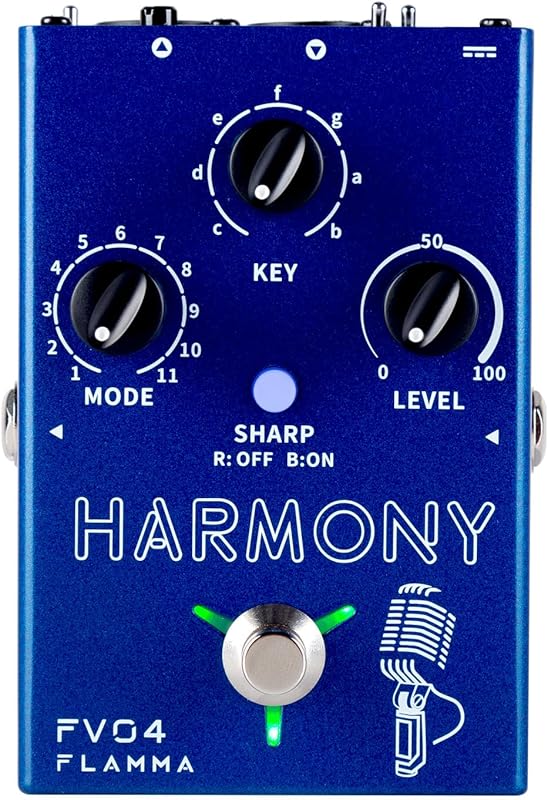
I can’t say I’m overly familiar with Flamma, but the Flamma FV04 is a great unit. There’s a lot on offer here, despite its diminutive size: an EQ, multiple delays and reverbs, pitch correction, and, of course, harmony.
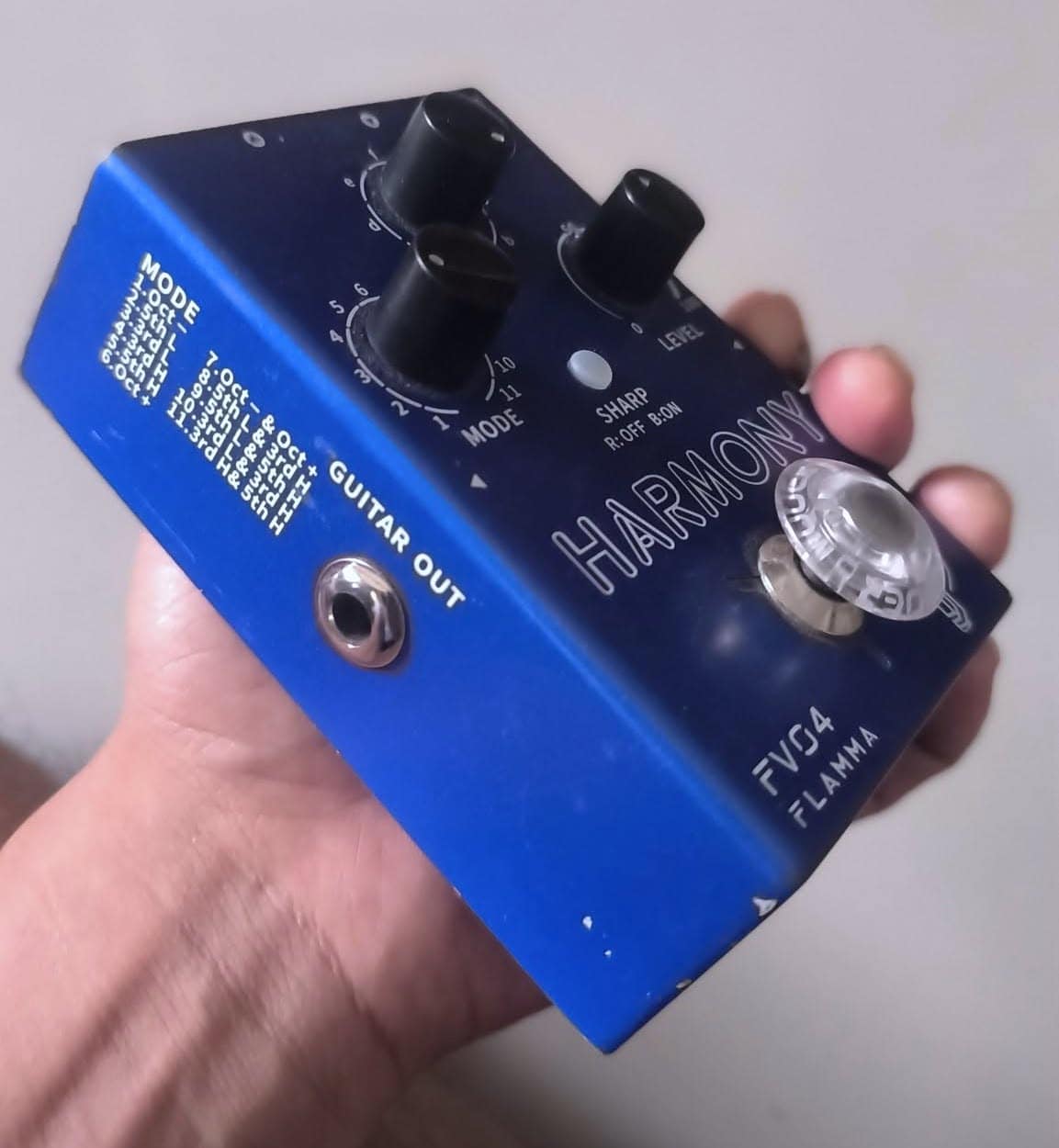
FLAMMA FV04
As with other units, it’s possible to run a guitar signal through the unit to help keep the harmonies it produces in key. However, when running it as a single output, the guitar signal was more powerful than the vocal signal, which is not great for a unit that’s primarily for vocal processing.
The reverb and delay, curiously, are not both applicable to the guitar signal as well as the vocal signal. I found that only the reverb could be applied to the guitar, while the delay can work for both.
The pitch correction isn’t overly severe. It does smooth out any little flubs or issues, but it won’t turn an off-key singer into Celine Dion.
Similarly, I found diving into the deeper features extremely challenging. The “hidden menu” isn’t described in the included instructions. It makes navigating the plethora of features on offer here much trickier. For basic functionality, it’s fine, but attempting to dive deeper such as for use in the studio, it’s a lot harder. I’d argue that you can simply layer harmonies in the studio, but I wouldn’t want to be hamstrung by hidden menus while I’m recording and looking for easy vocal processing.
The vocal harmonies do sound good, and it’s relatively easy to switch them on or off as required. There’s a wide range of harmonies on offer here, too, and experimenting with this at home was a lot of fun. The three vocal harmony tones (bright, warm, or normal) are pretty interesting, as they’re effectively EQ presets. I found “warm” to be the most useful of the three, for my baritone range, but I can see how a female singer or a lyrical tenor might enjoy the “bright” setting too.
It’s a little too complex for me, to constantly use live in a solo or duo setting, but I might find it useful with a little extra time to work it all out.
Although there is an included power supply, I would prefer the ability to operate this unit using batteries.
Final Thoughts
Vocal harmonizers can be a lot of fun, and make a solo gig sound like a full ensemble. Some harmonizers offer other effects processing, which can take your vocal performance from good to great.
Modern listeners are accustomed to the highly processed vocal signals of modern radio recordings. Compression, densely layered harmonies, and pitch correction are the norm for studio recordings in this day and age.
Sometimes, replicating the vibe of some of these big radio hits, like Sabrina Carpenter’s “Please Please Please,” live requires a little extra technical assistance. The right vocal harmonizer can turn a single great vocalist into an all-powerful vocal trio!
