
By the end of next month, I will have played around 100 gigs in the past five months. Most of these have been solo acoustic gigs where it’s just my guitar and voice in the mix, and maybe a looper.
I’ve been doing this for a while, and I’ve learned over and over again how important it is to get the right amp or speaker for my singing voice. The singer’s voice is the first thing most listeners hear when they listen to your music. It’s why there are countless singing competition TV shows and none that I can think of about playing guitar or drums!
Top 3 - Vocal Amps for Singers
Preview | Product | Price |
|---|---|---|
 | ||
 | ||
 |
It’s not enough just to be a great singer: it’s vital to get a good amplified vocal sound, too, especially for playing live. This is even more true when playing with a band!
With that in mind, here are my favorite speakers and amps for singing through.
Best Vocal Amps & PA Speakers for Singers
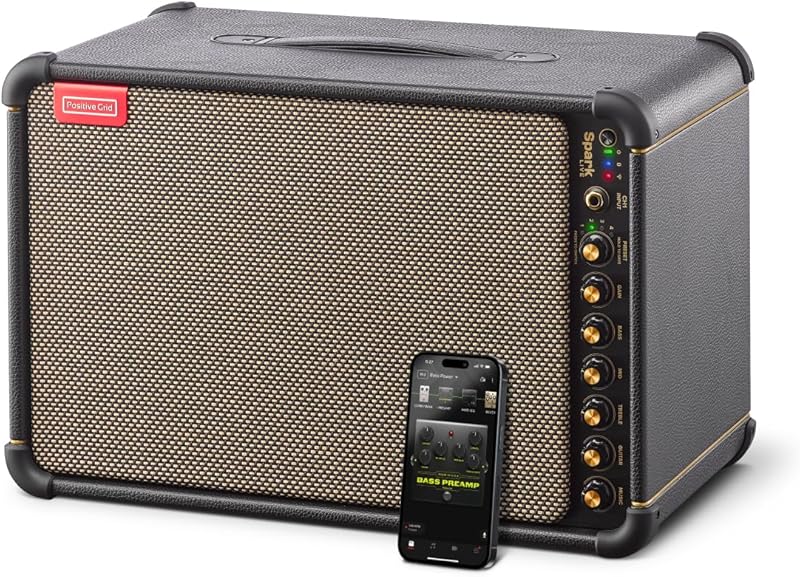
1. Positive Grid Spark LIVE
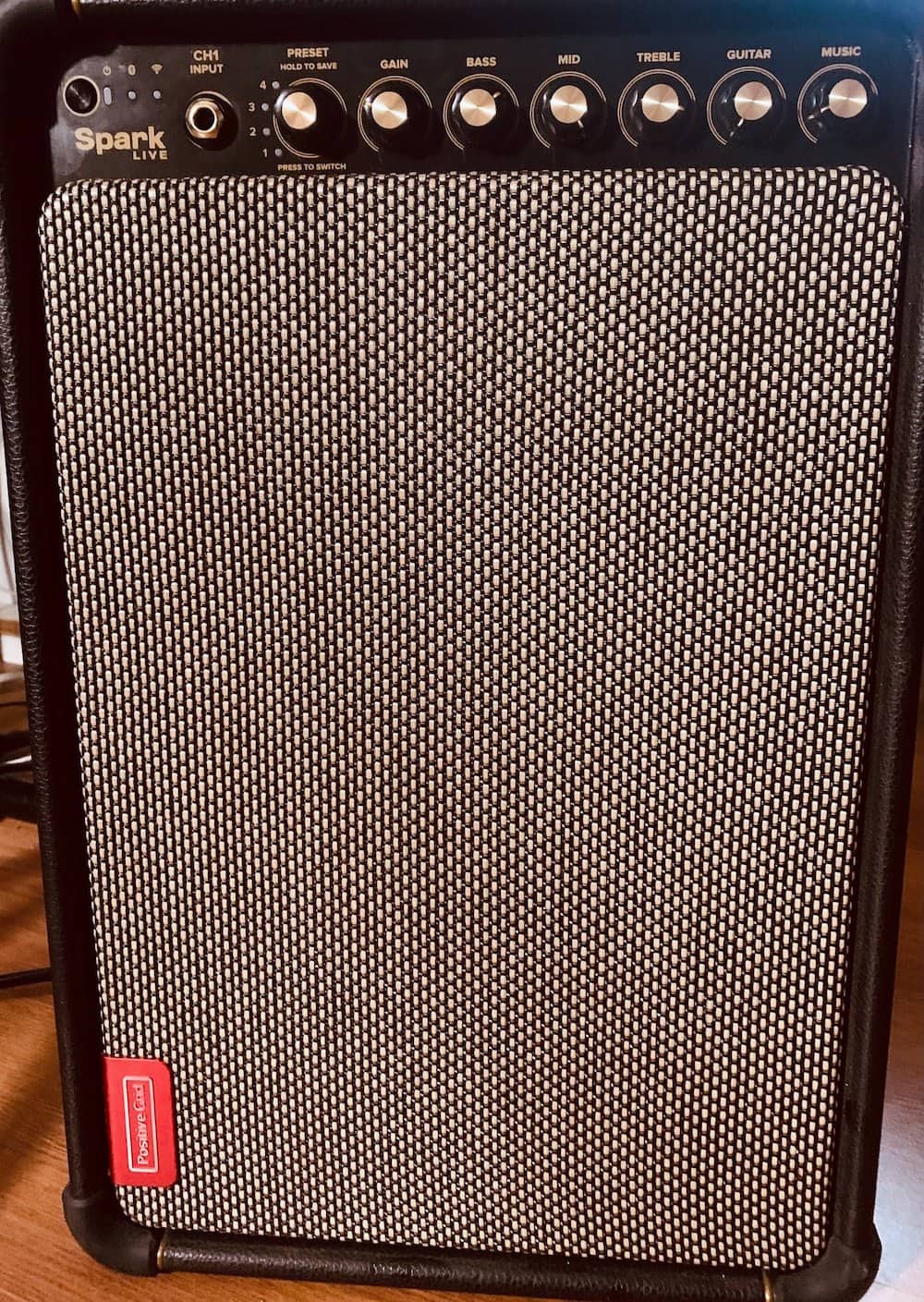
This all-in-one solution is a considerably more versatile entry than I’d typically use! It’s basically Positive Grid’s answer to the all-in-one busking amps seen on street corners around the world, and the Spark LIVE can certainly keep up with the best in the game.
Positive Grid Spark LIVE
The versatility on offer here is a lot of fun to play with out of the box: vocal effects, extra channels, plenty of volume. The reverb is particularly satisfying, adding subtle depth and dimension to my voice without drowning it in swirling echo.
The inputs are relatively straightforward: they’re supposedly optimized for different instruments, but I only really tried it out with my acoustic guitar. It sounds good, which is the most important thing. It’s nice and clear, without any unwanted distortion or crackling.
Playing this piece of gear is a very futuristic experience. It’s loaded with enough smart features to make an iPad blush. For example, I found that it automatically switches between mono and stereo depending on whether the unit is upright or sitting lengthways!
The intelligent features also automatically adjust EQ depending on the environment. Playing indoors, it’s softer and warmer, and outdoors it’s brighter and stronger.
As expected based on my other experience of the Spark line, there’s convincing amp emulation built in to the unit. I tried it with my Les Paul: the tube amp emulations don’t sound exactly like my Marshall Plexi, for example, but it’s a good, usable tone, and it’s nothing most audiences will notice anyway.
The other feature here that will attract many soloists is the built-in band. It’s possible to set up automatic accompaniment on bass and drums simply by playing a few chords and letting the built-in band do the rest. Not bad!
Overall, it’s a pretty exciting unit, and I’d happily gig with it. I don’t know how much I’d rely on the “backing band” feature for live application, but as a practice tool it’s hard to argue with.
2. Fishman Loudbox Mini
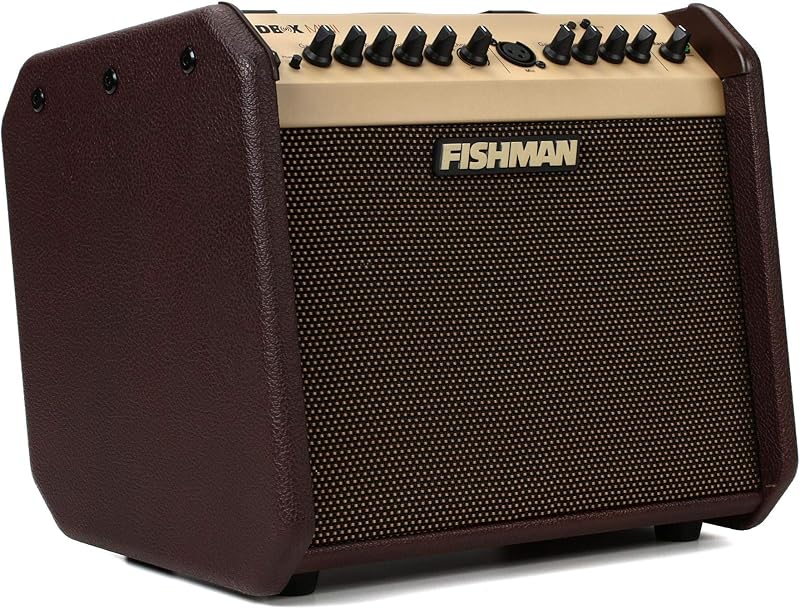
The Fishman Loudbox Mini might as well be the busker’s best friend. I tend to think of it mainly as a cafe singer’s amp, as this is primarily a guitar amp that happens to work for singers, as opposed to a PA that can handle a guitar.
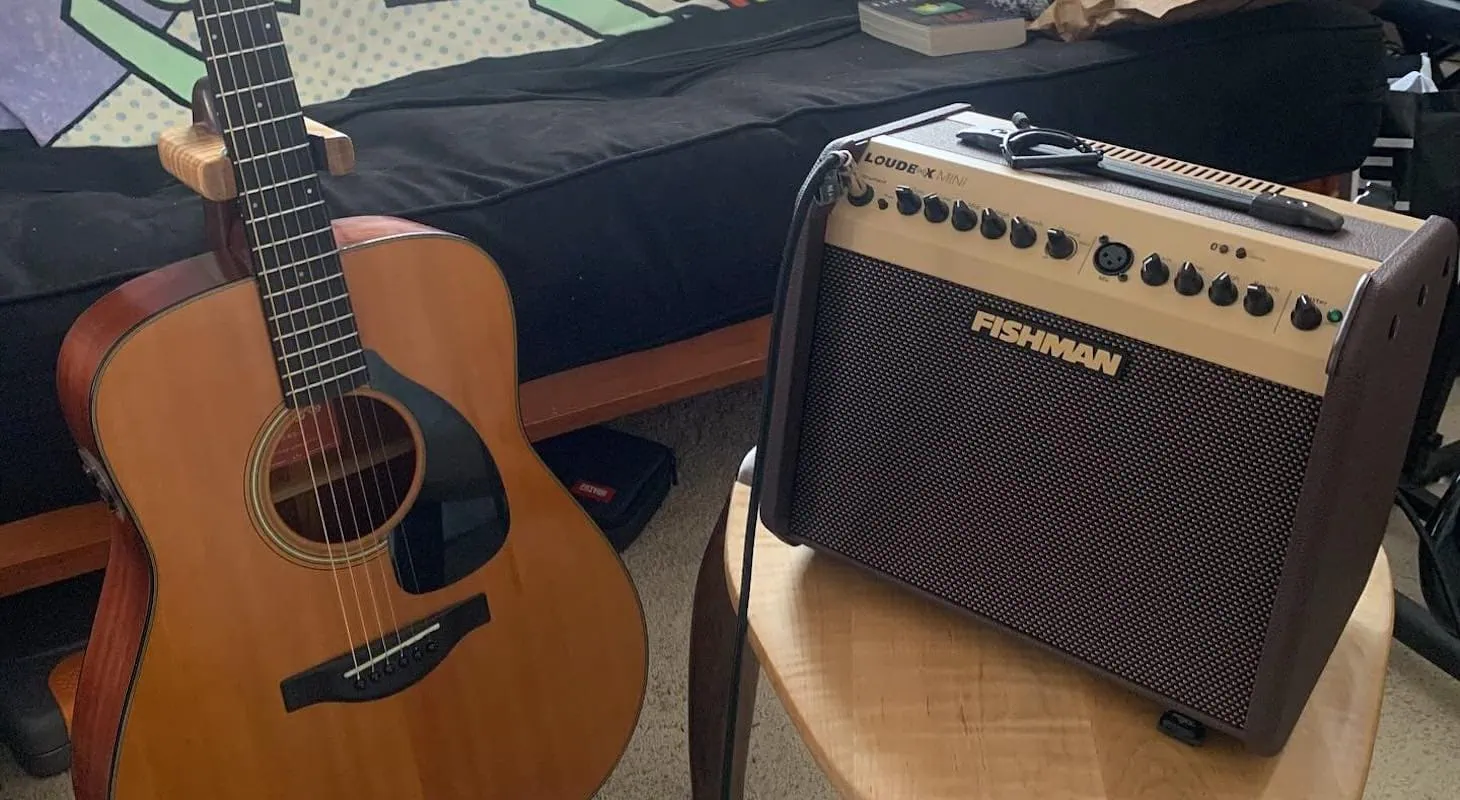
Fishman Loudbox Mini
The star of the show here, predictably, is the acoustic guitar tone. Fishman are well known for their acoustic guitar pickups, so the sound is great. Punchy, clear, and the EQing is extremely sensitive, so my battered old Takamine sounded excellent.
The tone for my voice was similarly good, with plenty of clarity and warmth, and no excessive sibilance as I’d feared for an amp primarily voiced for acoustic guitar.
The built-in reverb on my voice was pleasantly warm and deep, adding some much needed dimension to the mix.
Its 60 watts of power are clean all the way up to the highest setting, and in the unlikely event that I need even more power, I can plug it into a bigger system via the DI out.
It’s just my taste, but I love a simple setup. I like to get my solo rigs up and down in ten minutes - or less!
The simple controls are for gain, EQ, and the onboard effects. As far I’m concerned, simplicity and effectiveness are the most important factors for a successful acoustic solo performance. The Bluetooth connectivity is fairly reliable, and the aux input works well even when it isn’t.
It’s reassuringly rugged and hefty, and feels like it could easily withstand the elements while busking on a street corner.
3. Boss Acoustic Singer Live
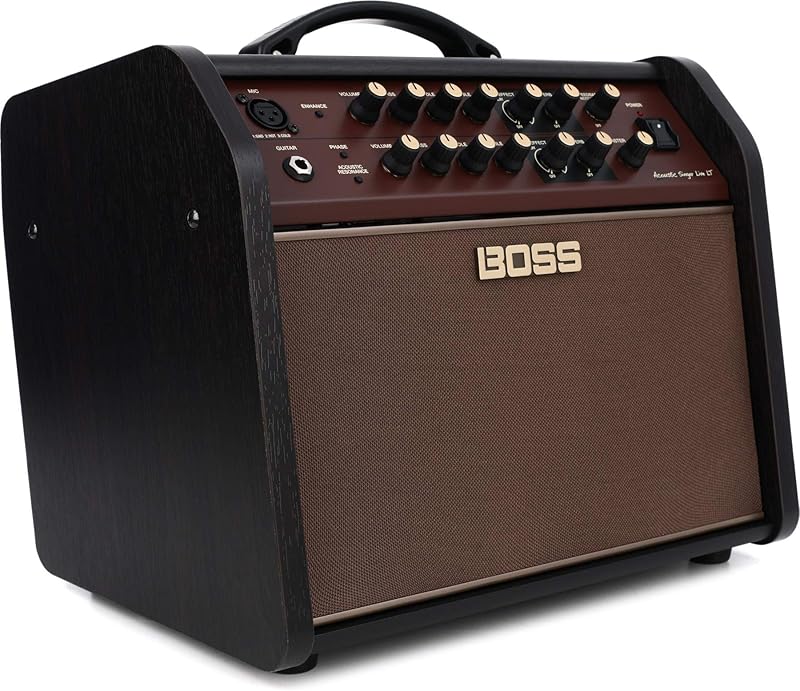
Boss’ Acoustic Singer follows many of the design cues I’ve come to expect from acoustic guitar/vocal combo amps. A slightly angled front wedge, brown accents, and a straightforward interface are all indicative of the form-follows-function ethos of the Boss brand.
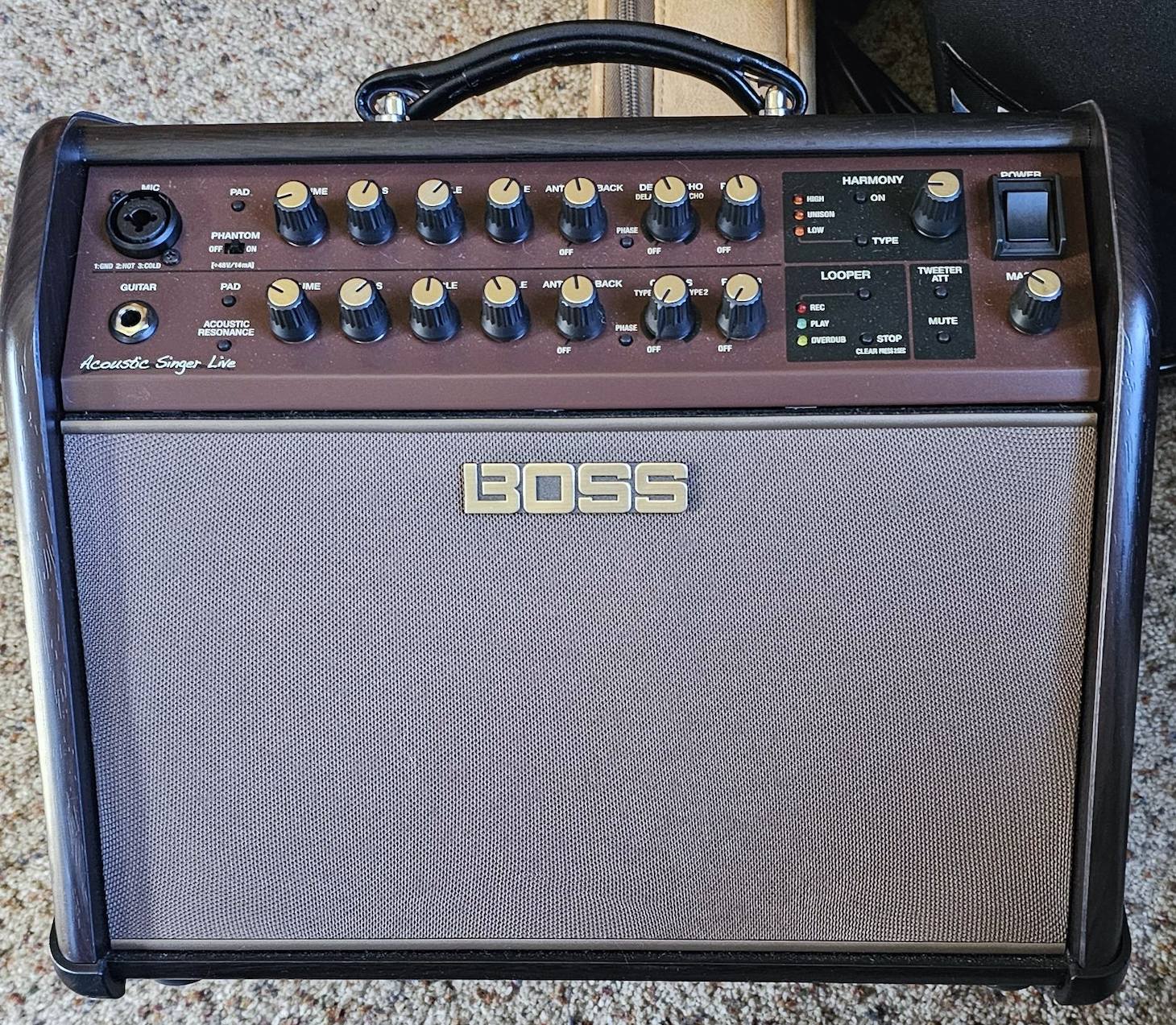
Boss Acoustic Singer Live
The twin channels have their own controls, which looked a little intimidating at first, but are fairly intuitive once plugged in. The build quality, as I’d expect from Boss, is excellent, with the amp feeling sturdy and reliable. I’d happily drive this to a gig without a road case!
It’s relatively easy to dial in a beautiful, resonant acoustic tone, and the vocal EQ is appropriately sensitive. The built-in reverb is similarly excellent, with plenty of depth and warmth to it.
The clean, clear tone on offer stays true even at higher volume levels, so I’d happily use this in a loud bar or a crowded coffeehouse. It does respond best to lower volume, with clearly audible subtle nuances in my playing and singing really coming to life.
In the event that it’s not quite loud enough for the venue, the line out can run into a PA, and the Boss Acoustic Singer becomes a customizable stage monitor.
I found, too, that the inclusion of a feedback reduction knob was extremely useful in a louder setting. Even at full belt I was able to prevent any harsh, piercing feedback!
As expected from Boss, it’s a great, reliable unit, if a little on the underpowered side for larger rooms.
4. Mackie Thump 215XT Enhanced
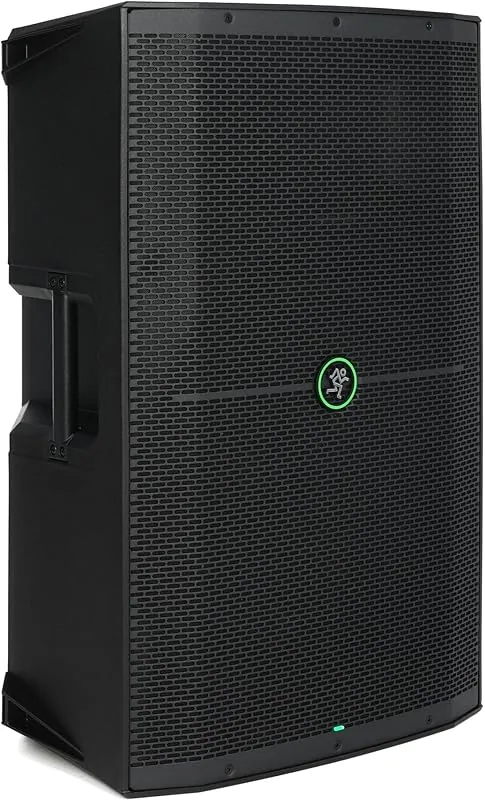
I’ll happily admit that I’m largely unfamiliar with the Mackie Thump brand, but I’m very impressed with the 215XT!
This is a rugged, (relatively) lightweight powered speaker running a whopping 1400 watts of class D power. I wouldn’t use it at a jazz gig in a coffeehouse, but it’s a great piece of gear for playing outdoors or larger venues.
The sound is crystal clear, with the 15-inch woofer doing most of the legwork here. It projects and disperses the sound very well.
I found the bluetooth connectivity very useful: I was able to play some background music during a break between sets via Bluetooth, which is always a welcome feature.
Honestly, the sound here is so clear and wide-ranging that I’d happily use it in a home theater!
The build quality of the Mackie Thump was noticeable as soon as I picked it up: at 35 pounds, it’s not quite as lightweight as Mackie claims, but it’s far from back-breaking. I’d happily lug it up and down stairs for load in and out.
Singing through the Mackie Thump yielded very satisfying results: my voice came through loud and clear, even outdoors and several yards away.
It’s big, it’s loud, it’s relatively light, and it’s a great piece of gear.
5. Alto Professional TS408
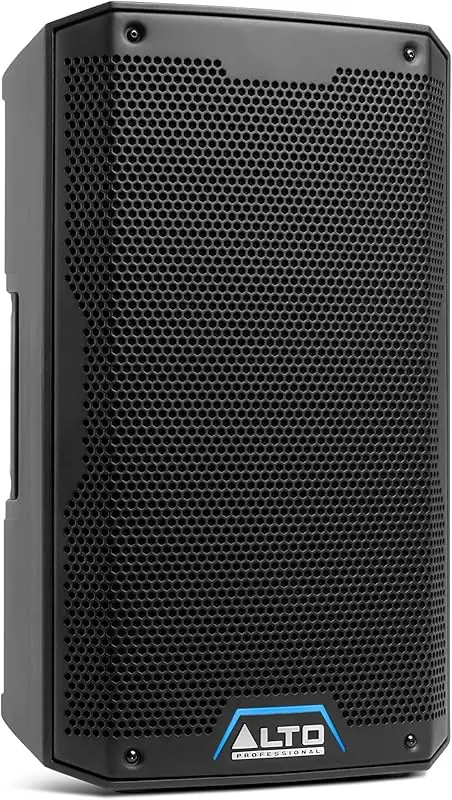
The Alto Professional TS408, despite its name, isn’t just for female singers. Its 8-inch speaker isn’t massive, but the two thousand watts of power on offer here mean it provides plenty of headroom and a great, clean sound.
I tried it at first just as a vocal monitor, and it was great. Easily audible from the ground wedge, and easily transportable too.
I found the sound out of the box to be perfectly usable, but they do offer plenty of EQ tailoring options just to make sure the speaker suits any given room.
I’m not a huge fan of having to use a special app for my gear. The Alto demands use of the Alto app for full remote control and speaker settings, which is easy enough to use, but I generally prefer onboard controls.
The Bluetooth connection to support this holds up decently well over distance and, as I found, offers a great listening experience when I needed to play music through the speaker. AC/DC’s Back in Black sounded clear and powerful, just like it should!
6. JBL EON One Compact
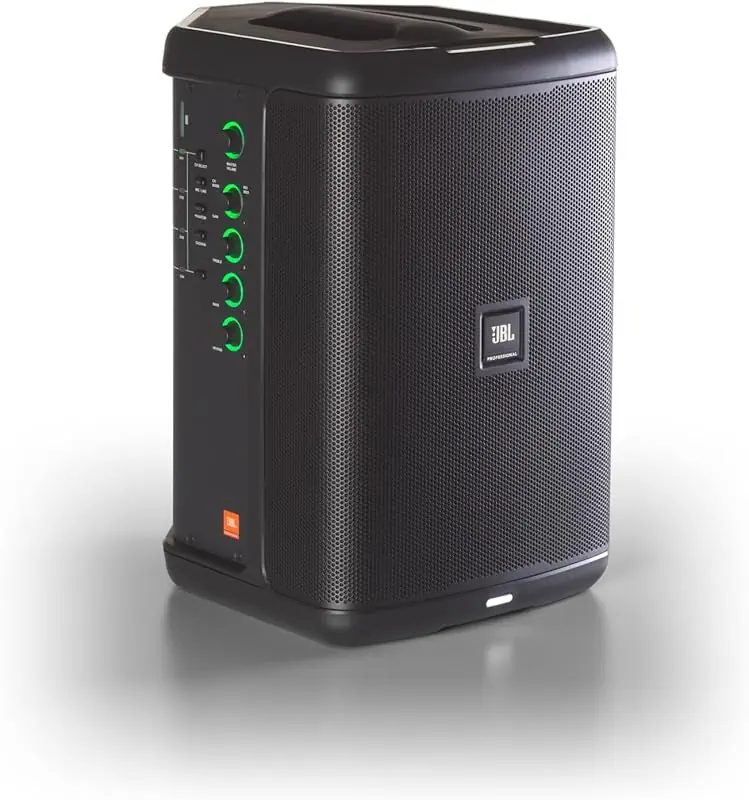
The JBL EON One Compact is my go-to piece of gear for all solo gigs, and even occasional duo shows! I’ve used it for street busking, private parties, bar shows, and even as a party speaker for my own back yard.
It’s under twenty pounds, so even the diminutive young woman I occasionally play guitar for can carry it to and from gigs.
I tend to use this for gigs up to a few hundred people, and the speaker isn’t quite powerful enough to really crank up and play outdoors. I even used it to play a show in a sheep shearing shed once!
The Eon One dedicated app has a steep learning curve, but once I familiarized myself with it, it was much easier to use than the slightly less-than-intuitive controls.
My guitar sounds great through it, and the ¼ inch pass through works a treat when required. I’ve played some full band shows where I slaved another JBL EON One Compact to the first one, effectively running two in series.
There’s only phantom power from the first input, but that’s enough for a solo application.
The battery power, however, I’ve found is good for eight to nine hours of solid gigging, too. It sounds great at higher and lower volumes, although I do have to tweak it manually using the app for vastly different venues and noise levels.
Overall, this workhorse is a staple of my solo rig, and I’m always happy to use it.
You’re The Voice
When it comes to a live show, the singer’s voice being clearly audible is the most important thing. Nothing turns an audience off more than being unable to hear the lyrics to their favorite songs.
I like my voice to be able to cut through the mix, nice and clear, without competing for space with the other instruments. This is doubly true in a full band context!
The good news for singers is that human ears evolved to hear, mostly, the range of human voices. Accordingly, our musical instruments and systems of amplification are tuned and specialized to the frequency range of a human voice.
Where it gets trickier is the specific tonal range of a voice as opposed to, say, a bass guitar, or a keyboard. Some singers are louder than others, and will belt into a microphone, bringing about unwanted murkiness or even distortion. Others are so quiet you have to crank them in the mix.
No matter what, it’s important to get a vocal amplification system designed to take a microphone input and replicate your voice as cleanly as possible.
As always when it comes to a gear purchase, the most important piece of the puzzle is your specific use case. I tend to use my JBL Eon One Compact for solo gigs. That’s my go-to piece of gear. It’s loud enough for pretty much all the smaller venues I play, and I don’t need too many inputs.
Sometimes, however, I need a much bigger PA, especially for full band shows. Getting the right number and type of inputs, outputs, and headroom (that is, clean volume) for your use case is critical. Smaller rigs are worthwhile for smaller gigs. Bedroom singers don’t need much volume. Playing outdoors demands a ton of volume.
It’s all about what’s best for you!
Great Vocals in Every Venue
Having a great-sounding vocal speaker is critical to any vocal performance. The best singers deliver flawless performances devoid of unwanted hissing, crackling, or feedback. It’s all about clean, pure vocal tone, and hearing all the personality the singer has to offer.
As far as I’m concerned, getting the right speaker, whether it’s as a vocal monitor, for home use, or an all-in-one gigging solution, is a vital piece of the puzzle. From coffeehouses to shearing sheds, there’s a vocal amp for you.
