
Valves are valves. I know, that’s a polemic (very polemic) statement to make in times like these when everything is emulated. Well, especially in this day and age, I need to reaffirm that.
There’s something special about the real deal that’s just magical. A kind of magic with a hefty price tag, of course. That’s the reason why even Universal Audio came up with a FET version of the 47. I know, it’s still stratospherically expensive.
Luckily for us, saving for a lifetime to invest in one isn’t the only alternative to get that forty-seven sound.
Top 3 - U47 Clones
Preview | Product | Price |
|---|---|---|
 | ||
 | ||
 |
What you’re about to see are the best options right now for those of us who need to stick to a budget and can’t just spend that much on a (on your feet, ladies and gents) u47.
I did the heavy lifting for us all and tried a bunch of them so I could narrow down the list to the best options out there. Believe me, some of these are shockingly good.
Let’s do it!
Best Budget U47 Alternatives for Cloning that Signature Sound
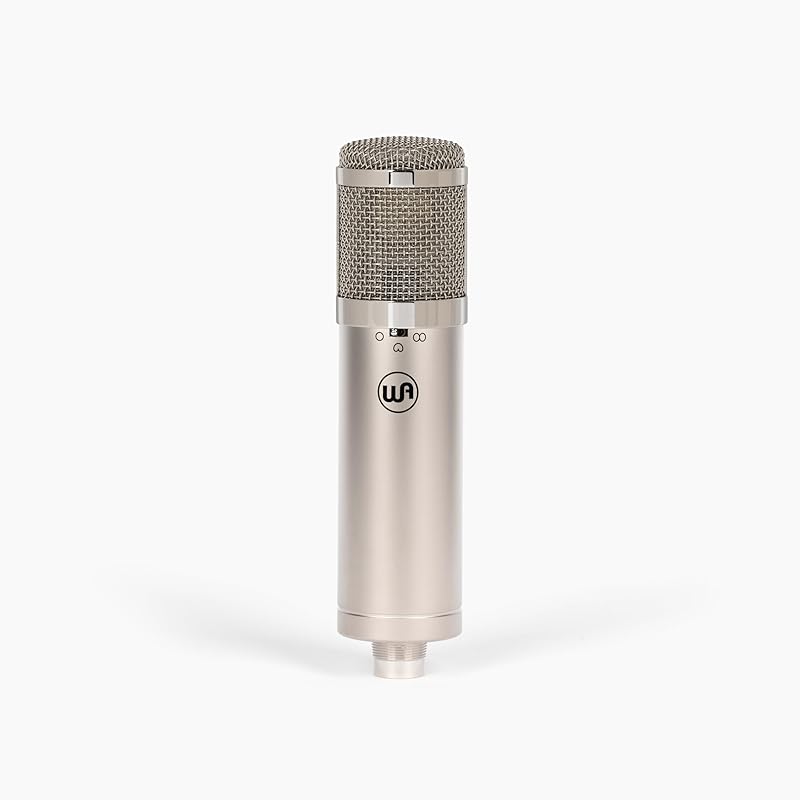
1. Warm Audio WA47 Jr
Warm Audio did it again, folks! This transistorized version of the u47 is a mix of top-shelf components and great attention to detail that offers more than the original did, but with its own flavor.
If I could use one word to describe the WA47 Jr, it would be warm. It’s ironic, I know, just like the brand, but believe me, this thing is warm with a capital W. This is good and not-so-good news at the same time.
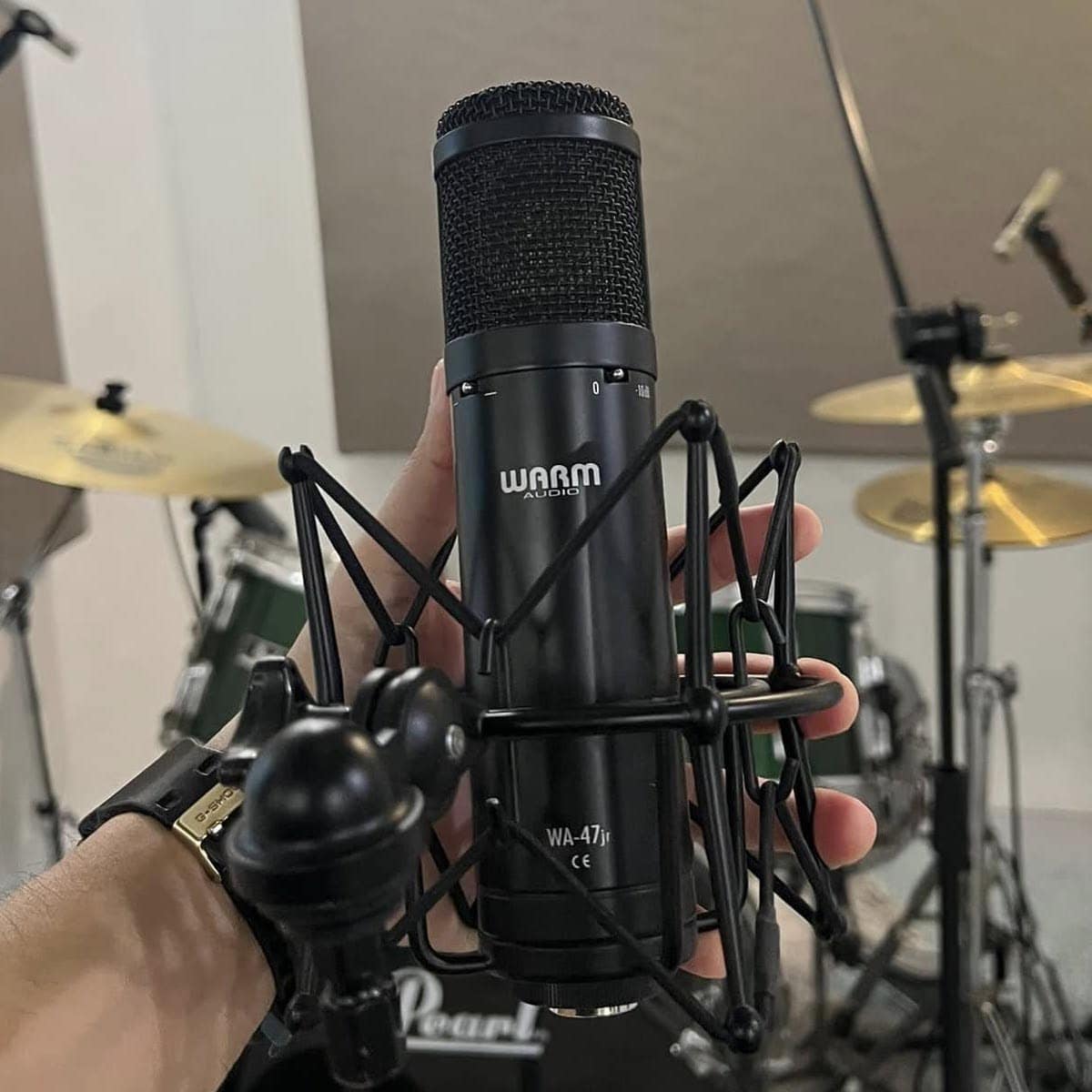
Warm Audio WA47 Jr
The good news is that it gives you that warmth associated with tubes and that punchy clarity right at the 1.5 kHz, while everything over 18 kHz is properly smoothened and musically rolled off.
The bad news is that you can’t get rid of it. If you have, for example, a rock singer coming to your studio, you just can’t get that clarity in the upper highs. You’ll always get a warmer, bassier tone. Think of Frank Sinatra’s vocals: Projected, powerful, clean enough to cut the mix, but big enough to own the track.
Well, that vintage low-end is there to stay.
Moving on to specs, I loved the three patterns: omni, figure of eight, and cardioid. It can be a great microphone to record claps, a full drum kit, guitar and vocals, two singers, and, well, anything that can benefit from the warmth. For example, it worked wonderfully with an all-mahogany Martin, capturing the guitar’s own roar-and-purr dynamics with a big, beautiful, loud-and-proud bottom end.
In the case of voice over, close talking, and whispering, I don’t think this is the most suitable option. I mean, on one hand, you get that fat and beautiful bottom end, but at the same time, you can’t get rid of it. If you happen to have a client with a very low register (or have one yourself), you’ll struggle for clarity.
So, rock singers and people with a very low register, be aware of the warmth. For those in search of a studio workhorse that tracks (almost) everything with great instant results, give it a try.
And for those who want to try out the full valve experience, try the big brother, the WA47. The brightness and magic are something else, and so is the price. Finally, the single-polar-pattern WA47Jr SE is perfect for tighter budgets.

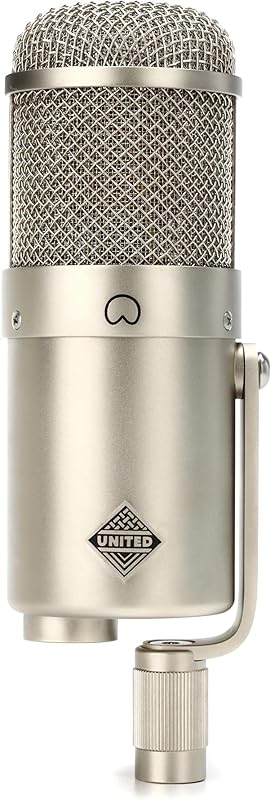
2. United Studio Technologies UT FET47
Right after the reign of tubes was challenged by the need for more reliable technology to make sound, FET transistors rose to fame. These represent one of the earliest and best efforts made by the manufacturing industry to replace valves.
That’s exactly when the legendary U47FET came out and changed history forever (again).
The UT FET47 is a reproduction of that iconic microphone.
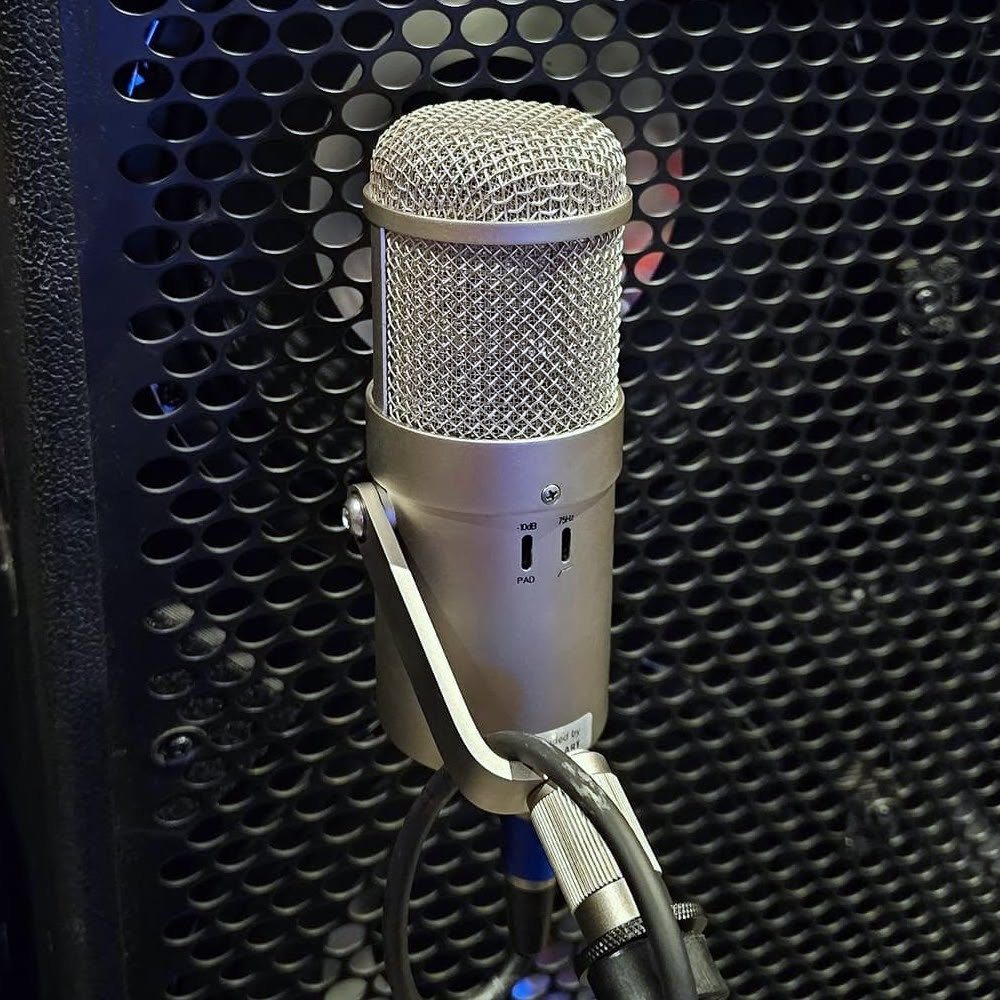
United Studio Technologies UT FET47
It’s as close as United Studio Technologies could possibly make it. They even went the extra mile in finding era-correct, NOS FETs, original, vintage polystyrene capacitors, and hiring legendary designer Eric Heiserman to design his own take on the K47capsule found in the original.
What does all that effort sound like? Well, it’s quite close to the original, but with some differences.
To begin with, the low-end and the clarity in the lower mids can be audible from moment zero. This is an outstanding microphone to capture a kick drum, a bass cabinet, upright bass, acoustic guitars, vocals… and the list could go on forever.
In my opinion and experience, it’s much better at working with instruments and louder audio sources than with vocals. This is because it wouldn’t benefit every singer out there. I tried it with my own voice, and it felt great, almost velvety, but I had to roll off a bit of the top-end (everything above 10 kHz) to make it a bit more vintage correct.
That’s the thing, it tends to be a little of both worlds, adding modern brightness to a vintage flavor. While that might be great for some vocals, it’s not perfect for every voice. For example, we tried it with a female vocal and the sound was oh-my-God good. On mine, it was unimpressive, kind of middle ground.
That said, with an acoustic guitar, it sounded clear, articulate, not boomy but generous in the low end. Furthermore, in front of a bass cab, it became a great choice to capture a slapping jazz bass since it delivers a very tight low end with some razor-like mids and higher mids.
I wish it had more polar patterns available, but the 10dB pad and the high-pass filter are very welcome, and, to be honest, the original design doesn’t have multiple patterns either.
If you want a studio workhorse to use on everything and work with multiple singers, you’ll get a lot done with this microphone. On the other hand, if you’re looking for that specific U47FET sound, you’ll find the UT FET47 to be a little too bright.
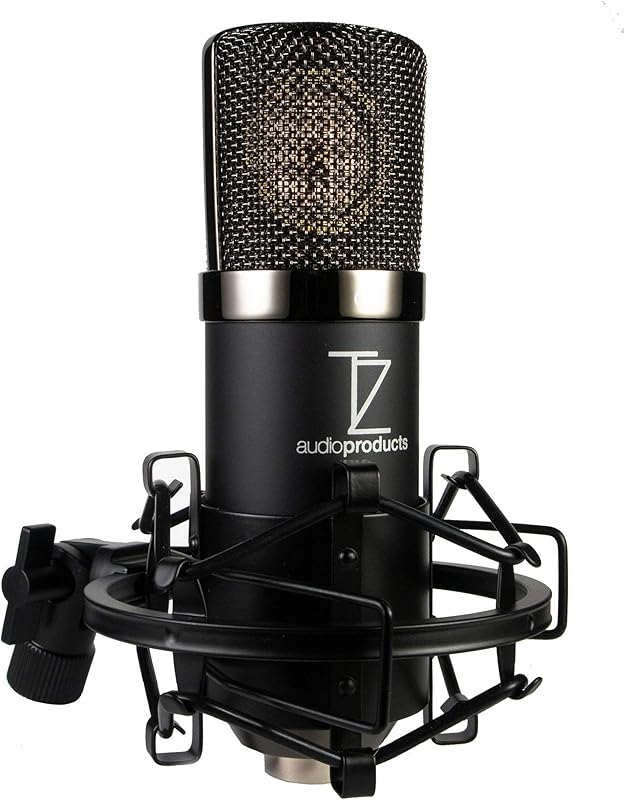
3. TZ Stellar X2 Vintage
There’s a lot of microphone for the money in the TZ Stellar X2 Vintage. I mean, just holding this microphone in your hands makes you believe you’re seeing an item from the future. Its sleek, gold-and-matte-black exterior and bigger-than-life tone are a unique combination.
I noticed right away that it didn’t feature either a -10dB pad or a high-pass filter to get rid of the muddy situation below 100 Hz. That might be this microphone’s only drawback. For the rest, it’s a great performer for a plethora of situations.
Let’s dive into it.
The first thing I did was sing to it. I cut several takes working with the proximity effect, and, while I have to recognize there’s a full bottom end with nice warmth and punch, the bump it gets in the 1.5 kHz to 10 kHz before smoothly shaving off the super-high end is quite noticeable. It opens the sound a lot. You feel your takes are livelier and that’s a beautiful difference with the original.
That clarity translates from vocals to every other instrument you put in front of. For example, kick drums and bass cabinets were tight, punchy, and surprisingly articulate. Moreover, acoustic, wooden instruments like acoustic guitars (especially 12-string) shine through while retaining their organic element.
I did a bit of “Wish You Were Here” by Pink Floyd (it sounds weird clarifying that, but there are so many songs with the same name), and it sounded just right. Like a record with a tiny bit of natural compression from the real FET transformers, adding punch and clarity.
One thing to bear in mind here, though, after saying all of the above, is that this is still a 47. That means bottom end is the name of the game here. So, how can you handle that bottom end when dealing with low registers? You might wonder. Well, you have to do that in the aftermath, AKA, the mix.
There’s no way you can get rid of the natural warmth and tight bottom end, which makes the applications of this microphone a bit limited.
If you want to add a vintage flavor to your mic cabinet with an affordable option that can capture the warmth and growl easily, this is a must-try. On the other hand, if you want a do-it-all microphone, openness will be welcome, but you’ll have to work that low end a lot.
4. Universal Audio SC-1
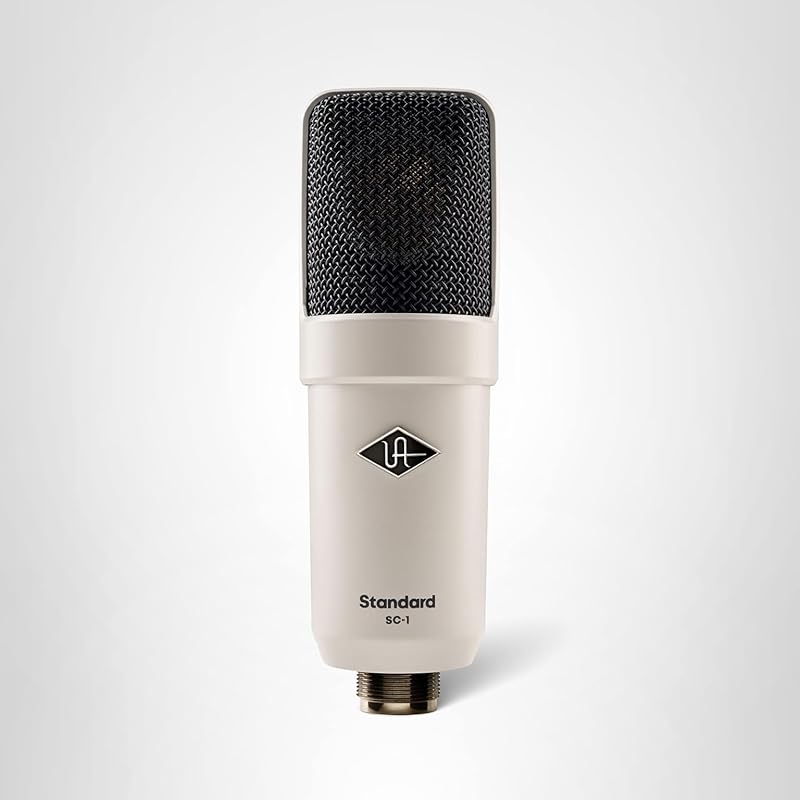
Universal Audio has been making history with its modeling products for a long time. They’re the spearhead company when it comes to emulations, state-of-the-art plugins, and sound interfaces. It’s no wonder that, after conquering the digital realm for guitar heads, they’ve decided to rule the world of microphones. Believe me, with products like the SC-1, they can very well do it.
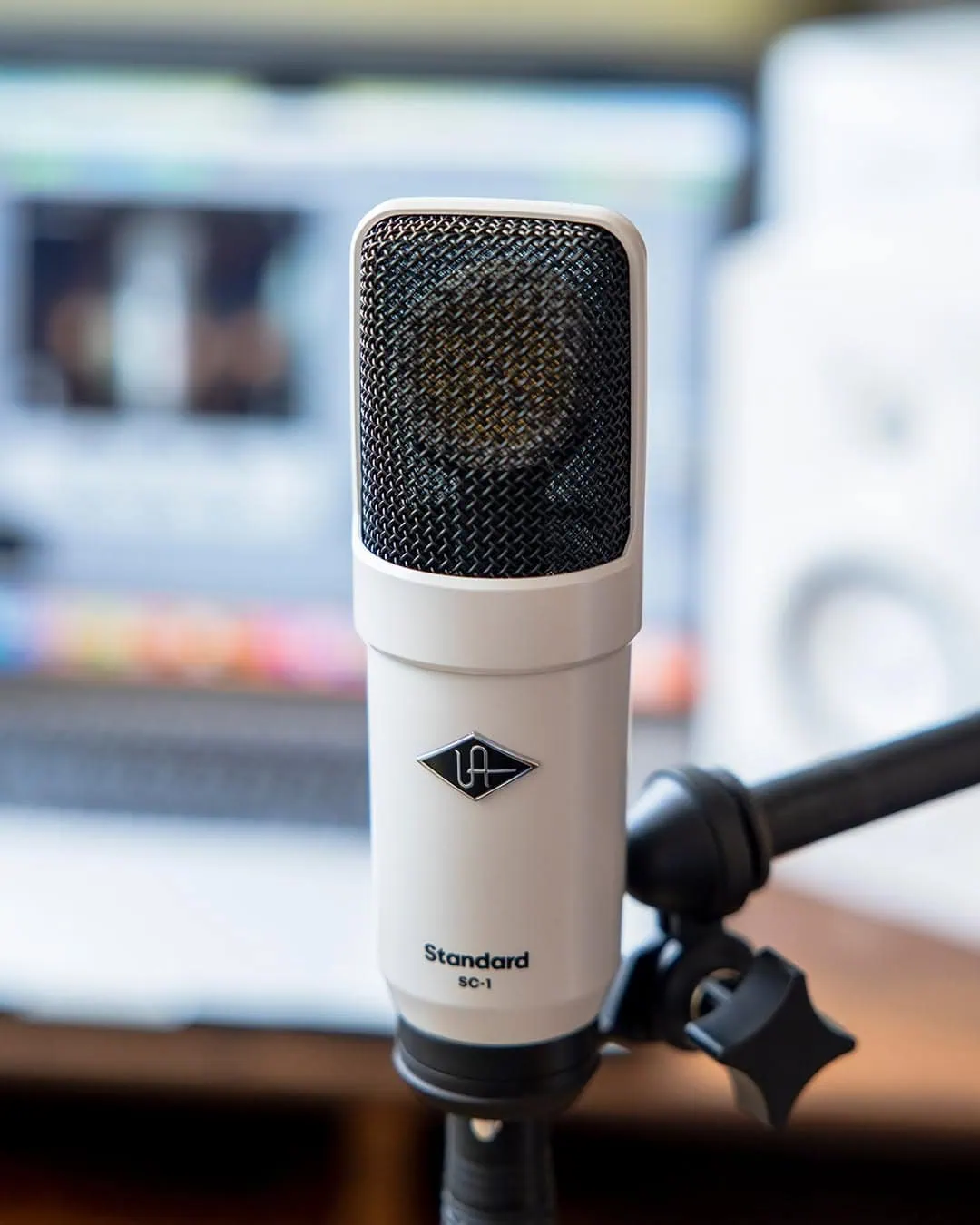
Universal Audio SC-1
Here's the deal: this is a modeling microphone, to which we’ll get in a second, but it’s also a great condenser on its own. It’s modern-sounding with a tight bottom and big, articulate, bright high-end. It’s not what you’d call a vintage-sounding condenser, but it’s good to bear in mind that this is yet another sound to play with.
That’s exactly what I did first: I tried the mic without the software. My vocals were very powerful and round with lots of high midrange and an open, big, natural presence. Me being a retro freak, I missed that warmth you get from a 47 rounding up the bottom end and giving those high notes some flesh and meat.
But that shouldn’t come as a surprise, after all, Universal Audio is great at doing modern-sounding gear.
The thing is that when you open the included software, you have access to many different classic microphone models that open the sonic palette widely. The first in line is, of course, the K47-style capsule.
I tried singing the same melody in this mode, and the result was so different I had to look at the mic twice. It really changed the feel, sound, and response of the microphone. It made me sing differently! That’s how believable it was. I just loved that extra roundness below my vocals and the round bottom end on every vibrato.
But that’s far from all, because there are three settings on the software that come super handy to try sounds. This is something you can adjust even after you’re done recording. The three knobs are filter, proximity, and axis.
With those, you can choose from 4 different modeled pop filters, virtually move the microphone from the source, and virtually change the axis.
What can you do with those?
Well, for starters, I got rid of all my lousy plosives just by finding a better filter setting after singing. Also, I was able to find the sweet spot for my voice by using the proximity knob. I did it on the vocals, but can you imagine moving drum microphones around without leaving the chair? Finally, the axis works wonders if you want to get rid of any harshness or annoying high frequencies. Did you get too much resonance from that snare? Just get rid of it by moving the axis knob.
This microphone does a great u47 sound, and it also does much, much more. I would recommend it to everyone except purists and connoisseurs. If you’ve heard the real deal, you won’t find that kind of magic here; those sparkling, musical highs and the organic, lively lower midrange only belong to the valves in the real deal.
For everything else, this is a great do-it-all studio tool.
The U47 vs The U87, Which One’s for You?
These are microphones that follow music’s timeline in the past century. The u47, the original design by Neumann, was released in1949, prepared to capture the big bottom-end of the crooners and give male singers that lower midrange needed to fill the track.
What made it stand apart from the pack was that it also captured higher mids musically, and those organic notes could cut through the dense mix of, say, a fifty-people orchestra.
It was tube-driven, so it came with a separate transformer for that and was used by everyone from Sinatra to The Beatles to Johnny Cash and Elvis Presley.
The thing is that, as rock and roll came along, it changed it all forever. This new musical style required more high-end. The line “howling sounds of rock and roll” isn’t just poetry; it’s a true definition of the frequency spectrum that this new musical style occupied. That of a howl, rich in midrange and high-end.
A new capsule by Neumann came along to rule the world and became the new standard for the industry. Gone were the valves and their warmth. Don’t get me wrong, the bottom end was kept big and tight, but the new EQ gave rock singers a new edge, a new sound. That’s the u87, a FET solid-state microphone that’s one of the most recorded in music history.
So, for a vintage-sounding studio microphone, the u47 is a much better choice. It will make everything sound warm, full, and punchy with a vintage flavor in the lower mids.
On the other hand, if you want a modern-sounding, rock-oriented, warm but very defined and articulate microphone, you’d be better off in the u87 realm.
Key Differences
Polar patterns – The u47 is a cardioid microphone. This means it always aims forward to the sound source, rejecting whatever is happening around. The u87, on the other hand, comes with three polar patterns: cardioid, omni, and figure of eight.
SPL – The u47 is widely used for capturing bass-oriented, loud sources like kick drums and bass cabs. Besides its natural EQ curve, its maximum SPL is of 147dB (with the pad on), so it can withstand those sounds much better than the u87 with just 127.
Frequency response – The u87 is a modern-sounding microphone with a frequency response from 20 Hz to 20 kHz. The u47, on the other hand, has a 40 Hz to 16 kHZ response. That’s something to bear in mind when capturing certain studio instruments.
Where is the Magic in the U47?
Now that you know what the key differences between these microphones are, it’s time to address what makes the u47 a legendary piece of equipment.
The magic resides in how it captures the lower mids, giving everything the right dose of body and punch. That said, if you want to capture something that needs to feel warm but close, organic, and natural, the 47 will provide just the right mix of midrange.
For example, in my humble opinion, there’s no better large-diaphragm condenser out there to put in front of a kick drum or big bass amp. Also, if you want a crooner kind of vocal or to increase the warmth of your voice-overs or even to use as a vintage flavor for the studio, the 47 is outstanding.
Finally, it has the same effect on humans that most Telefunken and Neumann microphones do; they make it all sound instantly better. That, right there, is magic.
The Bottom End
The u47 isn’t everybody’s cup of tea. It’s a bold, vintage, big, and warm microphone ready to take the entire track. In modern-day music, that makes it difficult to use for the vocals that usually sit over the beat and need that higher-midrange clarity to sound fresh.
What if the 47 was the element that allowed you to mix both worlds in your productions? I can’t even begin to tell you how good this microphone sounds on an acoustic instrument, a grand piano, and even a double bass. It’s perfect for kick drums and for just about everything else in a studio.
So, pick the one of the list that’s closer to your budget and needs and add that vintage sound we all love to your color palette.
The u47 has been making magic since the forties, so you’ve heard it a million times. Believe me, it’ll sound like home.
Happy (warm and punchy) recording!
