
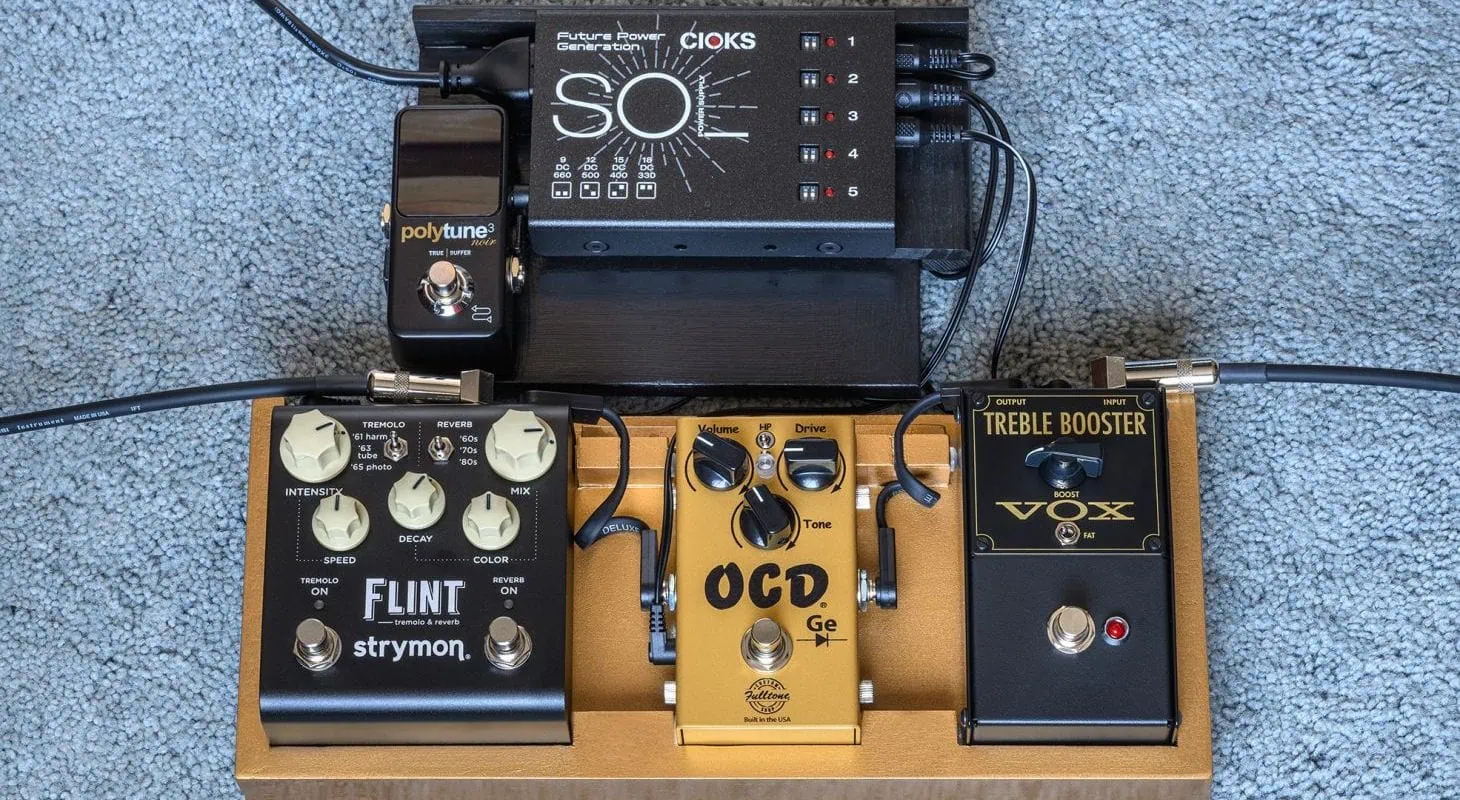
The humble Treble Booster is something of an undiscovered secret for many players. Back in the old days before digital modeling, before the advent of the pedalboard, even before the advent of the guitar pedal, players were looking to get more out of their tube amps.
The “treble booster” circuit as we know it is responsible for some of the most coveted classic tones in popular music. The list of iconic players and sounds includes Brian May, Eric Clapton, and Rory Gallagher: running a treble boost puts you in good company, without a doubt.
Top 3 - Treble Booster Pedals
Preview | Product | Price |
|---|---|---|
 | ||
 | ||
 |
The basic mechanic is simple: it increases the signal input into a dark, cranked tube amp, boosting treble and adding a little extra drive. Many players prefer them over simple gain-boosting overdrives for this reason.
Best of all, modern players are rediscovering the joy of the humble treble booster. Without further ado, these are some of the best treble boosters on the market today.
4 Best Treble Booster Pedals to Push a Little More!
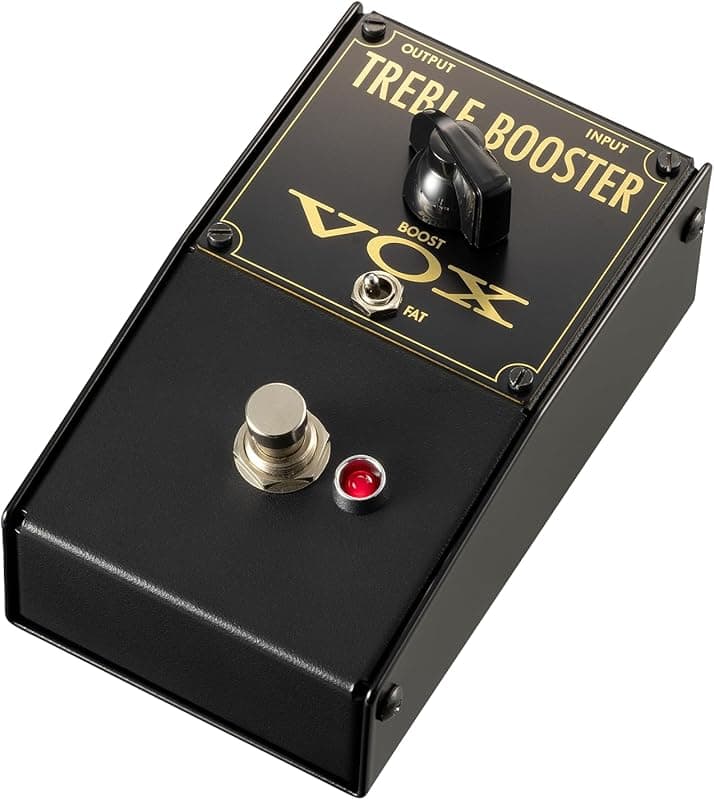
1. Vox VTB1 Treble Booster
It’s not exactly “instant Brian May lead sound” but it’s a key ingredient: the Vox VTB1 mimics the characteristic sound of a cranked AC30 and its treble boost channel. That’s a big piece of the Queen tone puzzle, right there: handbuilt guitar and glorious mop of curly hair not included.
This is a decidedly vintage-voiced treble booster. It’s a germanium circuit, which was popular in the 60s, but it’s considerably less noisy than those used to be. Watch any old Rory Gallagher concert footage: there can be notable hiss and crackle that I certainly don’twant, or need! For me, less noise.
The single-knob layout reminds me of the MXR Phase 90, and inspires faith. If Vox thinks this pedal only needs one knob, that’s a vote of confidence as far as I’m concerned. The pedal offers a significant front-end push.
The term “treble booster” is something of a misnomer. Upon plugging in with my friend’s Stratocaster, I immediately noticed that it adds treble, but also cuts bass, and pushes a very nice amount of gain into the preamp. I prefer it running into a clean-voiced Vox or Fender-style amplifier: it didn’t really add much to my Marshall Plexi, which is very bright-voiced to begin with.
I also found that this pedal plays very nicely with gain stacking! It especially works to boost a darkened overdrive like the OCD.
It’s a great circuit, built like a tank. I’d happily use this as my main lead boost for a big, scalding rock tone.

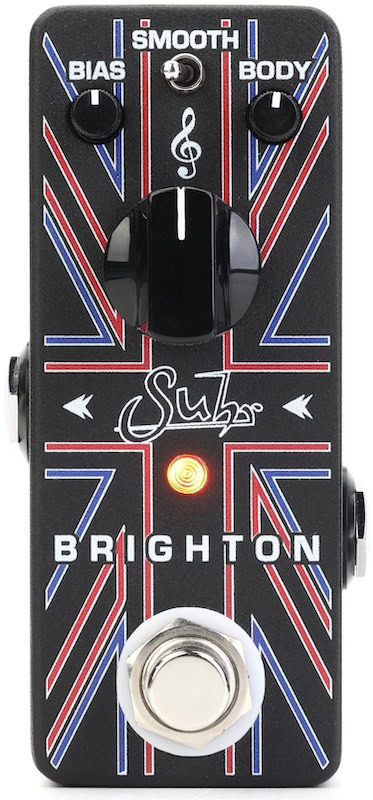
2. Suhr Brighton Treble Booster
If Suhr can make puns in naming their products (brighten/Brighton, get it?), I feel confident doing so, too. The Suhr Brighton is the Queen of treble boosters. The design brief may as well declare “we will, we will rock you.”
Armed with a nifty Union Jack design and a pleasantly sensitive control array, the Brighton booster feels custom-built for searing rock lead guitar tone.
The tonal character here is very distinctive. It offers plenty of top boost, as the name implies, but the “smooth” toggle switch rounds off some of the harsher, icier frequencies. I very much appreciated its sensitivity to my picking intensity.
Big arena-ready chords sound authoritative and throaty. I appreciated the clear, defined notes within even denser, jazzier chords. I found this pedal particularly well suited to roving triads situated over a droning open string: the intro riff to “War Pigs,” for example.
There’s not quite enough meat here for full-bore chugging metal tones, but plenty enough for 70s hard rock.
The additional knobs function as an EQ. “Body” is effectively a “make warmer” control, while “bias” is a “rock harder” control. It’s useful for using the same pedal and switching guitars with different voicings: going from a Les Paul to a Stratocaster, or tuning down to drop D, for example.
It’s hard not to break out into spontaneous performances of the riffs from “Bohemian Rhapsody,” and it’s very satisfying conjuring Brian May’s white-hot lead tone from this nifty little pedal. Overall, a great unit that is extremely fit for purpose.
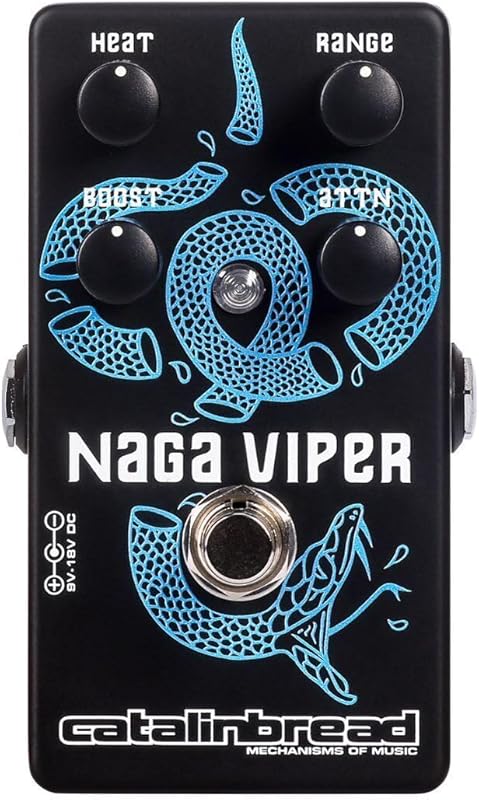
3. Catalinbread Naga Viper
The appropriately named Naga Viper from boutique builders Catalinbread is aptly named: it adds plenty of bite and venom to my guitar tone.
It’s clearly designed to be a strong boost for a cranked tube amp. It simply removes the natural muddiness that comes from really cooking the tubes in an old-school amplifier. It gets the absolute best out of my Plexi at higher volumes, for example.
Rolling back my Les Paul’s volume knob cleans up the tone enough to make it a viable rhythm sound, with all the spank and character retained.
The “heat” knob is the star of the show here. While most treble boosters offer very vintage-voiced sounds without much gain on tap by modern standards. Where the Naga Viper stands out is its “heat” knob offers plenty of gain, veering into fuzz territory when in its most clockwise position. I found the fuzzier character to be very reminiscent of Jimi Hendrix’s fuzz sound, or of '70s Black Sabbath records.
Catalinbread builds sturdy, reliable pedals, and this is no exception. It’s reassuringly weighty in my hand and the volume boost here is significant. That, plus its distinctive tonal character, make it an excellent solo boost, even for heavier styles of music that demand more gain than I’ve ever encountered on offer from a typical treble boost.
While many boosts are voiced for lighter rock styles, channeling Queen or Rory Gallagher, I feel like the Naga Viper is built for Sabbath fans or those playing stoner or doom metal.
4. Fulltone Custom Shop Ranger
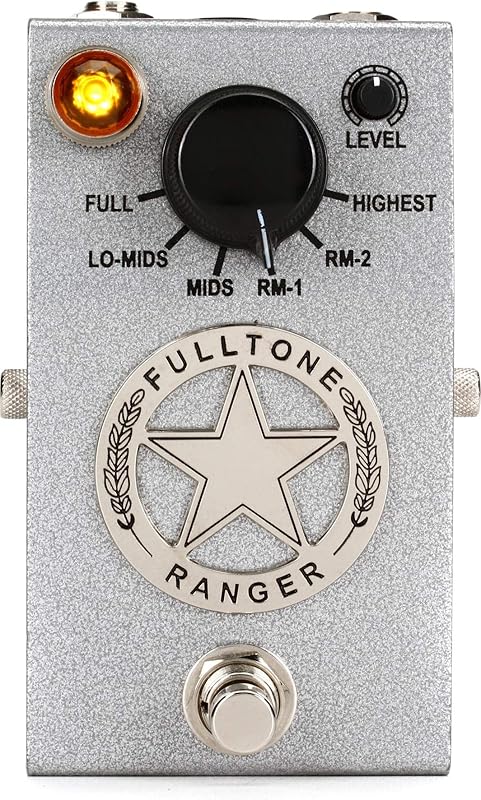
The Fulltone Ranger is the most faithful reproduction of the classic Dallas Rangemaster I’ve ever encountered.
I’ll be the first to point out that it works best as a direct replacement for the Rangemaster. It needs to go between a guitar (I tried both a Stratocaster and a Les Paul) and a dark-voiced tube amplifier running at full-bore poweramp saturation.
There’s a big jump in input signal here and the characteristic frequency shape that made the original Rangemaster so effective.
It worked best straight into an old Fender Champ, which is prone to muddier compressed tones at higher volumes. It added plenty of bite to my sound. With my Les Paul, it sent the Champ into searing rock lead territory. It also added a lot of bite to my Marshall Plexi’s tone, although it was a little too much treble for my taste. On the other hand, I stacked it with Fulltone’s Obsessive Compulsive Drive, and it worked wonderfully as a lead boost with gain staging.
With my Strat, I found myself in instant Rory Gallagher territory. I kept running through Rory’s blues licks from “Tattoo’d Lady” and “A Million Miles Away.”
The rotary switch allows for switching between different Rangemaster and Rangemaster-inspired tones. I found the rotary switch and adjustable bias trimmer to be more useful in simply trusting my ear. Some positions worked better with my high-output Les Paul than with the Strat, and vice versa.
One cool feature I found was that, at lower gain levels, this treble boost offers a very useful light drive, perfect for red dirt and modern country tones.
There’s a pleasant amount of gain boost here. Nothing bordering on fuzz or distortion, but enough of a signal boost to make guitar solos really stand out, especially with a big band. It cuts through the mix very nicely. I used it in a band with a pedal steel and an organ, and found the boost extremely useful for soloing.
I Knew You Were Treble When You Walked In
Treble boosters aren’t quite as popular or widely used as their related pedals, like overdrive, EQ, and fuzz.
The best known treble booster, the Dallas Rangemaster, was a common “secret weapon” in many players’ arsenals. It was not originally released as a guitar pedal, but as a unit to sit on top of the guitar amp. It shaped frequencies that were affected by cranking an old amplifier, like an EQ pedal. It also often added some gain and boost to the input signal, like an overdrive.
The basic use case of the Rangemaster was that the popular British tube amps of the 1960s became dark and muddy at high volumes. This was exacerbated by the darker voicing of the then-brand-new humbucking pickups, especially in the Gibson Les Paul. Players lost their picking attack and their leads got lost in the mix.
Ironically, overdriving the amp was a key concern, so many old treble boosters didn’t push the input stage of the amplifier very hard. Players loved high-headroom clean tones back then!
This extra input shaped the classic tones of many of the era’s greatest guitarists, including Black Sabbath’s Tony Iommi, Deep Purple’s Ritchie Blackmore, and Queen’s Brian May, as well as Irish blues legend Rory Gallagher.
A treble booster is a key piece of that tonal puzzle and is an irreplaceable part of any rig attempting to approximate those tones with era-accurate equipment.
Final Word
The treble booster is a great tool for any guitar player. Most important is to find a booster that offers the right voicing and gain staging for your needs. Era-accurate Rangemaster clones might not add enough gain for modern doom players, but there are treble boosters that have plenty of germanium transistor-powered gain.
A treble booster can be a great asset for classic and modern rock, as well as lead players in country and blues looking for a unique flavor in their tonal palette.
