
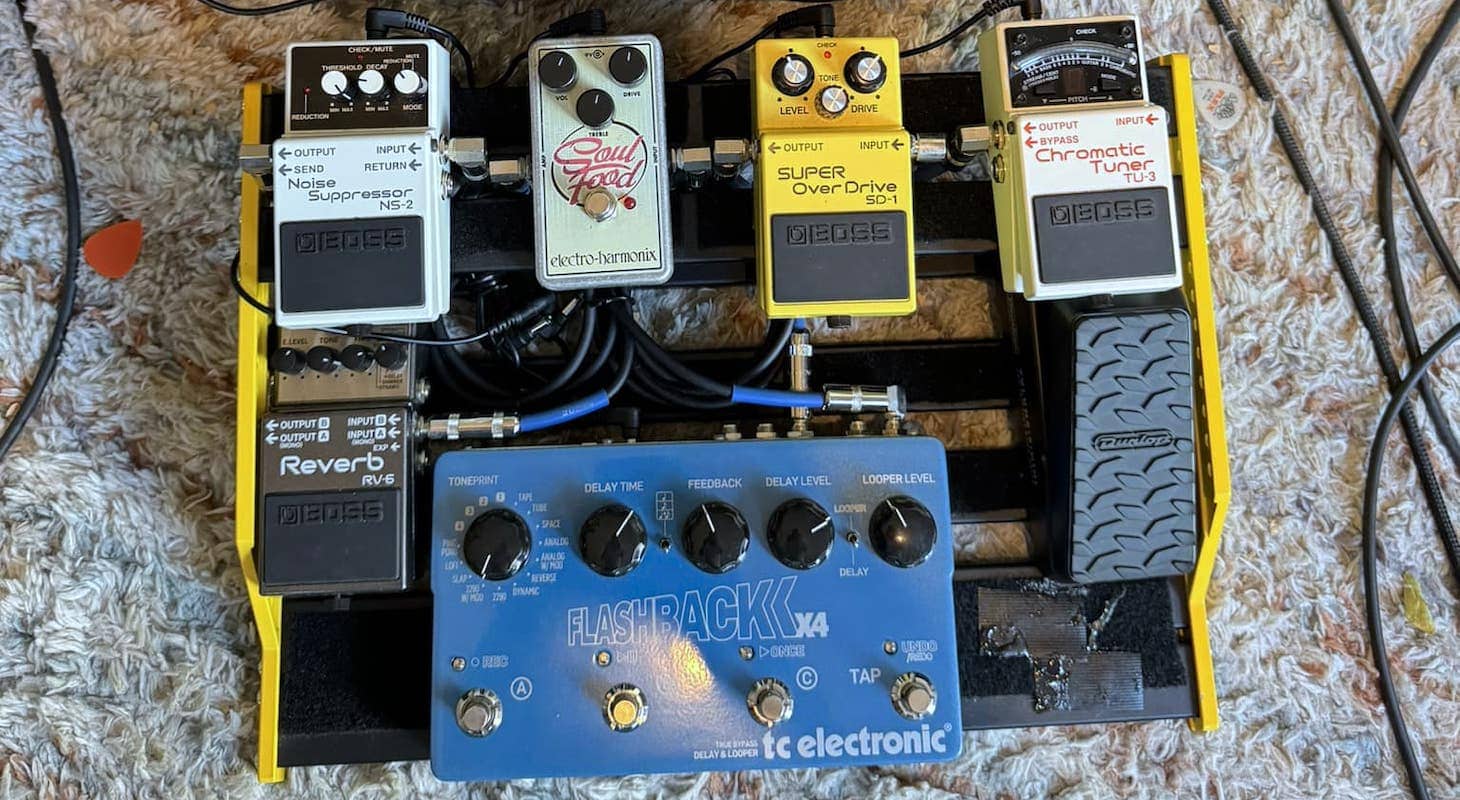
Reverb has been among us longer than any other effect. That’s if we talk about guitars. The cavernous setting in more than one of the following pedals can even resemble life in prehistoric times.
Well, we mastered reverb so much that today, a single guitar can fill a church, an arena, or a stadium with a beautiful wash that elevates the room.
The hard thing is picking that needle from a haystack. I know this because I've done it myself; the options are endless!
Top 3 - Reverb Pedals for Worship
Since we are on the same journey, I decided to share with you my favorite picks in the market right now. These are for every budget, for every need, and for every set of ears. Your next reverb pedal for worship is definitely on this list.
Let’s go!
Best Worship-friendly Reverb Pedals for Church Tones
1. Strymon BigSky MX
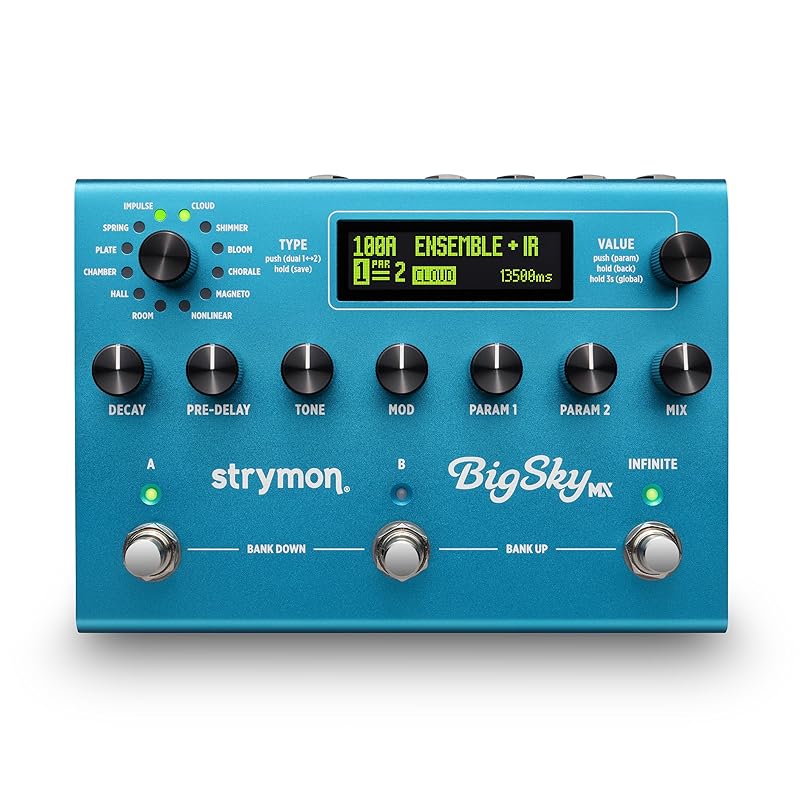
For all of us who thought it didn’t get much better, wilder, awesome, and otherworldly than the Strymon BigSky, meeting the Strymon BigSky MX is an experience. I mean, I can’t think of anything this pedal can’t do. It’s one of those cases in which companies listen to artists and users and come up with better versions of great gear.
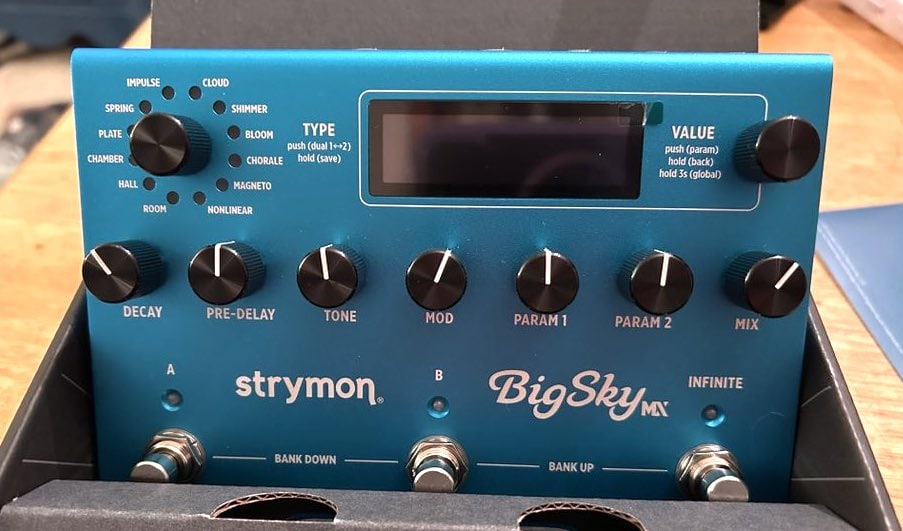
Strymon BigSky MX
MX’s biggest difference from the BigSky is that it comes with a screen. Yes, it’s OLED, and it allows you to dial in and be in total control of what’s going on with the pedal. You can name presets, tailor, store, and tweak them while moving from mode to mode and adjusting everything with virtually infinite tweaking capabilities.
Speaking of which, another big difference between these reverbs is the processing power. This unit comes with a new brain featuring a tri-core processor. That allows some wild, reality-bending moves that I’m about to tell you all about.
To begin with, I went into uncharted territory. Strymon advertises that you can send two different engines or modes in parallel. That’s one to the left and one to the right. I put a nonlinear reverb on one side, and a shimmer on the other, and the result was literally a new kind of experience for my ears and brain.
This thing is mind-blowing to say the least.
But that’s just the tip of the iceberg. Strymon, just like it did with the guitarist-favorite Iridium, went into IR territory with the MX. They not only loaded studio-quality impulse responses, but also blank slots for you to upload your own and then tweak them to find the perfect sound. That expands possibilities vastly.
Speaking of expanding, the third footswitch is labeled “infinite,” so you can imagine I went for it immediately. It’s just amazing to lay a base sound that rings forever while you do a subtle build-up that will fill the space, to say the least. I just strummed an A minor chord, hit Infinite, and played over it to create a soundscape.
However, as amazing as it all sounds, where this pedal shines the most, in my opinion, is in the number of tweakable options you have at hand. I mean, you can tweak even the slightest detail of any bank. Moreover, you can also do weird things like reversing or stretching an impulse response or even feeding one reverb to another.
A good example of the capabilities of the MX is the “Chorale” mode, which adds a subtle but perfectly tuned choir of voices to your playing. It’s not shimmer; it’s a whole different element. It makes any chord sound like it’s illuminating instead of just ringing. You can even add modulation or use the tone knob to make it brighter and more prominent.
The shimmer is another worship-friendly mode and one of Strymon’s signature sounds. Depending on what you choose, you can create a rising trail that gives you momentum and elevation or tune the voices down to add a solid lower octave that makes everything sound bigger.
Believe me, sending the chorale to one output and the shimmer to another creates a sound cathedral. It’s addictive.
I guess the only thing that could be perceived as a drawback is that the company elevated the price for this new iteration while maintaining the original one available for purchase. It might be off budget for many.
That said, I don’t think I’ve ever played through a reverb that was this powerful before. It can build your sound to gigantic proportions while delivering smooth, organic, beautiful sounds that are just inspiring to play and hear.
If it’s within your budget, this is one of the best reverb pedals out there. Period.

2. Walrus Audio Fundamental Series Ambient
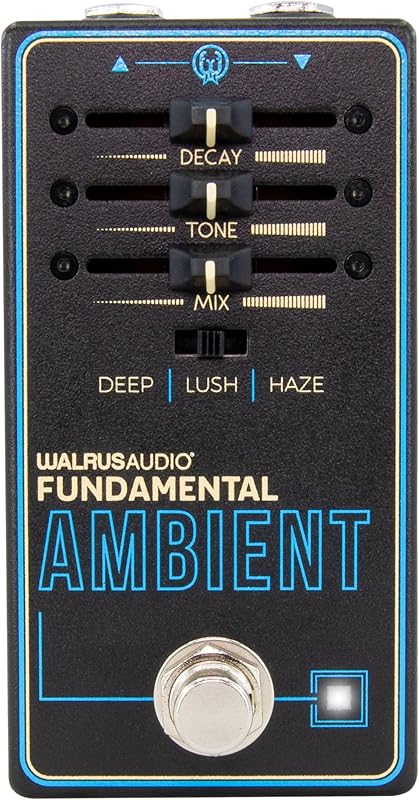
Walrus Audio has been making it to the big stages of the world thanks to their groundbreaking equipment. For example, the fun-and-colorful Canva line is powering pedalboards and transforming the signal of the biggest names in the world right now.
Well, the Fundamental Series aims at the core of any effects pedal. The premise is packing the bare minimum capacity you need to have a great pedal. The Ambient is a great reverb pedal that does a lot with very little.
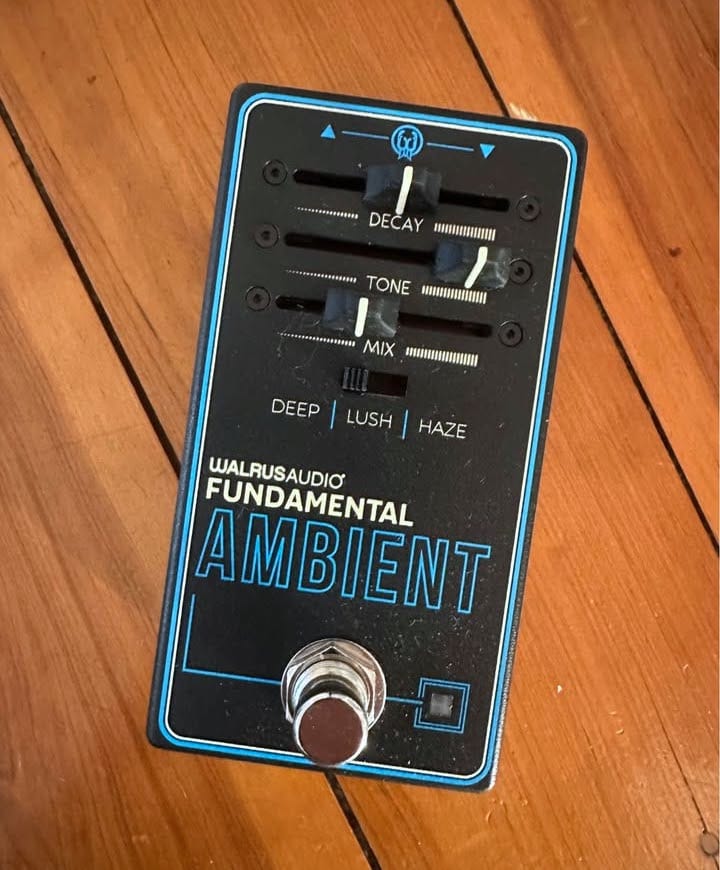
Walrus Audio Fundamental Series Ambient
It comes with one three-way switch and three sliders; that’s it. Yet, it’s all you need to get many usable sounds, especially when it comes to worship and church gigs.
Sound-wise, this is not your standard reverb pedal. It’s got trippy written all over it (I mean, they named it Ambience for a good reason). The reverb effect is lush, big, and you feel like it washes over your entire signal to take it into a much bigger and softer territory.
Let’s dissect it part by part so I can tell you what I loved and didn’t like so much about it.
The first mode is called “Deep,” and what it does is add a subtle lower octave sound to the effect, so it can give you the right kind of vernacular environment for your tone to grow. It’s like walking on clouds with your guitar or playing in the middle of an abyss. The added shimmer to the subtly octave sound is perfect to create space.
I loved it for acoustic and electric guitars, especially when you play a big chord and let it ring. Believe the “bigger-than-life” sticker should come inside the box. That’s exactly what this mode does for you: make your sound bigger.
In this scenario, used with a synth or a guitar with a volume pedal, cranking the mix and decay sliders will ensure your swells feel like divine intervention on any track.
Oh, and the key here was playing with the tone slider to find the sweet spot between utterly cavernous and bright and proud.
The second mode, “Lush,” is a much more classic take on big reverbs. The tone grows but remains faithful, and the guitar or synth seems to breathe more air into whatever you’re playing. I found this was especially useful for arpeggios, for silky pads where voices can really shine. Big, bright, melodic lines just shine through.
I added a bit of grit to make things more midrangey and cut through the mix, and the result was drippy and awesome without losing character. If that’s what you have in mind, beware of the decay slider, because repetitions do pile up and will ring for hours, but will also mess with the rest of your bandmates.
Finally, the Haze mode is great for those after a Lo-Fi kind of reverb that won’t sound crystal-clear but will add mojo and character to your tone. I’m a nineties kid, and I know it, but believe me, this mode punches way above its weight.
It automatically gives you a vintage, slightly distorted, textured sound that can turn any line into an experience. In my opinion, it sounds amazing on anything, from piano to Telecaster. It’s just something you don’t want to turn off!
That’s what I loved about this pedal. Now, what I didn’t like is that it’s not a stereo pedal, and that it can be a tad noisy when compared to other pedals on this list. The catch is that those might cost you 3x more, I know.
However, bear in mind the noise and the mono factors when buying this awesome tiny ambience machine by Walrus Audio.
3. FLAMMA FS02 Reverb Pedal
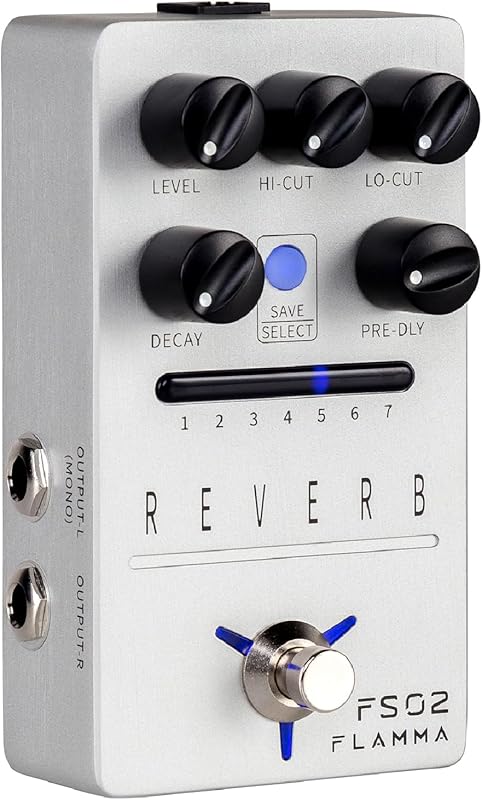
The FLAMMA FS02 Reverb Pedal is just way too much pedal for the price. I’m telling you, there are 7 types of reverb and all of them will give you something usable to play with.
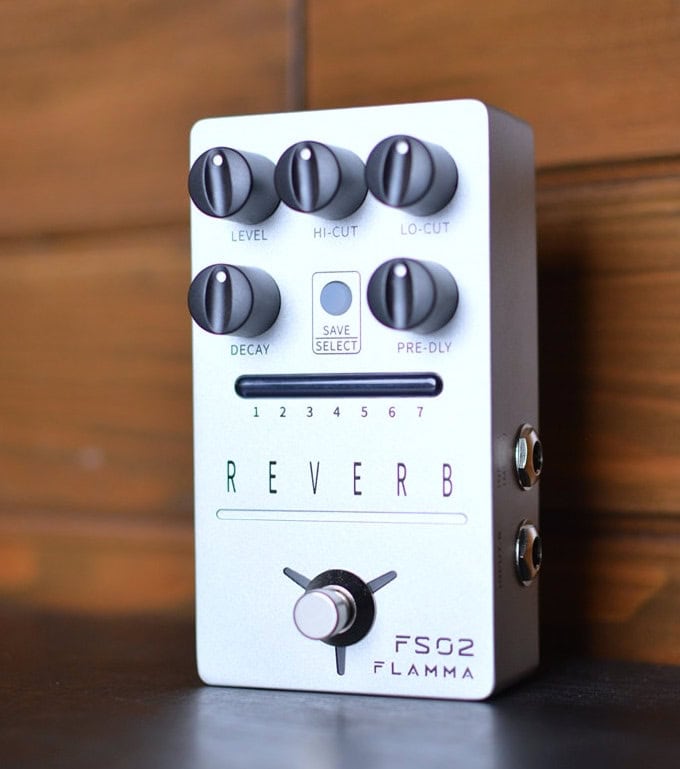
FLAMMA FS02 Reverb Pedal
Let me rewind and introduce my new FLAMMA friend to you. This is a stereo in and out, 7-mode digital reverb that gives you the possibility to access many features at a price that’s a complete steal.
Let me walk you through this pedal’s achievements (which are many) and where it felt short for me.
First, I loved the bank option. I took the time to set a usable reverb for each type and then just moved around banks to get the best out of them. The little “Save/Select” button in the middle of the unit will save a snapshot of the settings as they are for every mode. That’s what makes the little LED on each bank solid (no parameter has been changed) or flashing (you’ve modified something).
I didn’t like the fact that you have to bend over to change modes, and that it doesn’t come with an input to do it with an external switch. However, having that many sounds for the price is already an achievement.
I also loved the lo-cut and hi-cut filters instead of a single tone knob. It allowed me to tame the lows of my synth while also taming the extreme brightness of the higher octaves. Vice versa, I could make my guitar tone fatter and bigger by cutting off some of the high-end and keeping the brightness with the low-cut filter.
In the same line, the decay and pre-delay knobs interact with each other perfectly, creating big soundscapes that will sustain and fill the room. This is especially true if you find a sweet spot with the mix knob.
Finally, one amazing trick I learned was that, if you press the ON/OFF switch down as you plug the pedal, you can engage the Trail On mode. All LEDs will turn blue, and the effect will continue to decay even after you’ve turned off the pedal. This is great for smooth transitions. I loved it to let chords ring while doing some lead work on top with no reverb and some drive.
What didn’t I like about it? Well, the spring setting doesn’t “drip” when cranked (sorry surf guitar players), the aforementioned lack of external switch, and the noise floor. This is to be expected from pedals at this price. Nevertheless, bear in mind that it’ll introduce a bit of hiss to the signal even when you give it 300mA of clean power.
If you’re on a budget but want to add lush, big reverb to your sound, this is a must-try-before-you-buy specimen on the loose.
4. Boss RV-6 Digital Reverb
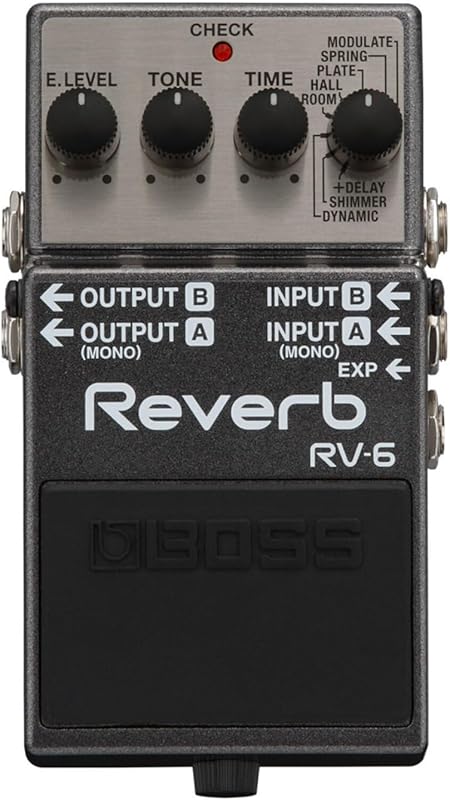
The Boss RV-6 writes its name on a pantheon of amazing audio devices that have been pushing musicians forward since the seventies. It’s got the same rock-solid, bulletproof construction that can get you through gigs in swampy basements, arenas, or garages.
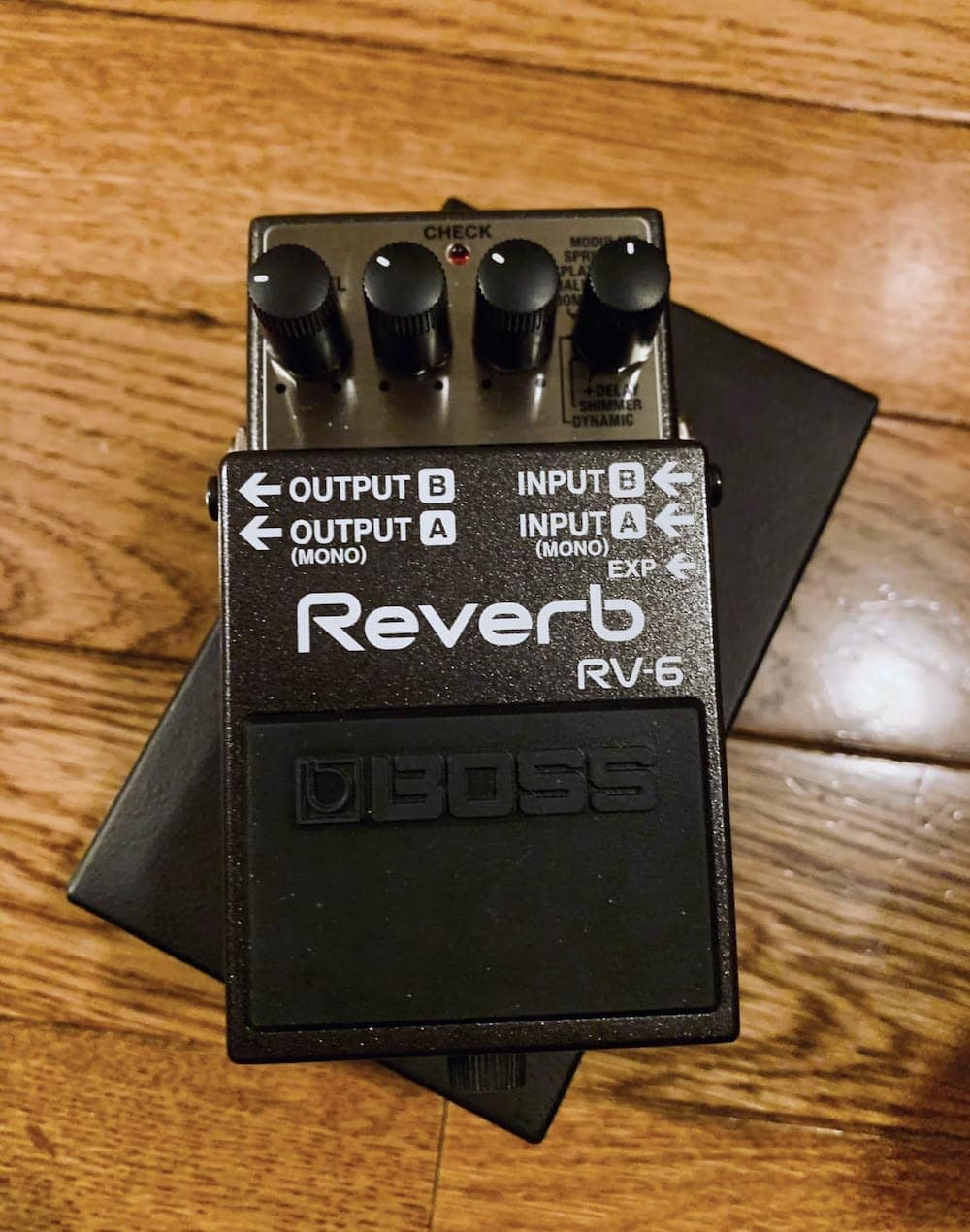
Boss RV-6 Digital Reverb
The first thing to say about the RV-6 is that it is as versatile and powerful as it is durable. That statement, for a Boss pedal, is saying quite a lot. Nonetheless, it’s entirely true because with eight modes available, there’s plenty you can do with it.
In my opinion, hall is the best setting for church playing because it gives you the grandiloquence you need to fill the room with a single chord while making space for everything else that’s happening. I just loved it with the mix at around 2 o’clock, the tone at noon, and the time knob at about 3 o'clock.
I know, you do get this digital-sounding reverb. However, just like with a DD-3 or DD-7, that’s the name of the game for Boss. They don’t make vintage units, but proud digital pedals that sound great and play forever.
Speaking of Boss, they practically invented modulation pedals, so the fact that the modulated reverb sounds great isn’t news. I have to say, for something a bit more lo-fi, with some granular texture and added personality, this mode is just perfect.
I also loved the reverb + delay mode. I found that, by moving the time knob, which actually means decay, I could add more tails to the delay. This made my playing way more epic.
What I didn’t like was the shimmer mode. It’s not natural-sounding or organic; it feels pushed, as if the high-octave trails would be added later. In that sense, the tone knob will help you tame those highs, and, in my opinion, you should always keep the mix below noon in this mode.
I’d have liked the expression pedal input, which is great for swells, especially in the +delay mode, to be for changing modes. Otherwise, it’s kind of a set-it-and-forget-it kind of situation on stage when there’s so much available.
Finally, this is not a true stereo reverb pedal. On the contrary, it’s a dual-mono one. This means the signal is repeated and sent over to two outputs rather than a true stereo image.
To sum up, this is yet another indestructible Boss pedal that won’t break the bank, give you a ton of usable tones to play with, and might be inherited by your grandchildren. If that fits your bill, play one today.
5. TC Electronic Hall of Fame 2
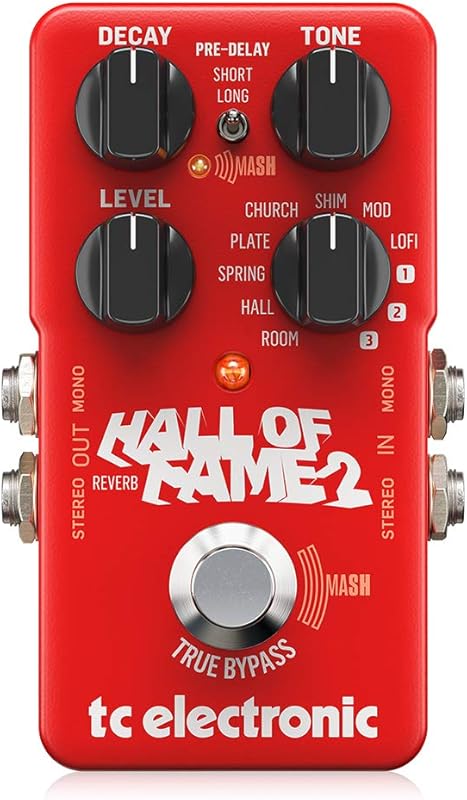
There’s so much merit in a company that listens to customers that the Hall of Fame 2 by TC is one of those sequels that’s actually better than the first film.
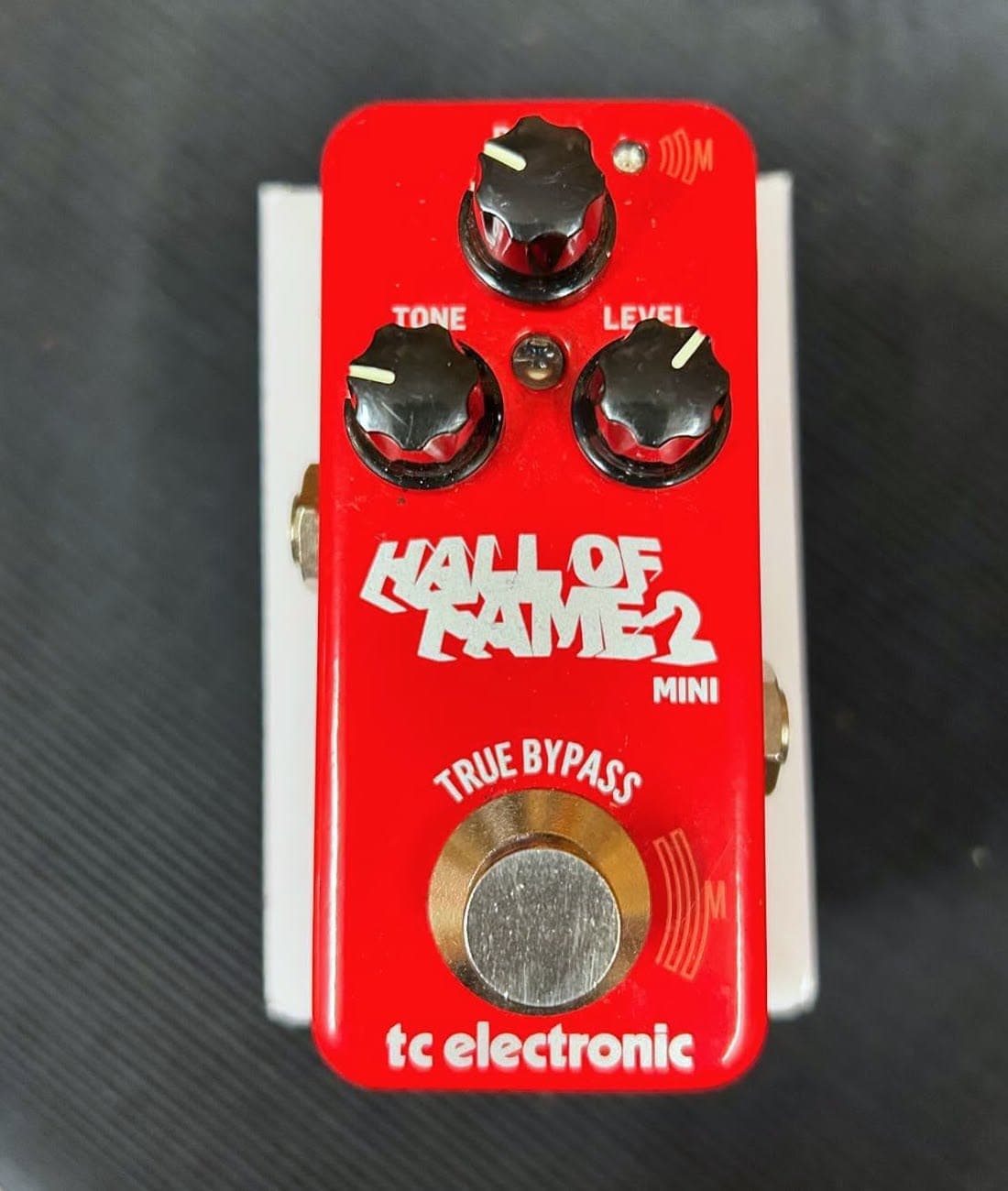
TC Electronic Hall of Fame 2
Yes, the company added several minor differences that turn this pedal into a much more powerful reverb and allow you to have a one-box solution for many needs. I’m telling you, I was playing through this thing for close to an hour without even realizing it.
But let’s begin from the moment I plugged this thing in. It comes with three well-known knobs for level, decay, and tone. There’s a mini toggle switch in the middle to go from short to long pre-delay setting, which is quite useful to make things (even) bigger.
What stands out at first sight among the knobs, though, is that you have eleven reverb types to choose from. That includes a very good-sounding, lush, and beautiful room, hall, spring, plate, and church. I mean, they don’t sound Strymon-organic, but they sound very good for a digital pedal at this price.
I especially liked the church mode for church playing (duh!). With generous decay and the mix at 2 o’clock, it sounds huge. The tone knob is great for dark guitars (or synths); I kept it below noon most of the time.
The three remaining factory modes are shimmer, modulated, and lo-fi. Here’s where things start getting interesting. The shimmer sounds gorgeous, adding a tail of great-sounding bits of your sound with polyphonic octave technology straight from TC’s celebrated Sub n’ Up pedal.
The modulated reverb sounds great if you want to give a little motion to the arpeggio you’re playing. There’s a nice warbly ending to every chord and phrase, and it makes it deeper, more interesting; it adds a nice psychedelic element to the playing. Just set the mix knob to wherever you think the sweet spot is.
Finally, the Lo-Fi mode was my favorite. There’s a lot going on in different layers, but the overall harmonic distortion and slightly dirty, reverberated frequency following your playing is nothing short of beautiful. I mean, if that’s the kind of tone you’re after. I just loved it in every position, but with the decay cranked, you’re in a different dimension.
However, that’s far from all with the HOF2. You can now store up to three tone print presets on your pedal by simply using the app and transferring the information through your guitar’s magnetic pickups and into the pedal through your cable. It sounds sci-fi, but it works great.
Another great addition for this iteration is the Mesh technology applied to the footswitch. You can increase or decrease the level of shimmer behind you by pressing and holding the button; the harder you push, the higher the effect setting.
Plus, with the app, you can assign whatever parameters you want to the switch. I tried it with the shimmer and the decay, and it was like having an expression pedal. I’m telling you, there’s some real urgency and thrill conveyed whenever you press and hold; the build-up is good and super musical.
Perhaps, the only thing I could say about this pedal is that it sounds a bit digital-ish for what it does. I mean, don’t get me wrong, it’s great for the price, but it won’t do the Strymon thing, delivering super organic, natural reverb sounds.
If you want a reliable, portable (less portable with the 2x4 version or super portable in its mini edition), and powerful reverb with lots of available tones, you have to check the HOF2 out.
The Bottom End
Carrying a reverb pedal to worship or church can be a game-changer. Believe me, any of the pedals on this very narrow list will help you sound bigger and better.
Choose the one that fits your budget and resonates with you the most, and play with confidence, knowing you can fill the room with sounds every service.
Happy (reverberated and huge) playing!
