
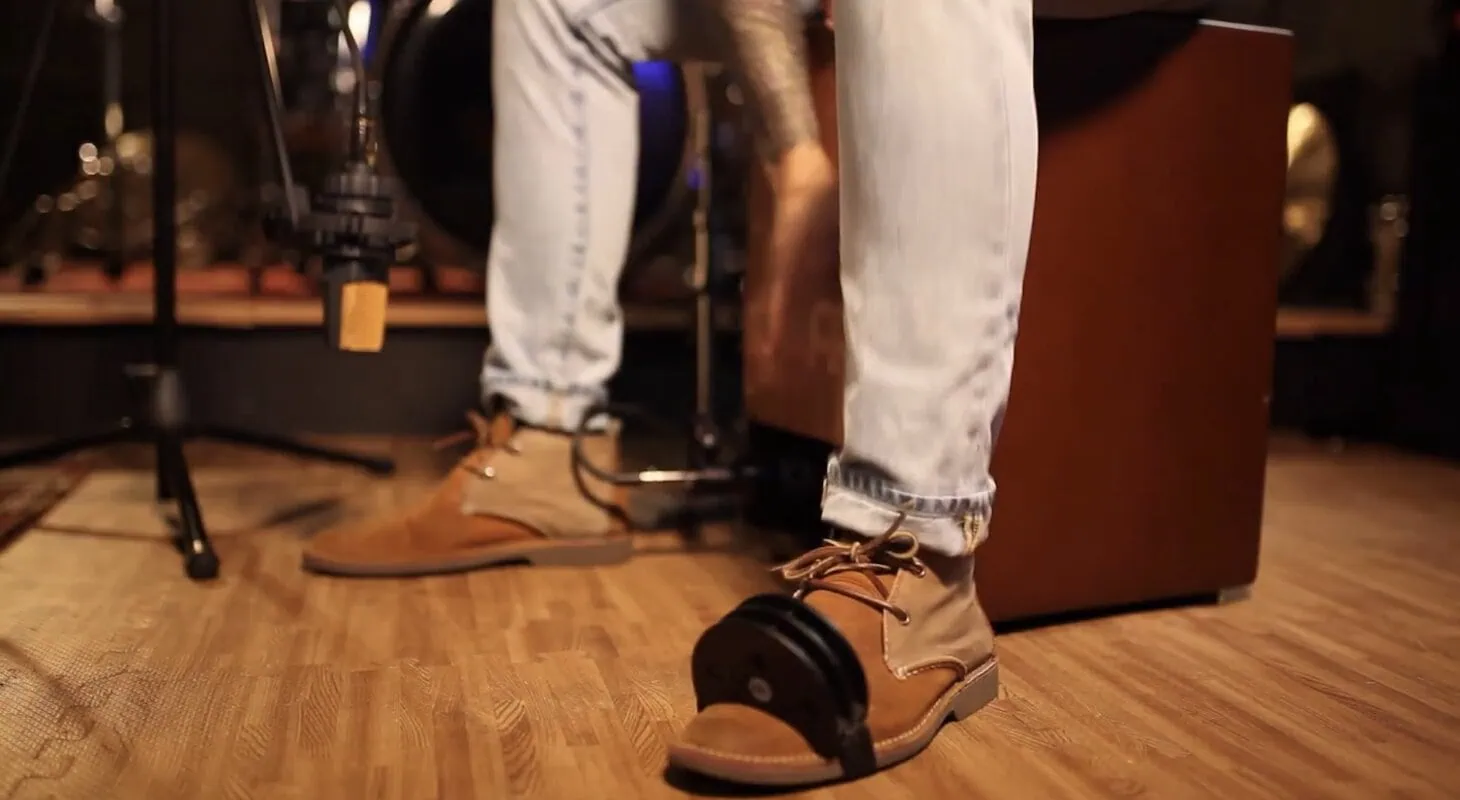
The first time I saw Shakey Graves playing with a Samsonite case turned into a kick drum and a tambourine turned into a hi-hat I knew I had to add feet to whatever I was playing. Yes, I’m like Father John Misty, Dave Grohl, Jack White, and many drummers out there who go back and forth between the skins and the strings.
Soon after watching that video I came across foot tambourines. I mean, tambourines are iconic percussion instruments that are instantly recognizable by anyone, musician, or not. Their distinct metallic ring gives a high-pitched sound that can be effective in so many different situations. Believe me, it’s like finding gold.
Top 3 - Foot Tambourines / Pedals
Preview | Product | Price |
|---|---|---|
 | ||
 | ||
 |
As drummers and percussionists, we don’t often have free hands to hold tambourines. Furthermore, if you’re a multi-instrumentalist like me, you might need your hands for something else completely different.
So, companies have designed pedals and straps to play percussion with our feet. The 21st Century is a cool moment to be a musician.
I went out to get the thing before I started blending it into my style and found so many options I got utterly lost. Lucky for you, I persevered and found THE one. Here are some of the best foot tambourines and kick pedal combos I came across during my last tambourine safari.
Let’s do it!
Best Foot Tambourines for the Money
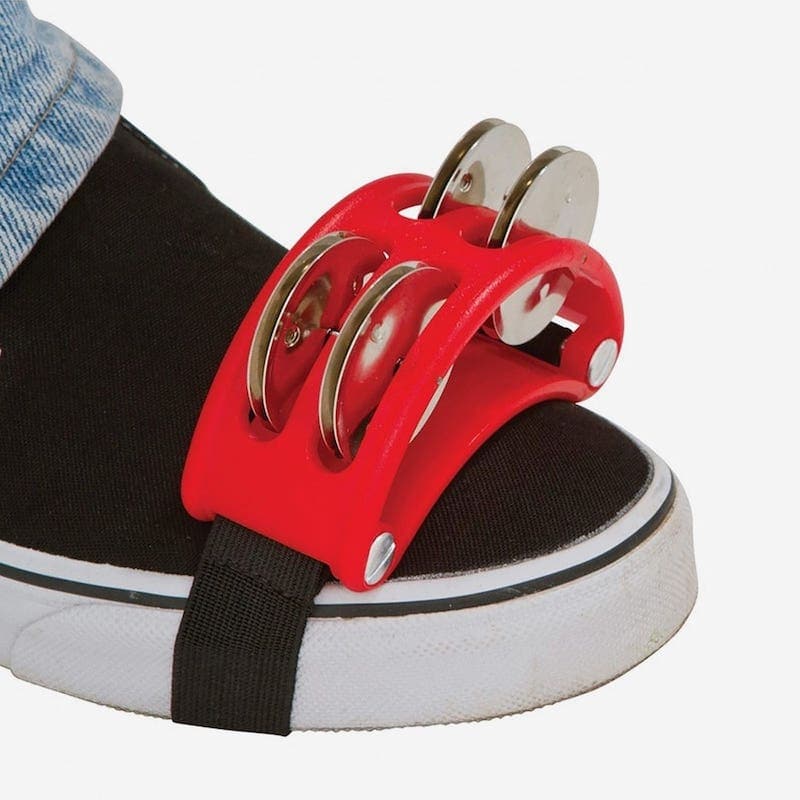
1. Latin Percussion Foot Tambourine LP188
The LP188 is a small tambourine with 4 nickel-plated steel jingles that produce a fairly bright tone. It has an elastic band that is intended to fit around a shoe. The band fits most shoe sizes, making this tambourine usable by all shapes of people.
Although I didn’t try it, replacing the elastic band needed to perform with it looks quite difficult, which can be a real problem down the line. That said, it’s perfectly tight and looks durable out of the box.
The LP188 is best suited for intimate environments that are indoors. It sounds great and gives a full range of use consistent with most headless tambourines. The sound is quite ‘toyish’, having short attacking jingles.
It’s great for using it as a hi-hat replacement when playing on a cajon. It’s light enough to play consistent foot taps without feeling any extra weight.
In that sense, the volume might be a little too low if you’re heavy-footed (or heavy-handed) on the cajon.
The LP188 is seriously inexpensive, making it a great teaching device. You could buy a few of these and use them in your music classroom. I’ve often made my drum students strap tambourines to their feet and march around the class to internalize time. The LP188 can be used as a hand tambourine as well. Moreover, I just loved it on the hi-hat stand. It creates a nice chime that can go over your playing.
As a first step in the world of foot tambourines, this is a terrific choice. In my opinion, the one downside to it is its volume. It’s not the loudest tambourine around, meaning it won’t work musical environments that aren’t mellow and intimate.

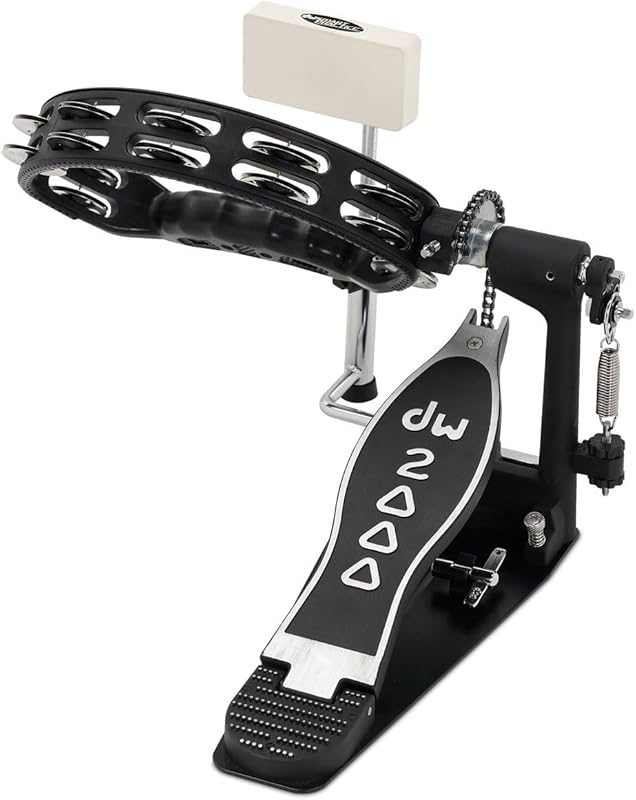
2. DW DWCP2010T 2000 Series
The first thing you’ll notice is the build quality of this DW DWCP2010T. Latin Percussion and DW have come together to make a product that is solid and meant to last.
I mean, we’re talking about two of the biggest brands in modern drumming. Plus, it’s basically a 2000-Series kick pedal that has a tambourine instead of a beater. The tambourine hits a piece of practice pad material to get a snappy jangle sound.
The cool thing about it is that each part is easily detachable. Therefore, you get a high-quality tambourine with its ergonomic handle to use on top of your hi-hat and also a usable high-quality kick pedal.
Another great thing about this product is how you can integrate it into a drum kit setup. The DW 2000 series pedal is built like a tank, comfortably fitting in anywhere you place it.
Our first instinct as drummers is to place the foot tambourine to the left of our hi-hat pedals. This makes it easy to quickly change between playing the hi-hat and playing the tambourine. I did this with my current rig and alternated between having the tambourine over the hi-hat and next to it.
I found that this one is a better alternative to placing a tambourine on top of my hi-hat. The problem with that approach is that you’ll always have that tambourine sound. The DWCP2010T lets you choose exactly when to have the sound.
We tried it in a cover band I’m currently drumming for. It’s one of those bands in which the singer is pitch-perfect and has a spectacular voice but no sense of rhythm. Believe me, our performance works much better with me handling the tambourine.
I know that the fact that it comes with a DW 2000 pedal makes it quite pricey. However, you can connect a standard beater to the pedal and use it for a kick drum and also use the tambourine as a regular one. So, you’d be buying a pedal that has multiple uses, and if you add up what each will cost you separately, you won’t think it’s so pricey anymore.
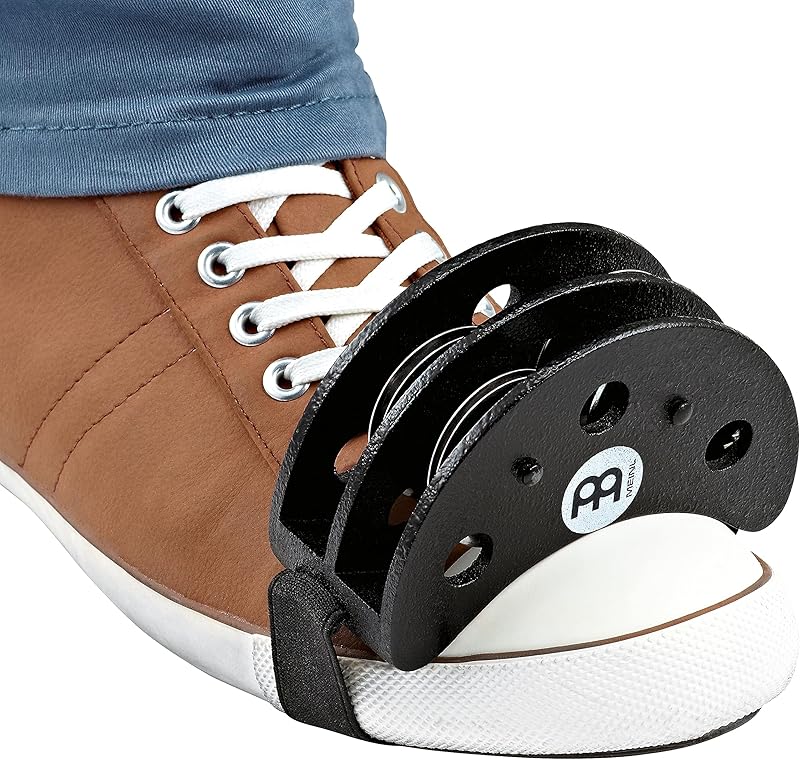
3. Meinl FJS2S-BK
Although Meinl is best-known for their cymbals, they produce some high-quality percussion instruments that are innovative and loved by many players. The FJS2S-BK is one of their finest-quality foot tambourines.
It’s made from a hardwood frame and has 4 pairs of jingles inside. The solid frame makes it durable, allowing you to play quite aggressively without worrying about it breaking.
Although it enhances durability the full wooden shape of this foot tambourine also affects how it sounds. In my opinion, it gives it more volume and a sound that’s unlike anything else on the market right now.
I mean, I noticed it as soon as I strapped it to my right foot; it has a beautiful tone when hit that is much louder than competitor foot tambourines. The tone is dark, blending into mixes rather than sitting on top of them. It’s actually too loud to be used in quiet and intimate environments.
So, it’s great for outdoor gigs or loud coffee shops and jazz clubs. It’s a great companion if you’re playing in a jazz trio format, for example, or if you’re accompanying a singer-songwriter. That mellow tone is a perfect match for an acoustic guitar and a double bass.
Another great thing about this foot tambourine is that it’s easy to take off, allowing you to quickly slide it off in the middle of a gig if you no longer want to play it. I tried this while playing the acoustic guitar. I had it on for the intro and the chorus and dropped it before the coda. Why? Well, because I jump around a lot in that part of the song and don’t need the tambourine sound to follow my tribal dancing.
The only drawback I have to name is that right out of the box I realized that the strap is designed in a way that makes it very hard to replace, making it quite a mission if it breaks.
4. Meinl CFT5-BK Cajon Foot Tambourine
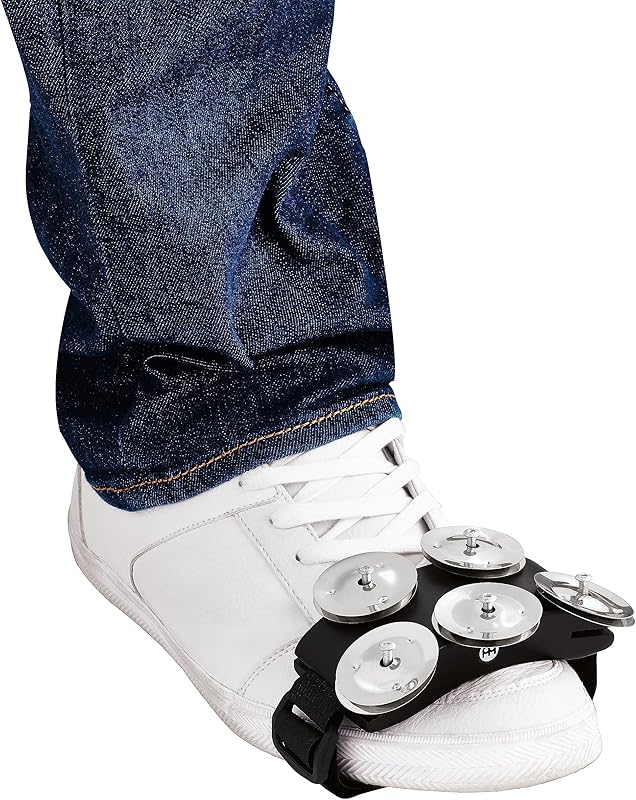
The CFT5-BK was designed for cajon players. However, it works in many different musical environments and contexts. It’s one of the only foot tambourines around that sounds like a regular hand tambourine. This is thanks to the 5 pairs of stainless steel jingles that are mounted onto the rubber-and-wood body.
It’s very responsive and is able to cut through a mix of amplified acoustic guitars, making it a great option for intimate acoustic gigs. It has an adjustable strap, enabling it to fit on all sizes of shoes. The adjustable strap also allows you to get creative and strap it onto other places.
We tried it with a couple of friends at a small, candle-lit gig at the living room of a house and I got a lot of compliments about it afterward. I mean, it’s got that big sound as if I was shaking a real, full-size tambourine but it’s very responsive as well. Transients are lightning-fast. Also, volume-wise, it’s perfect to go with a cajon.
You could strap it onto your wrist when playing drums, too. In my case, it resulted in a present tambourine sound with everything I played. On songs in which it became too much, I just strapped it onto a cymbal stand.
A downside to this foot tambourine is that the pins occasionally fall out, so you’ll have to periodically do a bit of repairing. The super-tight elastic band is a concern, too. Nevertheless, the design is so that it’s an easy fix.
Types of Foot Tambourines
Tambourines come in all shapes and sizes. The two main types of hand tambourines are ones that have a skin to play with your hands and ones that don’t.
When it comes to foot tambourines, you get ones that strap to your foot and ones that are set up with a pedal mechanism.
The foot tambourines that attach directly to your foot are typically cheaper. They’re also not used in complex drum or percussion setups as they’re not easy to attach and detach from your shoe quickly.
Foot tambourines that have their own pedal are designed to be used in a percussion setup. They’re used as an alternative to a bass drum or hi-hat pedal.
In my case, when I’m drumming, I love the ones like the DW pedal above. It’s just handy having it next to your hi-hat pedal. I know, if you’re a metal player that’s where your double-kick pedal would be. That said, I don’t think this is an accessory suitable for metal players.
You can always use it to save the reputation of your off-beat singer or give an extra push to those quarter-note kicks that keep people singing and cheering.
If we’re going acoustic, there’s nothing like the strap-on. My pick was the Meinl FJS2S, it’s got the perfect tone to complement my playing and is as loud as I need it to be.
Why Use a Foot Tambourine?
There are several great uses for foot tambourines. The ones that attach to your foot can be used for:
Playing in small venues where you’re using a small setup. If you’re playing Cajon, you can use one of those tambourines to add a different voice to your playing.
As teaching tools. When I have students that struggle with feeling rhythms and time, I’ll sometimes make them march around the room at a set pace. Getting them to use a foot tambourine allows them to hear the pulse as well as feel it.
The foot tambourines that have pedal mechanisms are great in drum or percussive setups:
They allow you to play a tambourine sound with your foot while still playing drums with the rest of your limbs.
They’re a great alternative to a hi-hat foot sound. It’s more aggressive and cuts through a mix easier.
Music that Uses Tambourines
The great thing about tambourines is that they fit with most music. A tambourine is one of the most versatile percussion instruments you get, making it a great tool to have no matter what you play.
When it comes to foot tambourines, Latin styles like salsa, merengue, and cumbia would arguably be the drumming styles that utilize them the most.
Latin music puts a heavy focus on limb coordination, with many sound sources being played at the same time. Therefore, a great Latin drummer would make excellent use of a foot tambourine.
Percussion vs Drums
A tambourine is a percussion instrument, but most percussion instruments can be easily integrated into a drumming setup.
Percussionists and drummers are both important to most bands, so you could benefit from having a foot tambourine if you’re either one of these.
If you have a percussion setup, the foot tambourine will allow you to play that tambourine sound while having your hands free to play other percussive instruments like congas or shakers.
I thought I was Tito Puente for a minute there banging on the timbales while keeping the beat with the right leg and the tambourine. Believe me, it’s weird having an SM57 aiming at your feet the whole show, but the result is totally worth it. I mean, these things are so expressive, you’ll find a million uses for it.
The only downside is that a foot tambourine won’t allow you to play 16th notes. So, you should still keep a hand tambourine to play. That is unless you’re Usain Bolt with the stamina of a marathon runner, of course.
Using a foot tambourine in a drum setup is a bit less common, but it can add a great sense of variety to your drum sound. In that regard, products like the DW tambourine with associated pedals are the perfect solution. You can try it instead of your ride’s bell for choruses, for example. Moreover, you can alternate it with a cowbell for a truly expressive bridge or C part for example.
Final Word
Foot tambourines have many uses. You could be a drummer that has to play a gig in an intimate coffee shop and the foot tambourine could work well as a replacement for a hi-hat pedal.
You could have a percussion pedal next to your hi-hat pedal to have an extra percussion sound for playing Latin music. You could even be a full-time percussionist, needing different tambourine sounds.
Your creativity as a drummer will extend the use of a foot tambourine. It’s a good idea to have one, just in case you need it for a gig. Besides, it’s a cost-effective solution that will not break the bank and will give you a plethora of options.
Plus, in case you want to join our club and become a one-man band, that foot tambourine and a nice suitcase snare are everything you need.
What are you waiting for? Go and get the one you liked the most and tambourine your way to stardom starting today.
Happy (foot tambourine) playing!
