
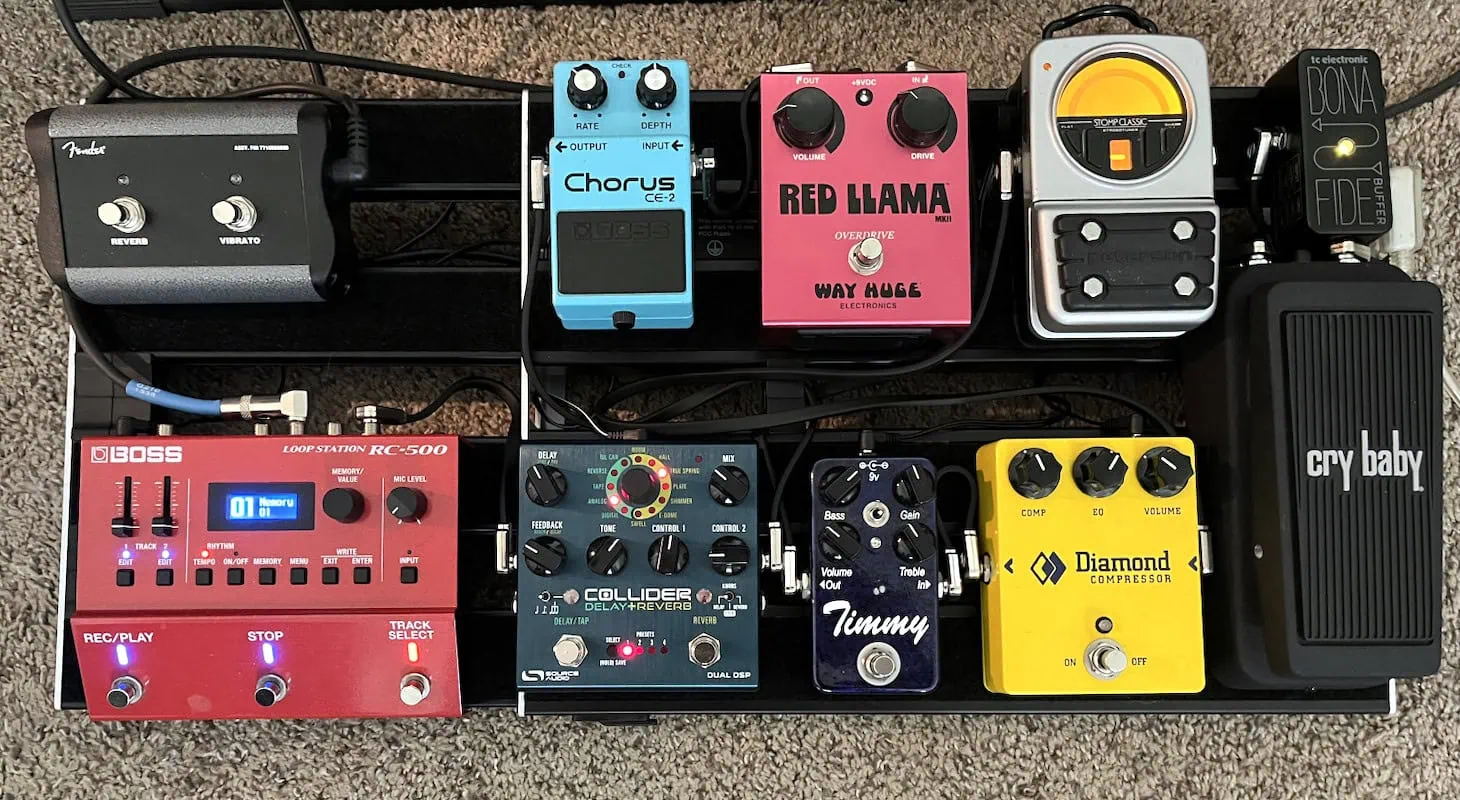
After playing my trusty old Ibanez Studio ’80 with which I shredded through my Nu Metal years in a low-as-a-grunt drop-C tuning for two decades, I know exactly how it sounds. Moreover, I know how that guitar feels when pushed with pedals.
For a long time, it was the guitar, a Tube Screamer, a Double Drive, and the amp.
The thing is that I lost it. You know how it goes. This pedal makes this fun thing that goes well with that odd section in that song. Suddenly, you need more pedals to get through the set. As I added more pedals to my board, I gradually lost that tone I loved, and that came from the guitar.
I found a way back to the source of the tone I love. I want to show you the path. Believe me, you can have as many fun pedals as you want, as long as you get one of these.
Top 3 - Buffer Pedals
Preview | Product | Price |
|---|---|---|
 | ||
 | ||
 |
Stick until the end so you can find out what the hidden lucky feature was that got me into buffer pedals in the first place.
Best Buffer Pedals to Keep Your Tone Intact Across Long Cable Runs
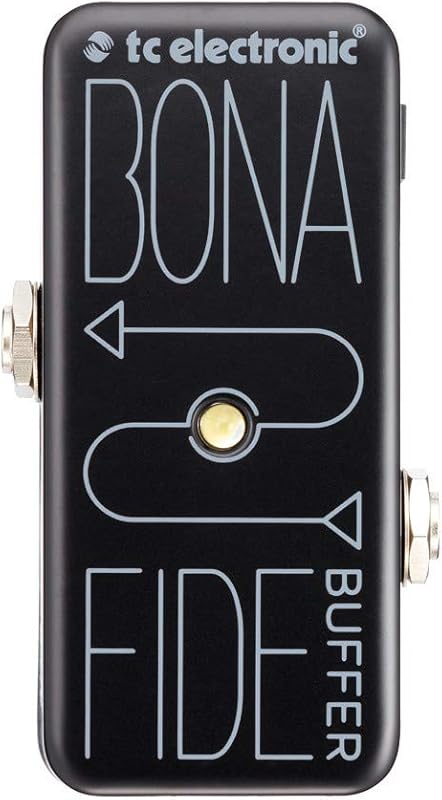
1. TC Electronic BonaFide
Let me tell you something right off the bat from a player who used to run a true stereo setup: This thing is so small, light, affordable, and powerful that you can have one for each of your channels.
I tried it before the splitter going to each amplifier for my usual double-mono amp setup. The result was the high-end of the guitar restored and the muscular punch of the Big Muff being big and bold instead of muddy.
Furthermore, I tried this pedal beneath the pedalboard, and I didn’t even have to make room for it on the Velcro-filled real estate, which we all know is precious and scarce.
Another great thing about it is the intelligent true-bypass construction feature. The pedal reads your pedal run, and, if needed, it engages the buffered bypass and otherwise goes into true-bypass mode. Moreover, if it suddenly dies on you because the power goes off, your signal will still go through.
If I could just add something to the TC Electronic BonaFide, it would be room for a battery. I found it intricate to make room for a 9V connection underneath the board. Nevertheless, the small footprint is very appreciated.
Plus, with its price, you can have one at the beginning and one at the end or one for each channel of your true stereo setup, and still spend less than buying most of the competition. If you need a quick, easy, and affordable fix for your signal loss, this is it.

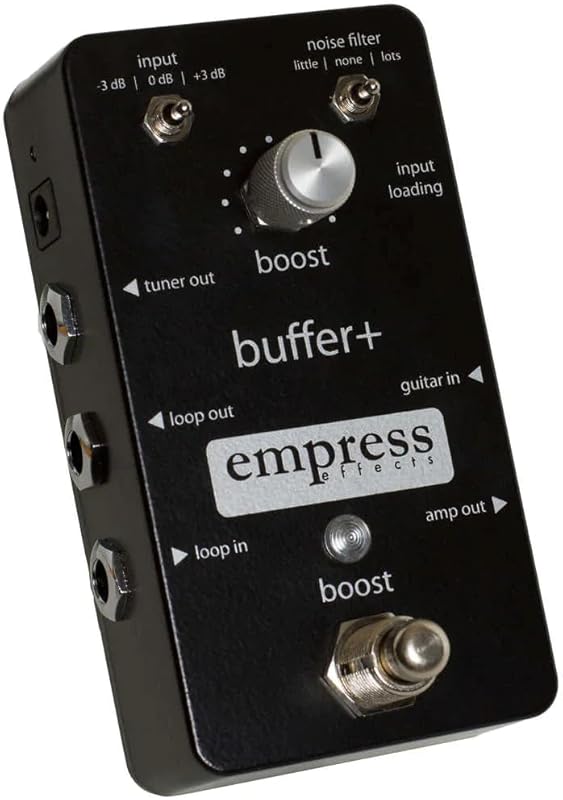
2. Empress Effects Buffer+ I/O
This is one of the smartest designs I’ve ever seen. The Empress Effects Buffer+ I/O solves so many problems at once, it’s simply outstanding. I put it at the very beginning of the pedalboard, before the Wah, but then changed my mind.
Let me tell you why.
This thing isn’t just a buffer; it’s a fully-blown effects loop in a box. It has a send and a return, an input for the guitar, and an output for the amp. It’s great to plug in both things on the same side. Moreover, you can then plug your entire pedalboard into it as if it were an effects loop. This box will boost the signal going in and the signal going out.
I found out my distortion pedals, especially the Double Drive, became too bright, so I put the buffer right after the gain stages and the filters. The result was crisp, punchy, and very close to the guitar-into-amp sound.
I loved it for these features, but there’s much more to this pedal than that. You get a booster and a noise gate as well. Yes, this pedal gives you the option to boost or cut the signal with the switch on the far right to accommodate different instruments. There’s a 3db cut or boost for active pickups and my ’66 Mustang, respectively.
On the other side of the pedal, you have yet another switch to flick. Well, that’s your noise gate to get rid of the white noise coming gently from the immense generosity of your digital pedals. I know my Flint adds plenty of that to the signal. If you have, for example, a Timeline or a Big Sky, this is gold.
Is that it? Well, no, the silver knob in the middle is to adjust your booster. It’s very full, powerful, and clean. It works great for leads and also for clean licks. Well, that’s it, right? There’s still more! The edge of the pedal offers a small knob that attenuates the extra high end coming from the buffer. You can dial in some darkness if you want. It was designed by Robert Smith, it’s a The Cure knob (lol).
This is one of the most versatile and feature-packed buffers out there. It might solve many problems at once. If it fills the bill for you, give it a try; it’ll become essential to your rig.
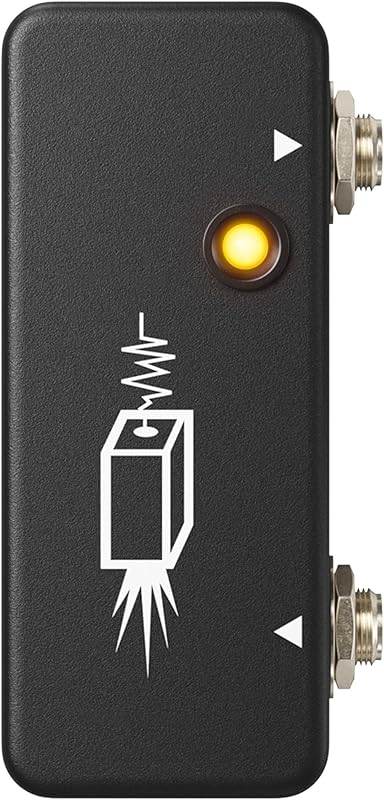
3. JHS Little Black Buffer
JHS is a pedal brand that has been making a lot of noise in the industry. It’s as disruptive as Electro Harmonix was, but in a different way. Let me explain, it’s a company commanded by a total guitar nerd who’s first a guitar fanatic and then anything else.
They make great solutions for modern players, give out knowledge for free, and try to make the world a better, noisier place every day.
They designed and handmade one of the smallest, most straightforward buffer pedals in the market right now. The JHS Little Black Buffer is made with top-notch materials by expert hands in Kansas, Missouri.
That might explain the price difference with some of the competition offering the same. Mass-produced pedals have some drawbacks. Error margin is minimal, and QA is getting better by the minute, but JHS offers boutique treatment throughout its entire catalog. Buffers are no exception.
The company ensures that it should be used at the beginning of the chain, but it doesn’t work in front of gain stages. I found it was great to use after the Big Muff and into the Carbon Copy. It works like magic; you plug it in, and your guitar immediately sounds more lively, punchy, and regains its spark.
I guess my only grip was design oriented. Putting input and output on the same side? Really? That’s beyond annoying, man. You should know better.
Other than that, if you’re after a small, well-built, super reliable, and effective buffer, this is a great candidate.
4. Vertex Effects Pedalboard Buffer
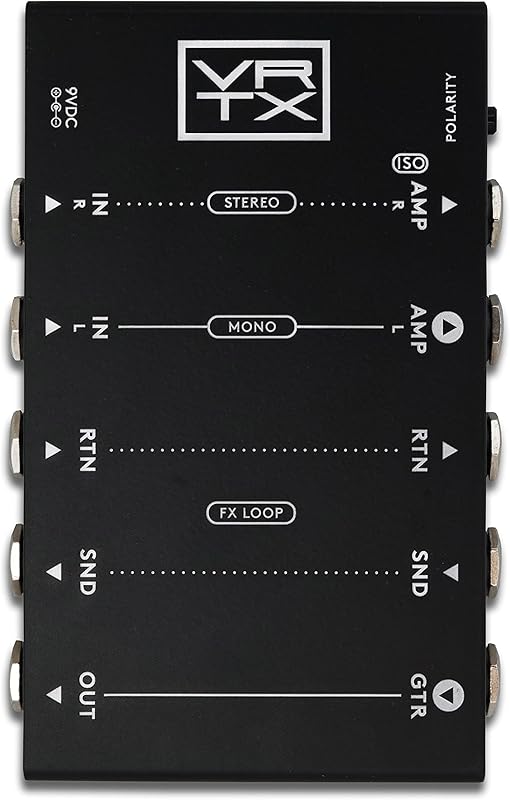
Vertex Effects is a company owned by a pedal guru. Mason Marangella has built pedalboards for many huge artists and knows what the heat of the battle requires from a pedalboard. It’s no surprise that the Vertex Effects Pedalboard Buffer is a superior pedal created by a mastermind.
The thing that I loved the most, beyond all the amazing features, is how clean it is. The company spent a long time looking and sourced the output transformers from the Hi-Fi realm. That ensures clean audio for sure.
Right after being shocked at the audio, I was blown away by how much you can do with it. This pedal comes with 4 internal buffers applied to the guitar input, FX return, and amplifier outputs. Yes, you can run a true stereo rig with this thing. Not only that, but it also comes with a polarity switch to help amps stay in phase.
I tried this: my signal ran mono through all my pedals until it reached the Flint and a stereo digital delay I borrowed from a friend. The signal was then split and fed into the two inputs labeled as IN. The result was lush waves of stereo tone to play David Gilmour licks for days.
Speaking of which, fuzz pedals don’t like this box at all. So, put them in front of the box, or you’ll sound nothing like you thought you would.
Also, there’s a wiring option that allows you to use this not only as your effects loop on the floor, but also as the buffer for your amp’s effects loop. You can even wire it to run your amp’s channel selector.
I know it’s thought of as an under-the-board piece of equipment. Nevertheless, an LED indicator would have been great.
That said, this is the ultimate high-end buffer for the professional musician. If you’re looking for flexibility to accommodate several setups, transparent tone, and top-notch craftsmanship, and your budget allows it, this pedal is a winner.
Give it a try, it might solve more problems than you think.
5. Xotic Super Clean Buffer
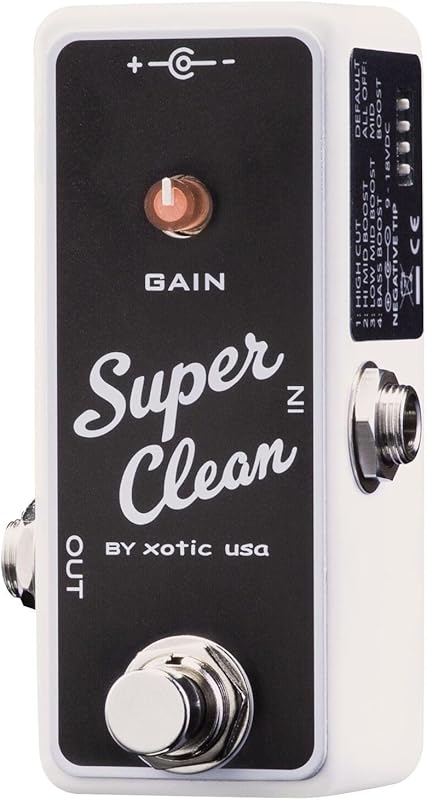
The Xotic Super Clean Buffer follows the same tradition as its siblings. It’s a great build that tackles a specific aspect of guitar playing perfectly. Believe me, their booster pedals are great, but this little thing has great clean headroom to push leads and clean riffs to the front.
Wait, I’m ahead of myself here. Let me start from the beginning. I plugged this thing before the entire pedalboard, and the sound difference was instantly recognizable. The high-end was back, and the lows were tight and punchy again. I unplugged it and put it at the end, and the result was another healthy push for the whole thing.
It doesn’t get along with fuzzes, that’s true. Nevertheless, if you put it right after your gain stages, it makes an outstanding boost pedal. I tried going with my Telecaster into my TS-9 on, and nothing else, and the result was amp-like with a push for the leads. Yes, there’s 12dB of boost available, so believe me when I say this little thing pushes like a train.
If you need no fancy multiple outputs or any other feature and could use an extra boost to go with your buffer, this is a great choice. Plus, it’s built like a tank, like everything Xotic does.
6. Mesa/Boogie High-Wire Dual Buffer
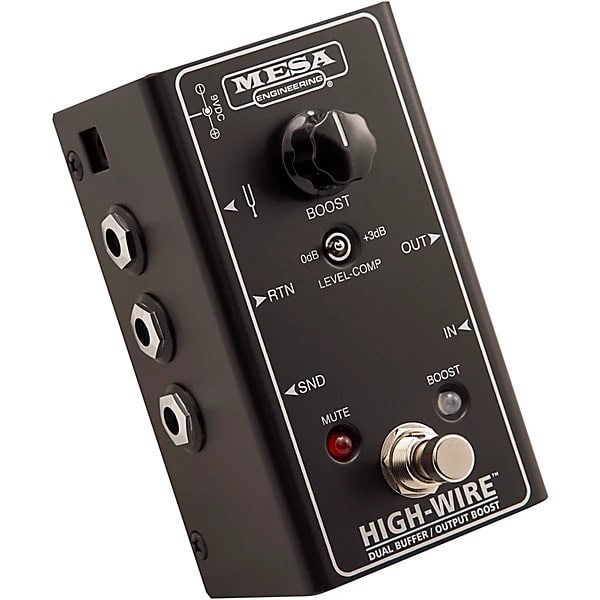
Whenever a company like Mesa Boogie embarks on a new direction, they do it head-on. This pedal is no different from any of the other products in the Mesa catalog. The Mesa/Boogie High-Wire Dual Buffer is sturdy, reliable, cleverly designed, and it will not only get the job done but also offer a few cool extra features.
Just like you’d expect from any and all Mesa amps, right?
Well, there’s one thing in the design that was annoying to me. The input for the guitar and the output for the amp being on the right next to each other is great if you’re placing this pedal at the beginning and running the whole pedalboard through the effects loop. Yet, those of us who want to use it after our fuzzes need to do cable origami to fit it into our boards.
Other than that, for those who use it at the beginning, you can just unplug both cables together and close the lid to take the pedalboard home.
Speaking of pedalboards, once connected, I just loved what this pedal does. It offers up to 22dB of boost, which is more than enough to wail your brain out. That’s not all, though; the Level Comp switch allowed me to go from the SG to the Mustang and not feel any volume loss. That’s without even turning the boost on.
Besides the boost, I liked the mute feature and the dedicated tuner output. No serious guitarist should ever underestimate the power of an always-on tuner on their board. It can save your gig!
I guess that’s a long story, maybe another time.
If you want Mesa-grade construction and reliability combined with versatility and a very usable boost, this is a great candidate. I know, it’s not on the cheap side, but once you see the Mesa logo on a product, you know it’s worth every cent.
Why Do I Need a Buffer Anyway? True Wisdom from the Road
My epiphany with buffer pedals came during a tour. I had just added an octave pedal and the DL-4 (sold, regret, would buy again) to the board. Those three sunk my guitar tone. My next two shows were nightmares.
In complete desperation, I talked to my trusty guitar guru, certified nerd, and trusty tech I’ve been going to since I was a teenager, and he said
— Tell me what you had before.
The moment I mentioned the Double Drive, he stopped me in my tracks.
— That’s it! Put that pedal at the end of the chain.
The Double Drive has a built-in buffer. My sound was back. I just had to fix how awful the delay sounded before the distortion (lol).
I bought a $20 handmade buffer from a friend and headed back to the road.
It’s just something in the power, the punch, the response, and especially in the level of detail you get in the high end that goes missing with long cable runs and big pedalboards. With my Telecaster, it just ate some of the twang away.
After that episode, I carry a buffer everywhere I go.
Where Do I Put It on My Board?
If you have one buffer pedal, put it at the end.
That said, you might have seen some pros put one at the beginning and one at the end. This is because being very, very picky, it’s not the same for a pedal to be hit with a hot signal or not. This is especially true for fuzzes. If you have any of those glorious noisemakers, put the buffer right after the gain stages.
Yes, that’s a rule of thumb you can always apply.
There are no limits, though, to how many you can have. If they are as good as the above, they won’t alter our tone.
Buffers are Closer than You Think
What if I told you that you’ve played through buffers most of your life? Well, all Boss pedals have a built-in buffer. I imagine you plugged your guitar into one of those before. Do they solve the issue? Well, no, because it depends on where they are in the chain and what else they feed.
Nevertheless, if you’re hesitant about whether a buffer will affect your tone, think of Boss pedals; they’re a great example of a clean buffer.
Ironically enough, though, Boss doesn’t manufacture buffer pedals.
The Bottom End
A well-placed buffer on a pedalboard can change your tone. Better said, it can restore your tone. Yet, that’s not all; it can make you fall in love with guitars you thought sounded dull.
In my case, I regained my love for my Ibanez Studio ’80 but also for my Mustang. Every time I plugged it into my entire pedalboard, the whole thing sank. With the buffer, it’s like straight into the amp. The Mustang, a low-gain guitar, feels livelier than ever.
I know, it’s a small step on your quest for the perfect tone, but believe me, it’s a great way to preserve your tone while you broaden your color palette.
Go ahead, add that fun, colorful, odd box to the board; your fans will go crazy for your new sound. Just don’t forget to buffer the whole thing perfectly.
Happy (heavily processed but buffered) playing!
