
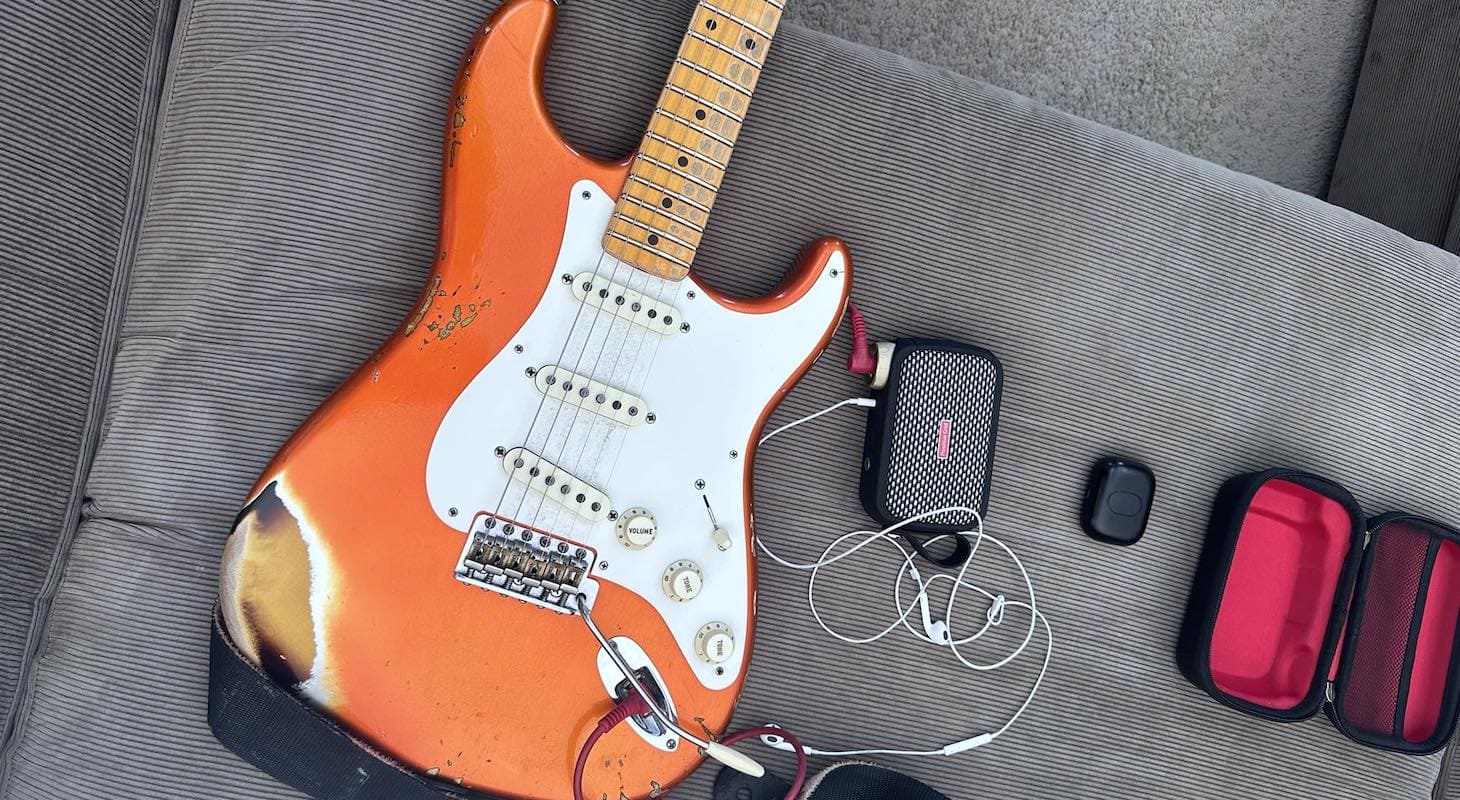
As guitar players, I think the best we can ask from our gear is to keep us inspired. I keep a guitar that feels like home right next to the couch. Believe me, I’ve had some of my best ideas while watching Seinfeld for the nth time.
These amps take that concept several steps up.
Top 3 - Battery-Powered Amps
Preview | Product | Price |
|---|---|---|
 | ||
 | ||
 |
Imagine being able to dial the tone of any song you can think of and enjoy stereo modulations, lush delay, and reverb to play with that same guitar. It can turn into an endless fountain of inspiration that will keep you playing and creating for days.
Furthermore, imagine hitting the park with your friends to play some acoustic songs with guitars and throwing in some soaring lead tones on top. That would turn any given casual-strumming Sunday afternoon into an epic jam session, no matter the setting.
I had so much fun playing with these creatures at home; it was hard to say goodbye to them. Maybe my family wasn’t so happy I had so many new toys now that I think about it. Anyway, one thing is certain: they inspired me to play for hours.
Choose one and just kick back and enjoy. Life is beautiful plugged into these tiny amps.
My Favorite Compact Battery-Powered Guitar Amps
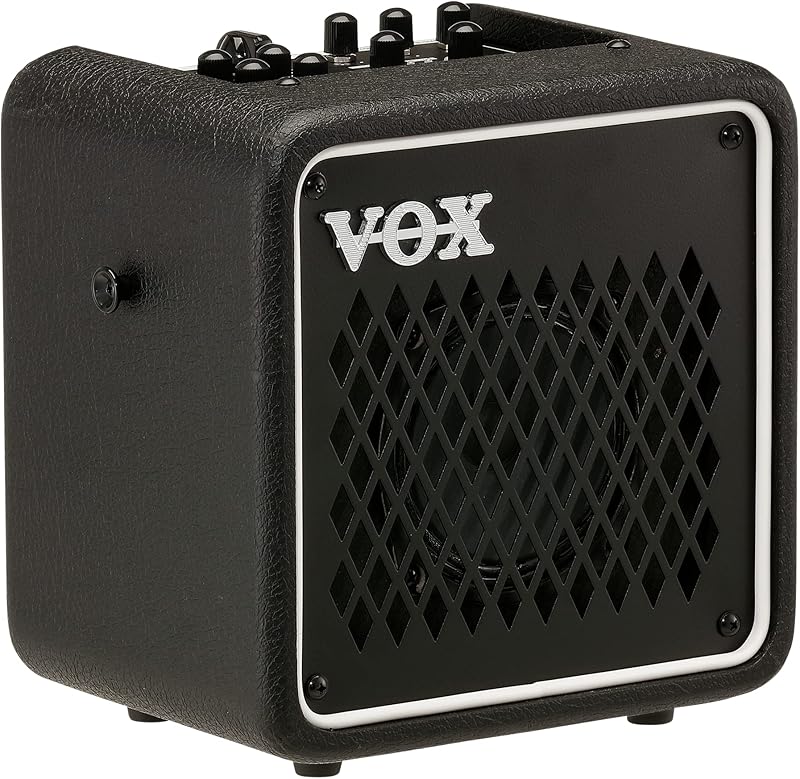
1. Vox Mini Go 3
This amp is an all-in-one tone powerhouse, a one-stop solution to put on your desk. There, especially, is where I think this amp’s only flaw is; it’s as big as a Roland MicroCube. That, for 2025, is big.
That said, having 9 amp types to play with in this size is just great. I started with the most familiar to me, blackface sounds with the Deluxe Reverb model (Deluxe CL). The trick to unleash that bright Fender-like tone was setting the tone to full. I was playing a humble version of “Scuttle Buttin’” with a little spring reverb in no time.
To make things more eighties, I went for some chorus and a little analog delay. The result was instant The Cure. Those cold and slightly modulated tones with my Telecaster in the neck position felt effortless.
To make playing by myself more interesting, I dialed in some drumming with the rhythm section of this amp. There are some cool, groovy beats to jam to, and the tap button is just great.
Things got hip, so I moved to something spicier, and the AC-30 and JCM800 models sure bite and gnarl. They begged me for P-90s, so I plugged in my SG Jr. to push it even further into rock and roll territory.
Let me tell you that the speaker in this small amp can give you a razor-sharp midrange. I played stuff from The Doors, early Stones, and Beatles, all the way to Social Distortion.
The gain knob works wonders thickening the tone.
Moving to the SL-OD and Dual Rec models, the best of the ‘90s, early ‘00s, and modern heavy tones appeared immediately. I switched to humbuckers and moved the rhythm dial to Metal. Boy was that a lot of fun. I went straight to my Silverchair favorites (Freakshow) and was headbanging for half an hour alone in the living room.
With the ability to play over some of your favorite tracks through the Aux-in and to plug in a microphone, I can’t think of anything you can’t do with it.
Finally, this is a battery-powered amp, but you need a power bank to plug it into, and it’s sold separately.
In my opinion, portability it’s not its strongest point, but the Vox Mini Go 3 is the perfect amp to have next to your couch.
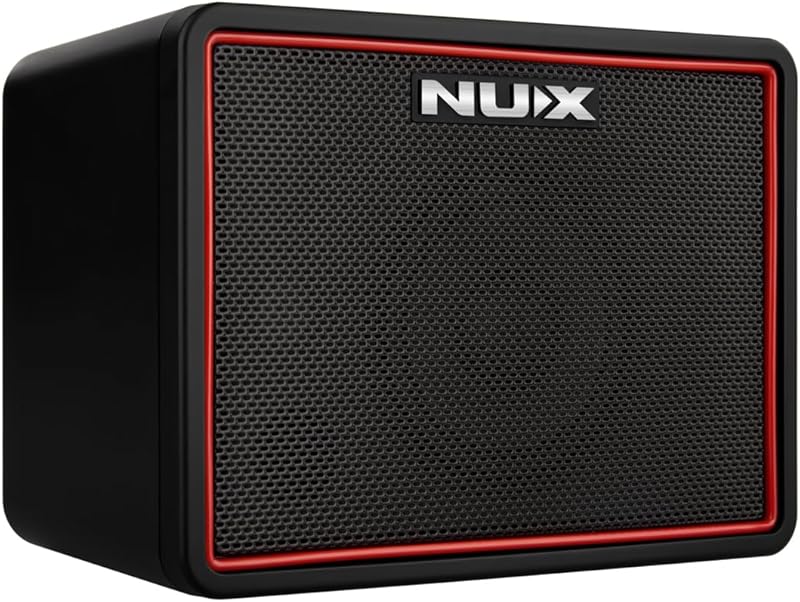
2. NUX Mighty Lite BT MKII
This NUX Mighty Lite BT MKII does justice to its name. It’s small enough to fit inside your backpack or the big pocket of your gig bag and big enough to play with virtually endless tones.
The NUX can achieve all of this because it’s an app-amp combo. There’s only so much you can do with just the amp, but choices multiply with the easy-to-use, well-designed app.
In my experience, the best way to use this amp is to dial your favorite tones and save them as presets. For this, you can access the 36 impulse responses and have, for example, a souped-up Marshall and a pristine Twin right next to each other at the touch of a button.
The app allows you to create 7 presets accessible through a button on top of the amp that changes color to indicate which preset it is. I won’t lie, it’s kind of difficult to remember colors for banks; numbers would have been much more useful.
Once I had my seven tones, I could add some drumming (also customizable through the app) and also delay and reverb with a dedicated tap tempo.
Soaring Gilmour leads with soaking delay? Did it. Supersonic-jet heavily modulated tones? Did it. Mayhem-ready fuzzed-out sounds to play White Stripes songs? Did it. Surf-infused tones with single-coil pickups drenched in reverb? Did it too.
But that’s not all, because I went to my acoustic guitar and even plugged in my bass, and this little mighty amp gave me usable tones for each instrument. It even did so without any wall power but with 6 batteries. I could really see myself leaving the house with this little thing inside the gig bag and having everything I need with me.
Finally, if you connect the USB Type-C to your laptop, the amp transforms into an audio interface so you can record your music or use Ableton to loop your performances with the tones you dialed in with the app.
If you’re after an amplifier that’s as powerful as it’s portable, this is one of the best on the market today.

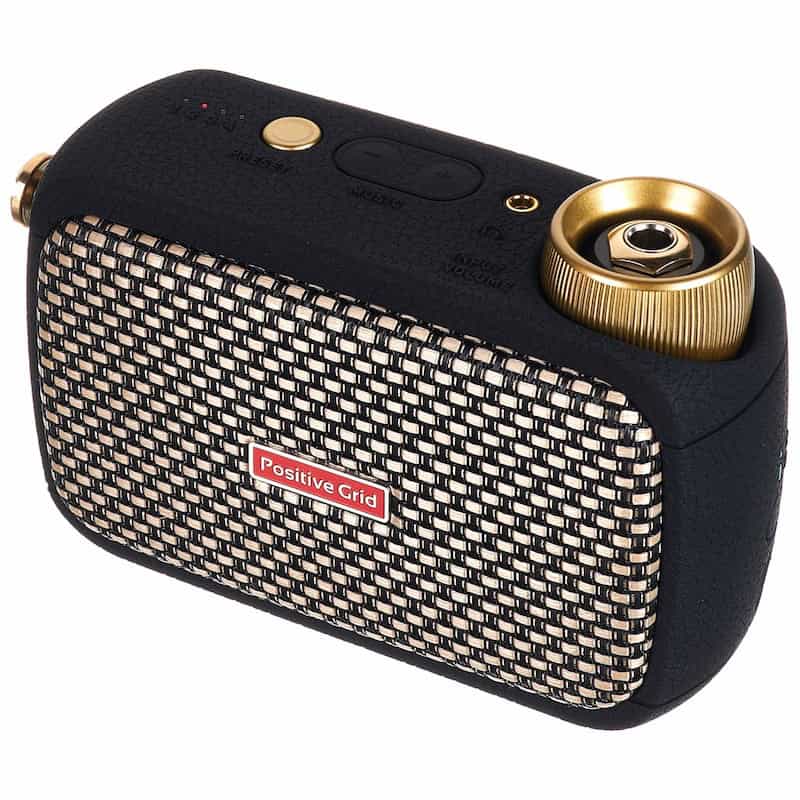
3. Positive Grid Spark GO
Positive Grid owns the desktop amp market, a niche they almost invented along with the one and only Yamaha THR. I loved the Spark 40, the Mini, but did I love the GO? Let’s dive into the test.
To begin with, the Spark GO excels in design. There’s no hard surface in the entire thing. It’s all made of rubber that’s soft to touch. Plus, the golden parts like the grill (it comes with an alternative all-black one for Depeche Mode fans, lol), the big volume knob, and the preset button just make it prettier.
Out of the box, you can just plug in and play with four very usable sounds. The first is a Blackface, next is an overdriven Brownface, third a distorted Marshall, and finally a 5150.
So, even without downloading the app, you can start jamming. As for how loud it is, I would say loud enough to make it fun, but not too loud to disturb neighbors. It’s like listening to music at a healthy volume.
Although I had fun with these four models and played some classics like “Black Magic Woman” by Santana, nailing that mid-infused, thick, lead tone, its true power is unleashed with the app.
Once you go in, you get instant access to 50,000 presets created by other users around the world. I had so much fun just toggling through those, I lost track of time.
If good gear should be inspiring, this little amp is as good as it gets.
But when trying out an amp, you’re kind of wondering what it can do, so I edited some of the presets using the app’s 33 amps and 44 effects and got some usable tones.
The one thing that’s missing, though, is spring reverb.
Yes, I’m a confessed Fender amp fan, and I can’t go around without a healthy dose of spring reverb in my tone. As prescribed by the music doctor!
I was particularly impressed by how soaring leads cut through backing tracks and gave me a razor-sharp tone to rock with my favorite songs. That said, the size of the speaker makes it obvious there’s some lacking in the low-end.
Luckily for me, this miniature amp also doubles as an interface, so I plugged it into my computer, and the sound through the monitors was far better. Moreover, I could record tracks using those same sounds.
Finally, I just loved the size and the battery time. I got it on and going for 5 hours with no interruptions or battery shortages. They did it again, folks. The Positive Grid Spark GO is a one-of-a-kind travel companion and Bluetooth speaker.
4. Danelectro Honeytone N-10
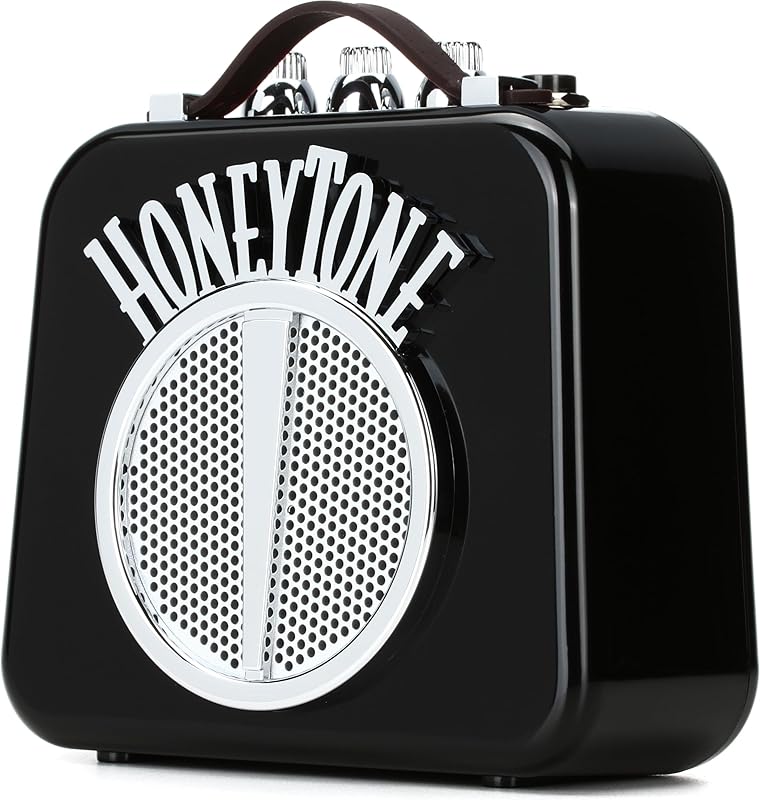
I have to say I’ve owned this amp for a decade and a half. It was one of my parents’ kind gifts in my college years, so I could play in my apartment. It didn’t just do that for me; I used it for gigs, practice, and even recorded great tones with it.
Yes, read until the end to learn a recording trick for small amps that will change the way you see them for good.
The first thing I have to say about the Danelectro Honeytone is that it’s loud. I’m not talking about crazy loud, but it pushes the mids forward so much you can’t crank it in a small place. That’s a good and a bad thing.
The good side is that the only way you can achieve clean tones with this amp is by playing really low and soft. Otherwise, it loves to go into overdrive mode right away. It is powerful enough to play clean at an enjoyable volume.
The bad side is that when you crank all the controls, you get this roaring fuzz sound that’s absolutely monstrous. Think of The White Stripes in the Icky Thump era. You can’t do it in an apartment because it’s just too loud.
I also got some good garage rock tones playing it with my Baby Taylor in acoustic gigs. I would play the guitar through the Danelectro and always get complimented for the raunchy, in-your-face, dirty tone I got out of it.
If you want to have pristine tones, lush effects, and a multiplicity of options, this is definitely not the amp for you.
On the other hand, if you want a portable, affordable amp that behaves like a traditional solid-state but with ultra-simple controls, 9-volt operation, and a belt clip to play it wherever you like, this is a great option.
5. Laney Mini-STB-Lion
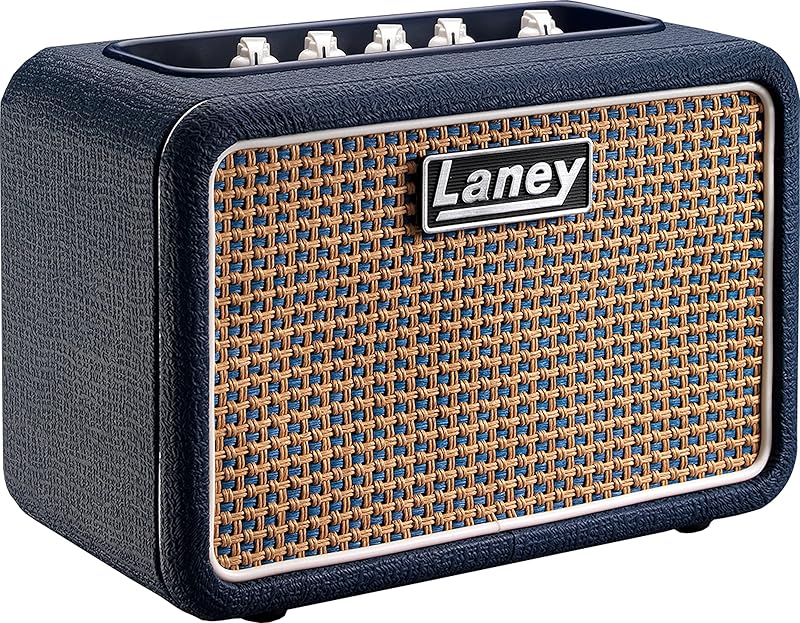
Laney has somehow managed to put a full-fledged two-channel solid-state amp into a casing that’s small enough for your backpack. Oh, and it also runs on six AA batteries in case you want to hit the park.
The Laney Mini-STB-Lion is the exact crossover between the modern and the vintage small amps. Newer ones tend to be smaller, look cool and classy, and offer some kind of DSP-powered features.
Old-school portable amps were just an amp with fewer controls in a small housing.
Laney’s triumphal entrance to the mini amp market is an amplifier that has a traditional clean channel and a distorted one. They work as any amplifier with a channel-switching button.
The controls are very simple, it features a gain, a level, and a tone knob. On top of that, you have a master volume and the delay with level and time controls.
Yes, it really is as simple as it sounds. I was playing out of the box in no time. I figured it was a great time to play some Black Sabbath since I was playing a Laney and got very close to that heavy, fuzzy, cutting tone Tony Iommi has.
Although it’s very small, this amp’s speakers can handle distortion quite well. There’s no such thing as low-end (unless you’re on headphones), but the sound is believable and muscular. Moreover, adding some delay in that same setting, I played some leads that felt arena-ready. I got some creamy, Gilmour-esque tone that got me playing for a while.
The clean channel made me realize this amp’s only flaw, which is the lack of reverb. I know Laney is a rocking brand aimed at lead players who need that delay to do their thing, but what about chords and songs?
Everything sounds better with a little reverb when playing clean.
The feature that opens more sonic doors for this amp is the LSI connection. This allows you to plug the amp into a phone or an iPad (with the provided cable) and use your favorite guitar modeling app. You’ll hear the result through your amp.
Finally, I tried the Bluetooth function and played over backing tracks with that same Gilmour tone I dialed in before, and it was a lot of fun.
Apart from the lack of reverb, this amp is a terrific bang for the buck.
Furthermore, if you’re a little old school like me, dialing great tones using just knobs is always a plus.
6. Orange Crush Mini
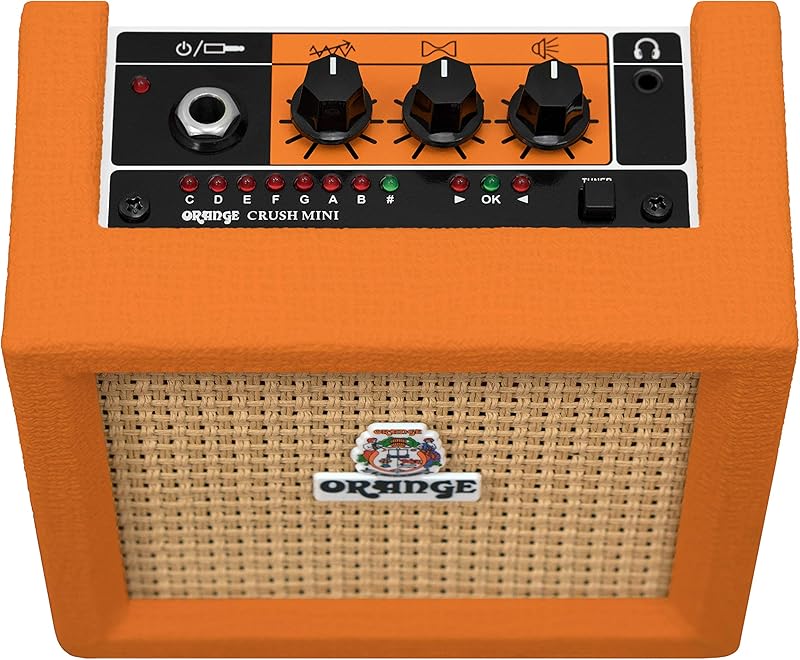
Orange is a brand known for its heavy-hitting rock amps behind bands like Black Sabbath, Mastodon, and Bad Religion. They are also orange in color, which makes them instantly recognizable.
The Orange Crush Mini is a worthy heir of such noble lineage. In other words, it was made to rock.
There are no bells and whistles, apps, or Bluetooth connectivity. This noise machine mimics the ease of use of regular amplifiers and breathes fire through its 4” speaker. No, it doesn’t have a massive low-end, but it features an 8-ohm speaker out.
That was the first thing I did: attach a 1x12. The amp grew enormously, and that fizzy, oversaturated tone was very usable to play some righteous stoner rock. Since I was playing an Orange, why not some Mastodon, right? I played “The Curl of the Burl,” and the amp held tight.
The controls are three: Gain, Shape, and Volume. I found the shape knob quite interesting because it’s not your regular tone knob going from muddy to brittle. This is a tone control that travels through time.
Yes, cranking it will scope out the mids and emphasize highs and lows. Think of the heaviest metal tone you can think of. Well, scoop some more mids now. That’s close to what this knob does.
If you turn it the other way around, you’ll get a retro, mid-infused tone that’s perfect for old-school rock and roll, punk, and other derivatives.
But what about clean sounds? Well, those aren’t this amp’s forte, but using the Tele, I was able to make some decent chords and get some Frusciante-approved spanking tones hitting hard with my picking hand.
Finally, I have to say it has one of the best integrated tuners on the market.
So, for those about to rock, trying this amp is nothing short of a must. For those in search of something with more features and available sounds, this might not be it.
Why It’s a Great Moment to be a Guitar Player?
My first amplifier was a 15-watt Crate that sounded so bad I thought guitars always sounded distorted. Technology has come a long way in the musical instrument industry. Yes, the Telecaster might remain unchanged, but amps are light years away from my Crate.
But what exactly should you look for in a small, portable practice amp? This is a mini buying guide I put together for you.
Volume
Before getting started with volume, let me be clear with this. If your aim is to play with headphones, then don’t pay attention to the loudness of the amp itself. Otherwise, please read on.
The volume of portable amplifiers should have its sweet spot at the level you’ll be using it most of the time. For example, if you’re a jazz player who plays alone in his room practicing impossible chords, a Honeytone is a good, super affordable choice.
On the other hand, to do bedroom and band practice, the Orange Crush Mini is awesome with its speaker out. You can play with other people in that setting.
Finally, for my favorite use, as a couch-side amplifier (did I just invent a new amp category?), 3 to 5 watts is the best option.
An amp like the Vox Mini Go 3 makes a perfect choice.
Portability
For an amp to be portable, in my book, it has to fit inside the backpack. Believe me, I’ve been to 15+ countries carrying my Baby Taylor in my backpack, and an amp would have been amazing on many lonely nights on the road.
So, with this in mind, being battery-powered is a must, but size matters too.
In that sense, the Spark GO is just perfect. You can charge it via USB, not worrying about the batteries, and it’s small enough to replace your Bluetooth speaker.
Remember the number-one rule of the road: everything extra is a burden. So, a dedicated power supply adds to the hassles of carrying around a bulky amp.
Features
We could divide this section into two types of players.
Let’s face it, some of us love the simplicity of just turning some knobs and being ready to go and others love to tinker around with parameters until they have their eureka moment.
I would say that the Laney Mini-STB-Lion, the Danelectro Honeytone, and the Orange Crush Mini are in the first group.
The Vox Mini Go might be the missing link in amplifier evolution. It features knob-operated tone customization options that can also be controlled from the app.
For the second group, things have gotten very interesting in the small amp world. The Spark GO and NUX Mighty Lite MKII are great examples of what DSP technology can do today. Even in amps that small.
Whichever group you’re in, I’m sure there’s an amp for you on this list.
Small Amp, Big Tone, The Ultimate Studio Trick
Let me tell you a little home-studio story. I was recording a song at home that mixes some raw acoustic tones and a very heavily distorted, octave medley.
I tried that medley with a Marshall, my Sovtek MIG 50, and the Deluxe Reverb, and nothing happened. I couldn’t make it in-your-face enough.
Suddenly, I locked eyes on my Danelectro Honeytone that sits in my studio mostly as a decoration item. I know, it looks awesome. I took it and decided to give the part one more go. So, I set up a Shure SM57 straight to the tiny speaker, and you wouldn’t believe how huge it sounded.
I threw the octave pedal on top of that, and Josh Homme would have been jealous of my tiny amp. Listen to it below!

For huge tones, especially distorted or broken, try a tiny amp like that and put the microphone very close.
I know, you’re welcome.
The Bottom End
The desktop amp category is growing non-stop. With so many players joining in all the time, it’s very common to feel mesmerized by the options.
Well, my intention was to trace a map using the features, volume, and tone of these amps, so you know what is closer to your needs.
To be perfectly honest with you, I had a lot of fun playing with all of them. They all made me play differently. While some asked me to rock harder, others begged for delay and modulation.
I think that’s where these amps shine the most: they make it easier to pick up the guitar and play more often. They’re easy to set up, and you can be playing in a heartbeat. In other words, these amps will very likely keep you inspired to play.
That’s what tone-chasing is all about, right?
Happy (couch-amp) playing!
