
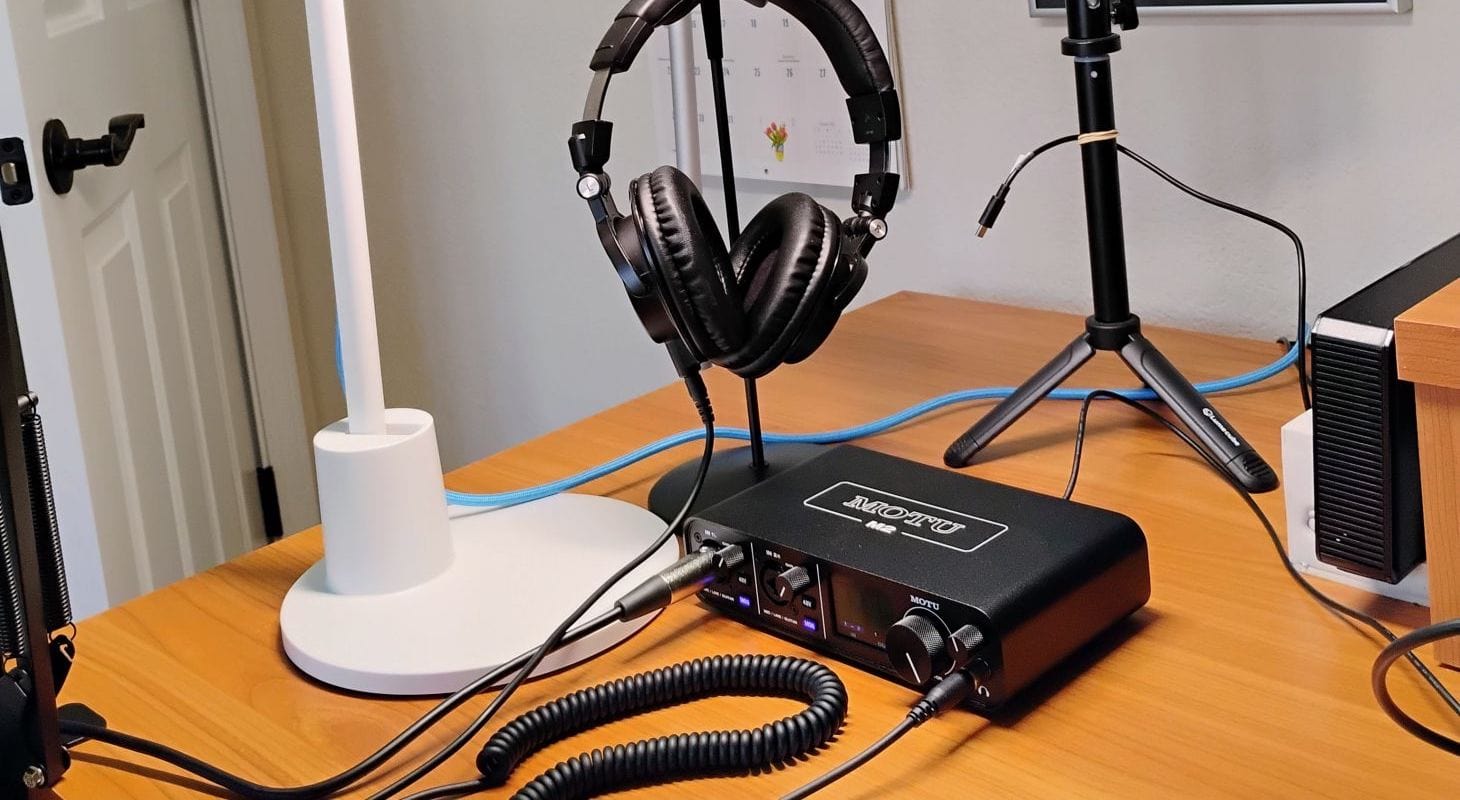
The audio interface is where the magic happens. I get it, you have a million plugins and work mostly with synthesized instruments.
Yet, what happens when you have to blend in the analog to sprinkle some human nuance and magic, or when you get a gig making music with humans?
That’s right, you need to be able to turn their grace into zeros and ones as closely as possible.
So, you might know every Ableton shortcut and be an absolute Jedi master programming the tightest beats in the business, yet if your audio interface is subpar with your talent, you’re wasting time, youth, and money.
Choose the brains of the operation wisely and start making music today.
5 Best Audio Interfaces for Ableton
1. Focusrite Scarlett 2i2
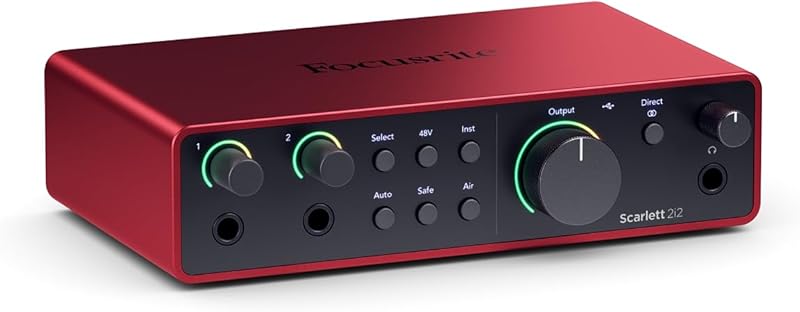
Focusrite was in the first row when the home studio revolution began, and they have been providing the tools for the task for decades. Well, the fourth generation of the Focusrite Scarlett 2i2 is its best by far. Am I saying it’s perfect? Well, no, it’s not, but it solves many problems of past iterations.
First, let me tell you what I didn’t like about it. The XLR inputs being at the back is a pain. Not being able to choose what channel to send the phantom power to makes it impossible to use with a condenser and a ribbon at the same time.
Yeah, I know, a Royer R-121 isn’t something we all have in a drawer at home. Nevertheless, it takes away the possibility. Finally, the automatic gain adjustment engages with perfect timing, but it won’t put the gain back at its original level. This meant an entire take wasted because of a gain peak.
Now that we got that out of the way, let me tell you all that’s good about it, because it’s plenty. Firstly, I loved the upgraded preamps and the Air mode. It really makes vocals brighter, adding presence above 2 kHz. For all house, lo-fi, and electronic music producers, that’s a big plus. Imagine getting a usable vocal to put over a tight beat effortlessly. Well, with the Scarlett and a decent condenser, it’s done.
Finally, the bundle included in the super affordable price is nothing short of shocking. You get everything you need to get started and push through much of your education as a producer. I mean, having XLN’s Addictive Drums and Keys alone is great, but you have to add a whole lot more to it.
If you want an affordable, portable-but-powerful, great-sounding interface, the Scarlett has to be on your list. Plus, it includes Ableton Lite for free.

2. SSL 2+
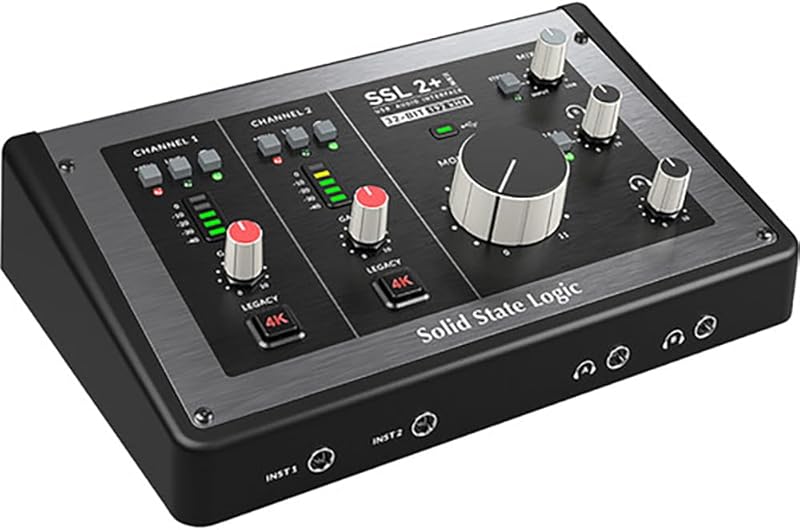
Solid State Logic has been making state-of-the-art audio equipment for decades. You might not have heard of them, but they make some of the most expensive and acclaimed mixing desks and studio hardware on the planet. Finally, they decided to join the party and pour decades of audio knowledge into a portable, reliable, good-sounding, and very powerful audio interface.
First things first: the audio is outstanding. I mean, even if all knobs and plugs were plastic and the SSL 2+ would be just a cheap unit, the sound would make it worth it. That said, this is what I call a robust casing. You could have gone through D-Day or lent it to Maximus at the Coliseum. It’s as sturdy as it gets.
Would I have liked the inputs at the front or top? I would have loved that. Nevertheless, the frontal inputs for Hi-Z instruments and the four audio outputs were a big plus. In the same vein, having two separate headphones out with independent volume allowed me to monitor along with a singer-songwriter in the control room. In that scenario, the vu-meters were great to keep levels in check doing adjustments in real time.
I loved the 4K feature, but I thought it was going to be a little more dramatic. It’s not. It’s a subtle little push you get to make the vocals sound more raw, more real, more analog if you like. One button I missed (and that could have occupied that big space there) was the mute button. It would have been nice, so I wouldn’t have to zero the volume and ruin my painstaking gain-adjusting process.
Finally, the suite of plugins it comes with, the 32-bit, 192 kHz recording quality, and the options make this affordable unit a must-try-before-you-buy specimen. If you have the room for it, this unit will deliver consistently.
3. Motu M2
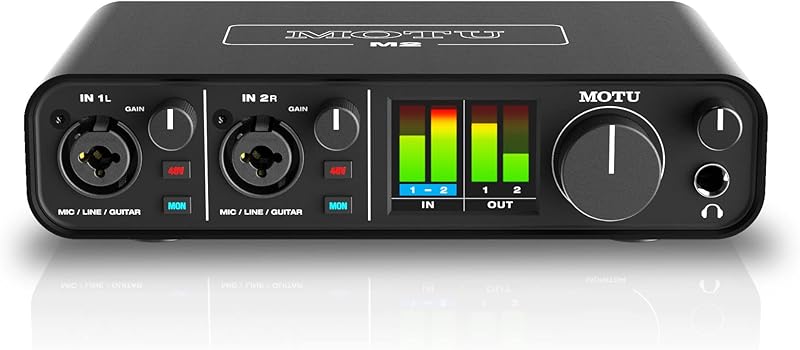
The Motu M2 is a great example of what you can do if you take process flow seriously when designing an interface. It’s so seamless and easy to use, it’s a joy to be around it. That said, don’t let the price tag or my words fool you; this is a powerful unit that can be the brains of your operation.
The first thing I have to say is that infinite meters are amazing. On most occasions, you have to guess how far or close to the third or fourth light you are. With the M2, you can always see it perfectly. Besides that, all inputs are mounted on the front of the unit, as well as everything else that’s necessary and relevant.
For example, being able to send phantom power to each channel separately, adjusting gain levels, and selecting whether you want to hear what’s being recorded is great. Also, the big monitor knob is good because it has that big white line. I could always keep an eye on the overall volume and each channel’s gain levels effortlessly.
One thing I have to say is that if you want to connect a bigger speaker system to this unit, you’ll be missing two outs. Furthermore, if you’re a podcaster or have a streaming channel, there’s no way to do the four-cable trick either.
Finally, the sound quality is very good. It’s not up to UAD levels, but it sounds great for a home studio. This MOTU M2 is perfect for those with a tight budget that still need an easy-to-use unit that won’t break the bank, but that will deliver consistently.
4. RME Babyface
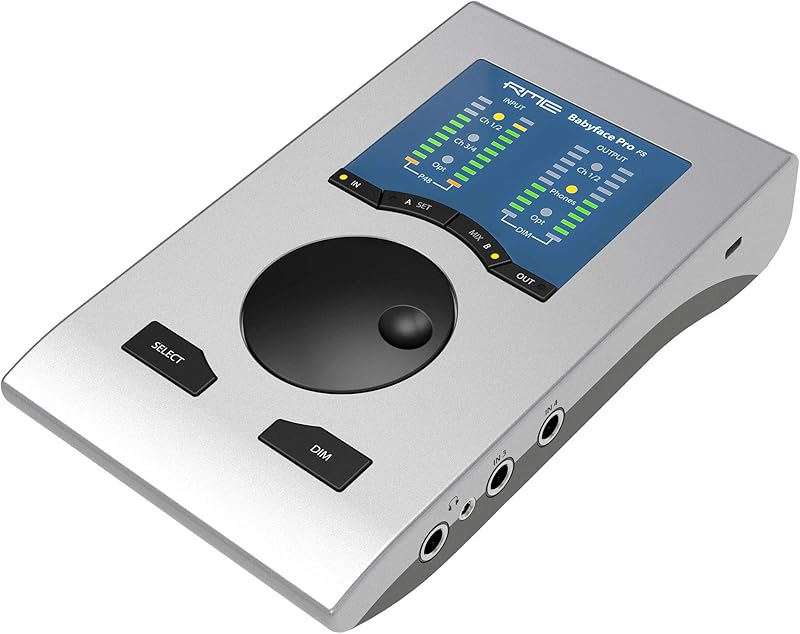
Ladies and gents, the future is here, and it looks sleek, fancy, and is as portable as it can possibly be. Yes, the name RME gave the RME Babyface, this groundbreaking workhorse, is very well suited. It looks like a child’s video game, but it can take any everyday recording experience to the next level. Plus, the new improved version boasts even better-sounding converters than its predecessor.
They come straight from the ADI-2 Pro.
The one thing that might divide waters regarding this unit is that you need to be screen-savvy to navigate through most options. I mean, when I searched all over the place for the phantom power button and found out you can only engage it through the TotalMix software, I was disappointed.
That said, the suite does open many, many doors. I was playing with it for well over 20 minutes. It’s not intuitive, but I wouldn’t call it painful either. It sits right in the middle.
I have to say I liked the preamps quite a bit for the XLR connections and also the side-mounted Hi-Z jacks for instruments and synths. I mean, if you add the MIDI input, I don’t think there’s any scenario that will catch you off-guard if you have one of these in your bag.
Finally, it looks just as good as it sounds. I’m telling you, if the future of home recording looks like this, we’re in good hands. Although the price might be prohibitive for some, if it fits your budget, give it a try; it will surprise you.
5. Apollo Twin X
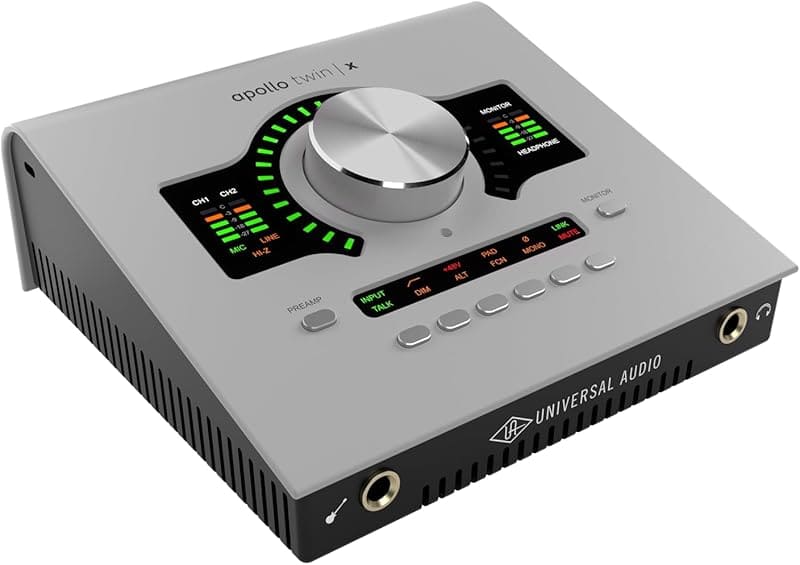
Universal Audio revolutionized the home studio market. They set a new benchmark, a new category within the home studio gear category. When the first Apollo Twin Thunderbolt and Apollo Twin USB came out, nothing sounded that good yet. They became the first to deliver pro audio to home efforts.
This new version, the Apollo Twin X, generation 2 is even better than its predecessors. It’s even got improved A/D D/A converters. Believe me, this interface sounds great. Plus, the four monitor outs in the back and the included app allow you to route the sound and feed a subwoofer for that extra kick. I mean, if you’re a serious producer, you have to have some decent lows in the studio, right?
I did miss the MIDI capability for my synths, but the optical IN is great for expanding through my old DAT gear. Dusting those off was quite an experience. They still sound phenomenal. In combination with the Apollo, the results were pro-sounding to say the least.
Speaking of combinations, the fact that this unit’s DSP works with your computer’s power to give you some extra juice is very important because of the software included. I mean, you suddenly have a plethora of hand-picked, state-of-the-art equipment to work with.
Plus, with the unison feature, you can print audio as if it were going through a legendary Neve preamp if you like. In that scenario, having some extra processing power is always welcome.
If your budget allows it and you feel like taking a big step up from your current setup, give The Apollo a try; it will surely shock you.
The Bottom End
Whether you’re live looping or making music at home or even in your pro studio, the interface choice is paramount to sound up to today’s standards. Any of the above can punch above the belt and deliver the kind of consistency you need from such a central piece of gear.
Go buy the one that suits you best and make music.
Happy recording!
